
Nima Adventure Trek & Expedition P. Ltd.
Boudha-06, Kathmandu, Nepal
+977-9851114058 · info@nimaadventure.com
Boudha-06, Kathmandu, Nepal
+977-9851114058 · info@nimaadventure.com
A remote expedition to Annapurna II (7,937 m), approached along the Annapurna Circuit to the Sabje Khola, with Nima Adventure's Sherpa team and full Base Camp support.
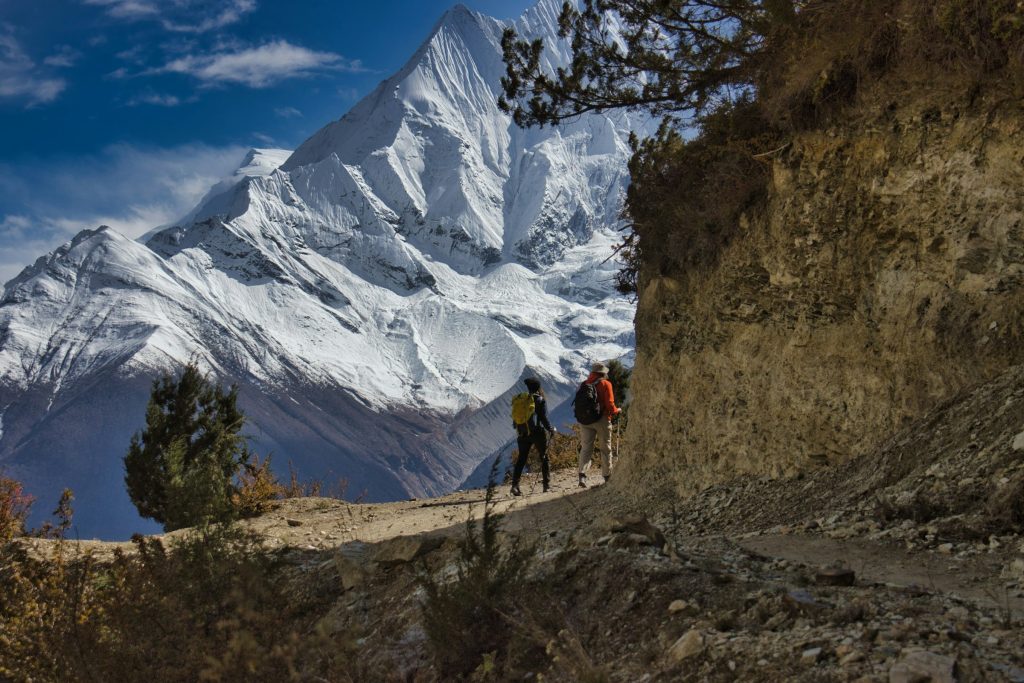
Annapurna II (7,937 m) is the highest summit at the eastern end of the Annapurna Himal and one of the great sights of the Marsyangdi valley on the Annapurna Circuit. It was first climbed in 1960 by a joint British, Indian and Nepalese services expedition, with Chris Bonington, Richard Grant and Ang Nyima Sherpa reaching the summit by the long west ridge from Annapurna IV. Just short of 8,000 m, it sees very few expeditions, so you can expect a genuinely remote climb in a quiet corner of the range.
The approach follows the Annapurna Circuit by road from Kathmandu to Besisahar and on by jeep to Chame, then on foot through Pisang to Humde in the Manang valley. From Humde we turn south into the Sabje Khola valley to establish Base Camp at around 4,500 m. The standard route climbs the north side of Annapurna IV to a high shoulder, then follows the long connecting ridge east to the summit of Annapurna II. It is a big, committing climb with several high camps, a long summit traverse and serious exposure to the weather, and it calls for a high level of self-sufficiency.
Nima Adventure runs the expedition with our own Sherpa climbing team, who fix the route, carry loads and climb with you. We arrange the climbing permit from Nepal's Department of Tourism, the Annapurna Conservation Area Permit (ACAP), the government liaison officer and all transport, porters, Base Camp tents and kitchen staff. Teahouses along the Circuit make the approach comfortable, and Base Camp provides individual tents, a dining tent and fresh cooking throughout. Acclimatisation is built in from the start: we walk rather than drive above Chame, spend a rest day at Humde and break the climb into the Sabje Khola with an intermediate camp, so you arrive at Base Camp well prepared for the rotations ahead.
Annapurna II is for experienced high-altitude climbers who have already climbed one or more 7,000 m peaks, or an 8,000 m peak, and who are comfortable on long ridges with sustained exposure. It is an outstanding objective for climbers who want a near-8,000-metre summit away from the crowds. Our planning, under Managing Director Kanchha Sherpa, includes a long climbing period and spare summit days, with turnaround times agreed in advance.
Welcome to Nepal. A Nima Adventure representative meets you at Tribhuvan International Airport and transfers you to your hotel in Kathmandu. After checking in, the rest of the day is free to recover from your journey or stroll through the lanes of Thamel. In the evening we meet at the hotel or our office in Boudha to check documents and insurance details and to introduce the plan for the Annapurna II expedition. Overnight at the hotel on a bed-and-breakfast basis.
Today we complete the formalities for the Annapurna II climbing permit, including the official expedition briefing at Nepal's Department of Tourism, where you meet the government liaison officer assigned to the team. Your Sherpa guide then runs through your equipment piece by piece. Kathmandu has good mountaineering shops, so anything missing can be bought or hired here. In the afternoon there is time to visit Boudhanath Stupa, close to our office. Overnight at the hotel.
We leave Kathmandu early by private vehicle and follow the Prithvi Highway west along the Trishuli river before turning north at Dumre into the Marsyangdi valley. The drive takes about 6-7 hours, with stops for tea and lunch. Besisahar, the headquarters of Lamjung district, is the traditional starting point of the Annapurna Circuit and a lively market town. The expedition cargo travels with us. Overnight in a lodge or simple hotel.
A full day by 4x4 jeep on the rough road up the Marsyangdi valley, passing Jagat, Tal and Dharapani, where the valley turns west towards Manang. The road is bumpy and the journey takes around 7-8 hours, but the scenery changes steadily from rice terraces to pine forest and the first snow peaks. Chame, the headquarters of Manang district, has comfortable teahouses and views of Lamjung Himal. Overnight in a teahouse.
Although the road continues further, we walk from here to help acclimatisation. The trail follows the Marsyangdi through pine forest, past the great curved rock slab of Paungda Danda, and opens out into the upper valley with fine views of Annapurna II. Walking time is about 5-6 hours with gentle height gain. Pisang is a Tibetan-style village of stone houses and prayer flags. Overnight in a teahouse.
A short and gentle walk of about 3-4 hours along the lower trail of the upper Marsyangdi valley, through pine and juniper and past mani walls, to the village of Humde with its small airstrip. The Annapurna peaks rise steeply to the south, and the side valley of the Sabje Khola, our route to Base Camp, opens nearby. The afternoon is free to rest and help the crew sort loads. Overnight in a teahouse.
A day to let the body adjust before going higher. In the morning we take an acclimatisation hike on the slopes above the village, gaining a few hundred metres before returning for lunch. Your Sherpa guide checks how everyone is adapting and reviews equipment for the climb on Annapurna II. Meanwhile, the crew organises porters and loads for the walk into the Sabje Khola. Overnight in a teahouse at Humde.
We leave the main trail and head south into the Sabje Khola, a quiet side valley that sees very few visitors. The path is rough and sometimes faint, climbing through scrub and then onto open moraine. After about 5-6 hours we stop at an intermediate camp at around 4,000 m, a sensible break in the height gain. Porters carry the expedition loads, and our crew sets up the tents and kitchen. Overnight in tents.
A further 4-5 hours up the valley brings us to Base Camp at around 4,500 m, beneath the north side of the Annapurna wall. Our crew sets up individual tents for each climber, together with the dining, kitchen, storage and toilet tents. The rest of the day is for settling in, drinking plenty and resting. From here you get a first proper look at the lower part of the route on Annapurna II.
We begin with a puja, the Buddhist ceremony Sherpa climbers perform to ask for safe passage before climbing. The following day is for rest and a skills refresher: your Sherpa guide reviews fixed-rope technique, ascender and descender use, crampon work and glacier travel. Meanwhile our climbing team scouts the lower route on Annapurna II and starts carrying ropes, tents and fuel towards Camp 1.
The standard route follows the north side of Annapurna IV before branching east. Rotations establish Camp 1 (around 5,500 m) and Camp 2 (around 6,100 m), then a higher camp on the slopes leading to the shoulder of Annapurna IV, with our Sherpa team fixing rope on the steeper snow and ice. After each rotation we return to Base Camp to rest. The aim is to sleep high on Annapurna IV before the summit push.
When the forecast promises several settled days, we move up through the camps to the shoulder of Annapurna IV and a final camp on the connecting ridge. Summit day follows the long, exposed ridge east to the top of Annapurna II at 7,937 m, with views across the whole Annapurna range and Manaslu. The push takes five to six days in total. Turnaround times are agreed in advance, and spare days allow a second attempt.
We pack up Base Camp, leaving the site clean and carrying all waste out, and walk back down the valley to the main Marsyangdi trail. With weeks of acclimatisation behind us the descent is quick, taking around 6-7 hours. Returning to a teahouse, with a hot shower and fresh food, is a pleasant change after weeks in tents. In the evening we thank the porters and crew. Overnight in a teahouse.
A long day by 4x4 jeep back down the Marsyangdi valley, retracing the route through Chame, Dharapani and Jagat. The road is rough in places and the journey takes around 8-9 hours, with stops for tea and lunch. As we lose height, the air warms and the pine forest gives way to terraces and villages. Overnight in a lodge or simple hotel in Besisahar.
We drive back to Kathmandu along the Marsyangdi and Trishuli valleys, a journey of about 6-7 hours with stops along the way. On arrival you are transferred to your hotel, where a hot shower and a comfortable bed are waiting. The evening is free to relax, eat out in Thamel or simply rest after the expedition. Overnight at the hotel on a bed-and-breakfast basis.
This day is kept in reserve for delays caused by weather or transport. If it is not needed, we complete the expedition debriefing and you are free to explore Kathmandu: the old royal squares of Kathmandu and Patan, Swayambhunath on its hilltop or the shops of Thamel. It is also a good moment to celebrate the Annapurna II expedition with the team before heading home. Overnight at the hotel on a bed-and-breakfast basis.
After breakfast, we transfer you to Tribhuvan International Airport in good time for your onward flight. We hope you leave with strong memories of Annapurna II and of the people who climbed it with you, and we look forward to welcoming you back to the Himalaya, whether for another expedition, a peak climb or a relaxed trek.