
Nima Adventure Trek & Expedition P. Ltd.
Boudha-06, Kathmandu, Nepal
+977-9851114058 · info@nimaadventure.com
Boudha-06, Kathmandu, Nepal
+977-9851114058 · info@nimaadventure.com
Climb Pumori (7,161 m), the elegant peak above Everest Base Camp, on a fully supported 40-day expedition with experienced Sherpa climbing guides and a Khumbu acclimatisation trek.
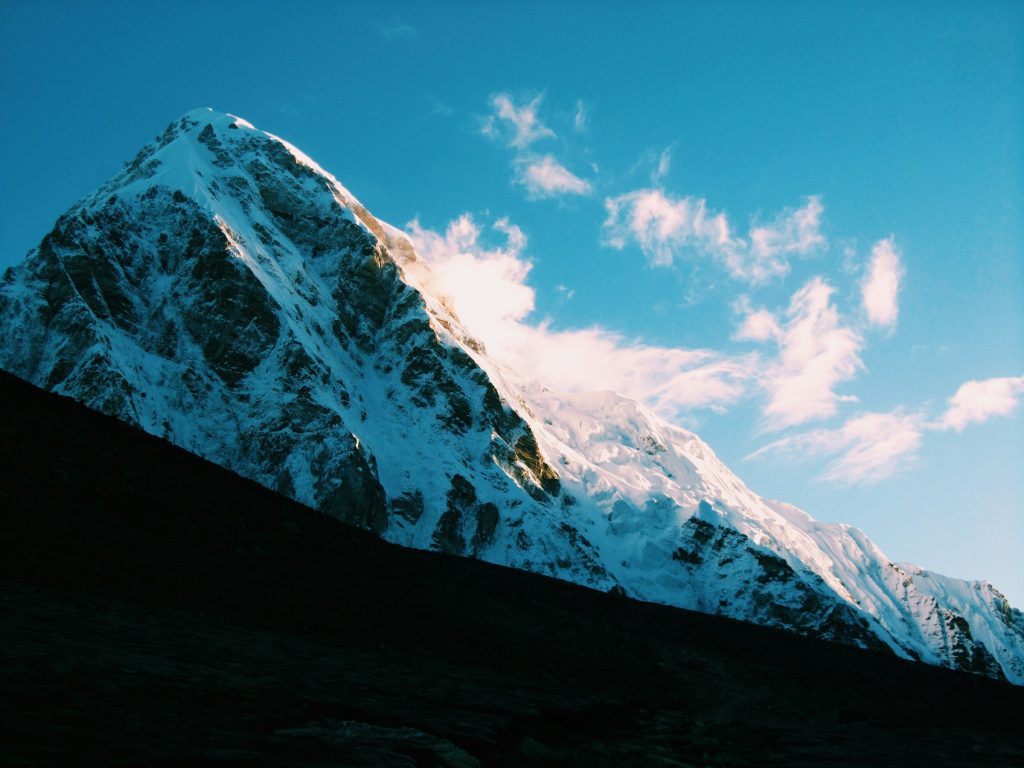
Pumori (7,161 m) rises directly west of Everest Base Camp, a graceful pyramid of ice and fluted snow that fills the view from Gorak Shep and Kala Patthar. George Mallory named it after the Sherpa words for 'unmarried daughter', and for many climbers it is the most beautiful mountain in the upper Khumbu. It is also a serious 7,000-metre objective: steeper and more technical than Himlung or Baruntse, yet logistically straightforward, because base camp sits only a short walk from the main Everest trail. For anyone preparing for an 8,000-metre peak, few mountains offer better training.
We climb the standard south-east face and ridge. From base camp at around 5,300 m, the route crosses moraine and glacier to Camp 1 at around 5,700 m, then follows steep snow, ice and mixed ground on fixed ropes to Camp 2 at around 6,200 m and Camp 3 at around 6,450 m. Summit day climbs snow slopes and a final ridge to the top, where Everest, Lhotse, Nuptse, Makalu and Cho Oyu surround you. Our Sherpa team fixes the route and stocks the high camps, and every member climbs with a personal climbing Sherpa. Snow conditions on the slopes between Camps 2 and 3 vary from season to season, so our climbing leaders choose the line and timing with great care.
The 40-day programme begins with a gradual acclimatisation trek through Namche Bazaar, Tengboche, Dingboche and Lobuche, with rest days at Namche and Dingboche. Around three weeks are then set aside on the mountain for rotations, rest and patient waiting for a stable weather window. Base camp is run by our own cook and kitchen team, with an individual sleeping tent for every member, a heated dining tent, solar power, satellite phone communication and regular weather forecasts. Permits, the liaison officer, Lukla flights and all group climbing equipment are included.
Pumori suits climbers who have already been above 6,000 m, ideally on peaks such as Island Peak, Lobuche East, Mera Peak or Ama Dablam, and who are confident with crampons, ice axe, jumar and abseiling on fixed lines. Strong fitness, patience at altitude and the ability to look after yourself in cold camps matter more than speed. Our Managing Director, Kanchha Sherpa, a career Himalayan guide, plans each expedition personally, drawing on a team that has guided Malaysian climbers on Everest, K2 and Manaslu. We keep teams small so that the pace and every decision on the mountain fit the people climbing.
Our team meets you at Tribhuvan International Airport and transfers you to your hotel in Kathmandu. After you have rested, we hold a short welcome meeting to introduce the expedition team, check passports and insurance details and answer any early questions. The rest of the day is free. If you have the energy, walk to Boudhanath Stupa near our office in Boudha, or explore the lanes of Thamel. There is no trekking today, so use the time to recover from your journey and start drinking plenty of water.
We complete the formalities for your Pumori climbing permit and attend the official expedition briefing with the Department of Tourism and your liaison officer. Your climbing leader then checks your personal equipment item by item, from boots and crampons to down suit and sleeping bag, so that anything missing can be bought or hired in Thamel before the flight to Lukla. Expedition food and group gear are packed and sent ahead. In the evening we talk through the acclimatisation plan, communication and safety procedures.
An early flight from Kathmandu, or from Ramechhap in the busiest seasons, lands at Lukla's famous mountain airstrip. While our porters organise the loads, we have a hot drink and then set off down the Dudh Koshi valley on a gentle trail lined with mani walls, prayer wheels and small farming villages. The walk to Phakding takes 3-4 hours and loses a little height, an easy introduction to trekking at altitude. Overnight in a teahouse beside the river.
Following the Dudh Koshi upstream, the trail crosses several suspension bridges and enters Sagarmatha National Park at Monjo, where permits are checked. After the high Hillary Suspension Bridge, a long and steady climb through pine forest brings the first view of Everest on a clear day and leads to Namche Bazaar, the horseshoe-shaped trading town of the Khumbu. Expect 5-6 hours of walking. Namche has comfortable lodges, bakeries and shops for any last items.
Today follows the climb high, sleep low principle that underpins safe acclimatisation. We hike up to the Syangboche area and the Everest View Hotel at around 3,880 m for views of Everest, Lhotse and Ama Dablam, or continue to Khumjung village and its monastery, before returning to Namche to sleep. The Sherpa Culture Museum is worth an hour in the afternoon. Allow 3-4 hours of walking, then rest, hydrate and eat well.
The trail contours high above the Dudh Koshi with Ama Dablam ahead, drops to the river at Phunki Thenga and then climbs steeply through rhododendron and fir forest to Tengboche. The monastery here is the largest in the Khumbu, and if timing allows we attend the afternoon prayers. At sunset the views of Everest, Lhotse, Ama Dablam and Thamserku are superb. Walking time is 5-6 hours. Overnight in a teahouse.
We descend through forest to Deboche, cross the Imja Khola and climb gradually past Pangboche, home to one of the oldest monasteries in the Khumbu. Above the tree line the valley opens into yak pastures, and the trail follows the Imja valley to Dingboche, a patchwork of stone-walled fields beneath Ama Dablam and Island Peak. Expect 5-6 hours of walking at a steady, unhurried pace, and take care to drink plenty during the day.
A second acclimatisation day is essential before going higher. We climb the ridge of Nangkartshang above the village to around 5,000 m, a 4-5 hour round trip with views of Makalu, Lhotse and the Island Peak valley, then return to Dingboche to sleep. In the afternoon your climbing leader runs through rope work, jumar and abseil techniques that you will use on Pumori, and checks how each member is adapting to the altitude.
The trail crosses the open plateau to Thukla, then climbs the steep moraine of the Khumbu Glacier to the Thukla Pass, where stone memorials remember climbers lost on Everest. Beyond, the path follows the glacier's lateral moraine to Lobuche, with Nuptse and Lobuche East close above. The walk takes around 5 hours. Rest and fluids are the priority this afternoon, as the air is now noticeably thinner.
We follow the moraine to Gorak Shep, the last lodge settlement below Everest Base Camp, and continue on a quieter path towards the foot of Pumori and Kala Patthar. Base camp is set on the moraine at around 5,300 m, with the Khumbu Icefall visible across the valley. Our kitchen and Sherpa team will have prepared camp, so you can settle into your own tent. Walking time is 4-5 hours, followed by a relaxed afternoon.
A day to rest and adjust to base camp altitude. In the morning our Sherpa team leads the traditional puja ceremony, asking the mountain's blessing for a safe climb, an important ritual for every Sherpa climber. Your climbing leader then reviews fixed-rope technique, crevasse awareness and the plan for the first rotation, and checks that boots, crampons and harnesses fit perfectly. The afternoon is for resting, eating well and drinking plenty of fluids.
The Sherpa team fixes ropes and establishes Camp 1 at around 5,700 m, Camp 2 at around 6,200 m and Camp 3 at around 6,450 m. Members make acclimatisation rotations, sleeping higher each time and returning to base camp to recover. Once acclimatised, we wait for a stable weather window for the summit push: a long day from Camp 3 up snow slopes and the final ridge to the top, then descent to a lower camp. Spare days allow for bad weather or a second attempt.
After clearing base camp and packing out all rubbish, we descend past Gorak Shep and Lobuche, over the Thukla Pass and down to Pheriche in the broad valley below. Losing around 1,000 m of altitude, you will notice a real difference in appetite, energy and sleep. Pheriche is home to the Himalayan Rescue Association aid post, staffed by volunteer doctors in season. Walking time is 6-7 hours. Overnight in a teahouse.
The trail drops through Pangboche and Deboche, crosses the Imja Khola and makes the last climb to Tengboche before descending through forest to the Dudh Koshi and contouring back to Namche Bazaar. Look back for a final view of the Everest massif and Ama Dablam. After weeks in camp, Namche's bakeries, coffee shops and hot showers feel very welcome. Allow 6-7 hours of walking.
The final trekking day retraces the route down to the Dudh Koshi, across the suspension bridges and through Monjo and Phakding, before a last gradual climb to Lukla. It is a long day of 6-7 hours, so we start early. In the evening we share a celebration dinner with the Sherpa team and porters, a good moment to thank the people who made the expedition possible.
Morning flights leave Lukla when the weather allows, landing in Kathmandu after a short flight, or at Ramechhap followed by a road transfer of 4-5 hours. We transfer you to your hotel for a long shower and a rest. Flights from Lukla are weather dependent, so this programme keeps a reserve day in Kathmandu to absorb any delay without affecting your international departure. The evening is free.
This day is kept free as a buffer for weather delays at Lukla. If it is not needed, you can visit Boudhanath Stupa, Swayambhunath, Pashupatinath or Patan Durbar Square, shop for souvenirs in Thamel, or simply relax at the hotel. In the evening we host a farewell dinner to celebrate the expedition, share photos and talk about your next Himalayan objective.
Our team transfers you to Tribhuvan International Airport around three hours before your international flight. If your flight leaves later in the day, there is time for a last walk around Boudha or Thamel. Thank you for climbing Pumori with Nima Adventure. We hope to welcome you back to the Himalaya for your next expedition, whether an 8,000-metre peak or a quieter trek.