
Baruntse Expedition (7,129 m)
Trip Overview
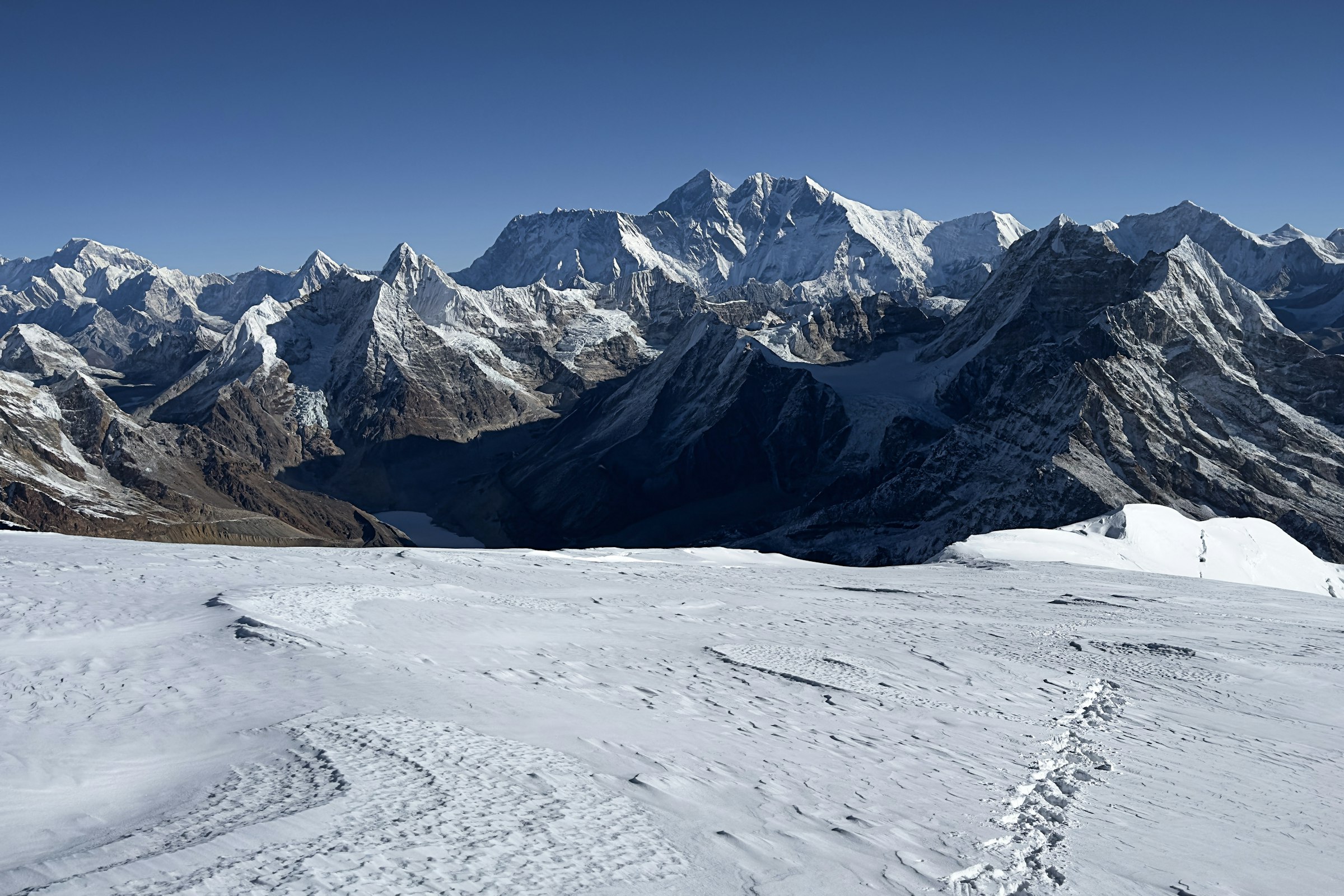
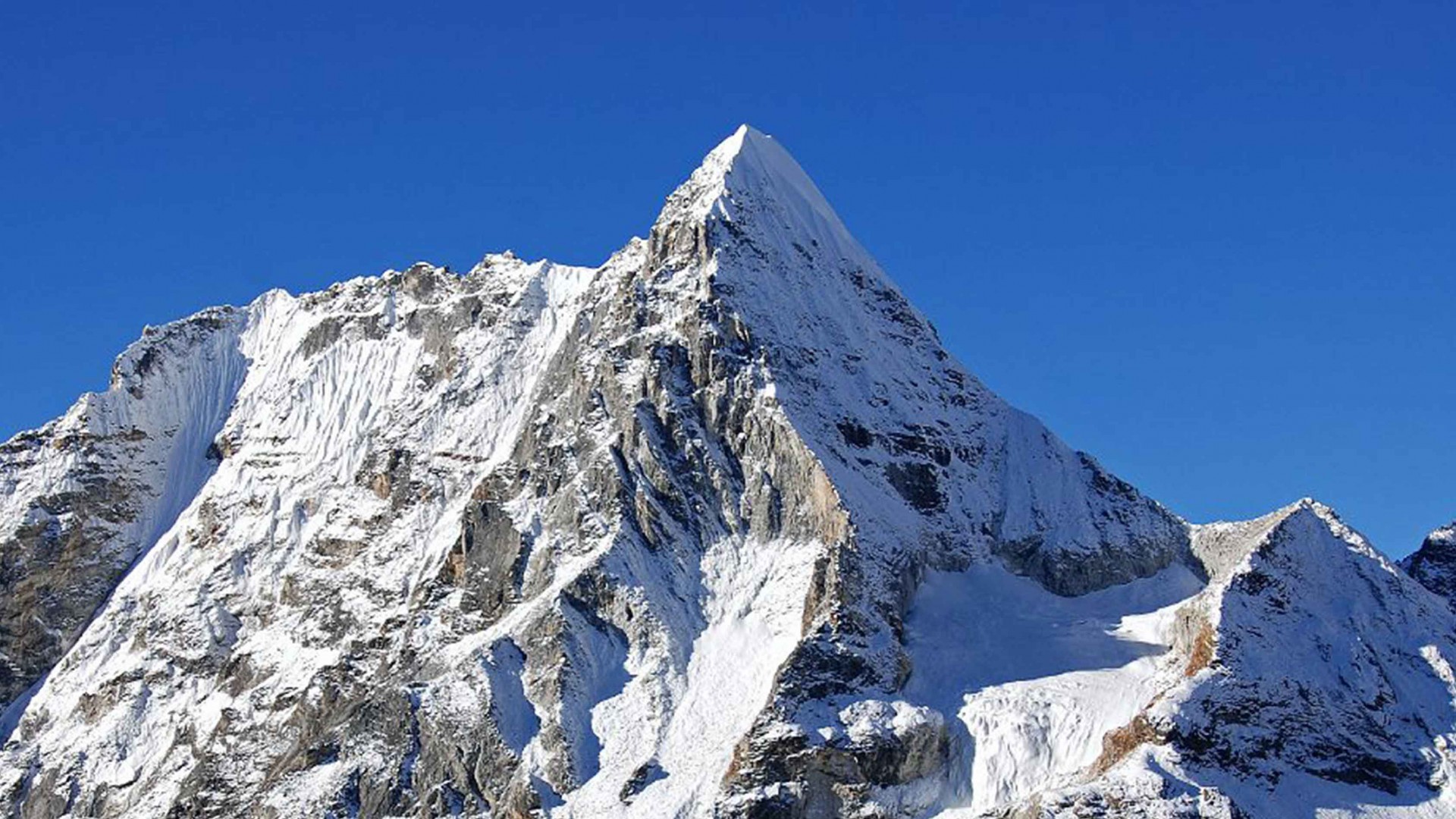
Baruntse (7,129 m) rises above the upper Hongu valley, south-east of Everest, in one of the wildest corners of the Everest region. Seen from Mera Peak or the Hongu, it stands as a striking pyramid of snow and ice ringed by glaciers. The standard south-east ridge offers a classic mountaineering experience: a balanced mix of glacier travel, steep snow and ice and an airy summit ridge, without the sustained rock climbing of Ama Dablam. For many climbers it is the ideal step between a 6,000-metre trekking peak and an 8,000-metre expedition.
Our 34-day route follows a careful acclimatisation line away from the main Everest trail. After flying to Lukla, we cross the Zatrwa La (4,610 m) into the forested Hinku valley, then climb gradually through Kothe and Thangnak to Khare (5,045 m) beneath Mera Peak, with a full acclimatisation day there. Crossing the Mera La (5,415 m) takes us into the remote Hongu valley, past the glacial lake of Seto Pokhari, to base camp at around 5,400 m. By the time you arrive, you have already spent several nights close to 5,000 m, so the climbing rotations begin from a strong base.
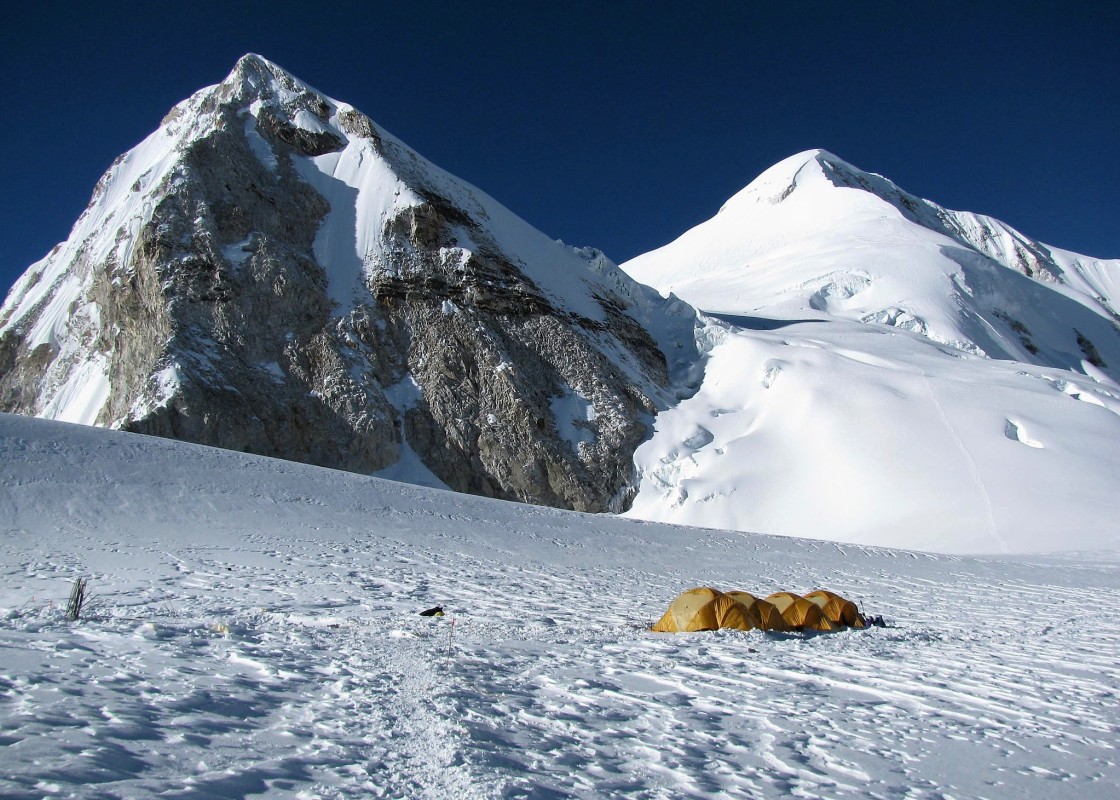
The climbing period gives 16 days for rotations and the summit bid. Fixed ropes lead up a steep headwall to Camp 1 at around 6,100 m, and Camp 2 is placed at around 6,400 m on the south-east ridge. Summit day follows the ridge, with a short, steep ice section near the top, to a summit with outstanding views of Everest, Lhotse, Makalu, Cho Oyu and Ama Dablam. Every climber has one experienced, government-licensed Sherpa climbing guide, and our base camp team provides an individual tent for each member, hot meals, satellite phone communication and daily weather forecasts. The expedition royalty, national park and local permits are all included.
Who is this trip for?
Baruntse suits climbers who have already been above 6,000 m, ideally on Mera Peak, Island Peak or Lobuche East, and who are confident with crampons, an ice axe and a jumar on fixed ropes. The Hongu valley is remote, so you should be comfortable living in camp for several weeks. The expedition is planned and staffed by Nima Adventure from our office in Boudha, Kathmandu, under Managing Director Kanchha Sherpa, a career Himalayan guide whose team has guided Malaysian climbers on Everest, K2 and Manaslu.
Trip highlights
- Climb a classic 7,000-metre peak by its south-east ridge
- Cross the Zatrwa La (4,610 m) and Mera La (5,415 m) on a superb acclimatisation route
- Trek through the forested Hinku valley and the remote Hongu valley
- One experienced, government-licensed Sherpa climbing guide per member
- Summit views of Everest, Lhotse, Makalu, Cho Oyu and Ama Dablam
- Sixteen-day climbing period with time for rotations and weather
Itinerary
A member of our team welcomes you at Tribhuvan International Airport and drives you to your hotel. Once you have settled in, we hold a short meeting to introduce the expedition staff, check passports and insurance details and outline the weeks ahead. The rest of the day is yours to recover from the journey, perhaps with an evening walk around Boudhanath Stupa, close to our office in Boudha.
Today is reserved for rest, the official expedition briefing and final preparations. We complete the Baruntse climbing permit formalities while your climbing leader checks your equipment piece by piece, so anything missing can be bought or hired in Thamel. Group gear and expedition food are packed and sent to Lukla. In the evening we review the acclimatisation plan, communication and safety procedures together.
A short, scenic flight from Kathmandu, or from Ramechhap in the busiest seasons, lands at Lukla. Instead of heading north towards Everest, we turn east and climb through rhododendron and pine forest to the summer pastures of Chutanga. The walk takes 3-4 hours. Gaining height gently here is important before tomorrow's high pass. Overnight in a simple teahouse.
A steep climb takes us to the Zatrwa La, the expedition's first high pass, marked by prayer flags and cairns, with wide views back over the Lukla valley and the peaks beyond. We then descend a short distance to the teahouses of Thuli Kharka. Allow 6-7 hours. This is a key acclimatisation day, so walk slowly, drink plenty of water and keep warm layers to hand.
The trail descends steeply into the Hinku valley through forest of pine, fir and rhododendron, with the first views of Mera Peak's broad snow summits ahead. We cross side streams and follow the Hinku Khola to Kothe, a small settlement of teahouses on the riverbank. Walking time is 5-6 hours. Losing height today helps the body consolidate yesterday's altitude gain.
We walk up the Hinku valley beside the river, passing the small Lungsumgba gompa tucked beneath a rock overhang, to the summer grazing settlement of Thangnak. Peaks such as Kusum Kanguru and Mera line the valley, and the landscape becomes more open and alpine with every hour. Walking time is 4-5 hours, leaving time to rest in the afternoon. Overnight in a teahouse.
A short but steady climb along the moraines of the upper Hinku valley leads to Khare, the last settlement below Mera Peak, with impressive views of the Mera glacier and north face. Walking time is 3-4 hours, leaving the afternoon free to rest. The altitude gain is significant, so take it slowly, drink plenty and tell your guide about any symptoms of altitude sickness.
A full rest day to let the body adapt. We take a short hike higher towards the Mera glacier and return to sleep at Khare. Your climbing guide also runs a refresher on crampon, ice axe, jumar and abseil techniques on the nearby slopes, so that the whole team works efficiently on fixed ropes later. The evening is for resting, eating well and drinking plenty of fluids.
We climb onto the Mera glacier to the broad saddle of the Mera La, then descend steeply on the far side into the remote Hongu valley. Glacier and moraine give way to open pasture at Kongma Dingma, where we camp. It is a long day of 7-8 hours, with crampons needed on the glacier. From here onwards our camping crew takes care of all meals and accommodation.
We follow the Hongu river upstream through a broad, rocky valley, with Chamlang towering above to the east. Seto Pokhari, meaning white lake, is a beautiful glacial lake set in an amphitheatre of peaks and a quiet place to camp. The walk takes 4-5 hours, and the modest gain in altitude is a useful step in our acclimatisation before base camp.
A gradual climb along the valley and over moraine brings us to base camp at around 5,400 m in the upper Hongu, beneath the snow slopes of Baruntse. Our kitchen and Sherpa team set up the dining tent, kitchen and an individual tent for each member. Walking time is 4-5 hours, and the afternoon is free to rest, settle into camp and enjoy the setting.
After a puja ceremony, the Sherpa team fixes ropes up the steep headwall to Camp 1 at around 6,100 m and on to Camp 2 at around 6,400 m on the south-east ridge. Members make acclimatisation rotations, returning to base camp to recover between them. With a stable forecast, we make the summit push along the ridge and up a steep ice section to the top, then descend to base camp. Spare days allow for bad weather.
We dismantle base camp, pack out all rubbish and walk back down the Hongu valley past Seto Pokhari to the pastures of Kongma Dingma. Losing around 550 m of height improves sleep and appetite, and the walk of 5-6 hours feels far easier than on the way up. The evening is a good time to celebrate the climb with the whole crew around the dining tent.
We climb back to the Mera La (5,415 m) and cross the glacier with crampons, then descend to the familiar teahouses at Khare. With full acclimatisation, the pass feels much easier than on the way in, although it is still a long day of 6-7 hours. Enjoy final views back over the Hongu valley and the peaks that surround Baruntse.
A long descent down the Hinku valley through Thangnak returns us to the forest and the riverside teahouses at Kothe. Losing more than 1,400 m in a day, you will notice warmer air and the scent of pine and rhododendron. Walking time is about 6 hours. After weeks of camping, a hot meal in a lodge kitchen feels like real luxury.
We climb out of the Hinku valley through dense forest, retracing our route back up to the open meadows of Thuli Kharka. It is a steady day of 6-7 hours with some steep sections, but your acclimatisation makes the ascent far easier than it would have been at the start of the trip. Overnight in a teahouse, ready for the last pass.
A short climb brings us back to the Zatrwa La (4,610 m), the last pass of the expedition, followed by a long, steep descent through Chutanga to Lukla. Allow 6-7 hours, and take care on the steep and sometimes icy trail below the pass. In the evening we share a farewell dinner with the Sherpa team and porters who made the expedition possible.
Morning flights leave Lukla when the weather allows, landing in Kathmandu after a short flight, or at Ramechhap followed by a drive of 4-5 hours. We transfer you to your hotel for a long shower and some rest. Lukla flights are weather dependent; if delays occur, our Kathmandu office rearranges your onward plans with you. The evening is free.
Our team transfers you to Tribhuvan International Airport around three hours before your flight home. If time allows, enjoy a final stroll around Boudha or Thamel for souvenirs. Thank you for climbing Baruntse with Nima Adventure. We look forward to welcoming you back for your next Himalayan objective, perhaps an 8,000-metre peak.
What’s included
Cost Includes
6 itemsComprehensive Expedition Support
This package covers essential permits, logistics, and high-altitude support for a safe expedition.
- Permits & Fees: Expedition Royalty and a permit fee of Nepal Government to climb Mt. Baruntse, Sagarmatha / Makalu National Park. Trekking Permit (TIMS) and Makalu Barun National Park permit. Our service charge and Government Taxes levied in Nepal.
- Guiding & Staff: One Experienced government license holder climbing guide (Sherpa) per client. All wages, equipment, medical and accidental insurance for all involved Nepalese staffs (including Sherpas, cooks, etc.). Equipment allowances and wages for climbing sherpa, cooks, kitchen boys, and government Liaison Officer.
- Logistics & Transport: Arrival and departure transfer services to and from both domestic and international flight. Scheduled Flight Tickets for KTM-Lukla-Kathmandu sector to climbing member, guide, liaison officer and kitchen staff. Per person 60kg baggage allowance during trekking-up carrying by porter or Yak.
- Base Camp Infrastructure: All trekking and mountaineering equipments like kitchen tent, store tent, dining tents, toilet tents, tables, chairs, and cooking utensils. Each expedition member will have an individual tent in the base camp.
- High Altitude Support: All food and fuel for Base Camp and higher camps. Common climbing equipment (fixed and main rope, ice bars, ice screws, snow bar, etc.). EPI Cooking gas, stove, cooking pot, and high altitude food for a member will be provided in camp one, two and three.
- Safety & Communication: First Aid medical kits. Satellite phone carrying by guide for communication. Daily Weather Report Services. Helicopter rescue insurance for high altitude climbing Sherpa guide, cook and staff.
Cost Excludes
4 itemsMember's Mandatory Responsibility
All climbers must secure the following items, with mandatory insurance being the most critical exclusion.
- Mandatory Insurance: Insurance covering both medical and high altitude evacuation costs (including rescue, air evacuation, and trip cancellation) is mandatory.
- Travel & Visa: International airfare (from and to Kathmandu). Nepal entry visa fee.
- Personal Gear & Expenses: Personal climbing gears, clothing, personal medical kit, and trekking gears. Any packed food/snacks, aerated drinks, energy drinks, alcohol, etc., during the trekking. Laundry expenses, Tips, and Wi-Fi/internet costs.
- Contingency Costs: Extra nights’ accommodation in Kathmandu (due to early arrival, late departure, or flight cancellation). Any extra expenses arising out of unforeseen situations (natural calamities, political disturbances).
Oxygen Use: Oxygen bottles will be in stock at Base Camp in case of an emergency but are subject to an appropriate charge.
Equipment list
Foot Wear
3- Normal Socks 3-4Pairs
- Trekking Shoes 1 Pair
- Slippers
Hands
2- Thin Fleece Gloves 1 Pair
- Wind Stopper Fleece Gloves
Upper Body
6- Light Weight Top / Thermo Coat
- Buff
- Fleece Jacket 1
- Gore Tex Jacket 1
- Down Jacket 1
- Cotton T-Shirt 2-3
Lower Body
4- Mid Weight Long Under Pants
- Under Wear 4-5 Pairs
- Gore Tex Pant. 1
- Water Proof Pant1
Head
4- Sun Cap
- Balaclava
- Fleece Hat
- Neck Gaiter 2-3
Sleeping Bags
1- Sleeping Bag rated to -20°C For base camp
Bag Packs
2- Rucksacks 45-55L
- Duffle Bag 90 L 1 Piece
Sun stuffs
4- Sunscreen Minimum SPF 50
- Lip balm with SPF 30
- Sunglasses UV protection
- Toiletries.
Medicines
7- Brufen / Ibuprofens
- Antibiotic
- Diamox
- Paracetamol
- Handy Plaster
- Crack Bandage
- Tincture Iodine
Miscellaneous
2- Walking Stick
- Umbrella / Rain Coat
Frequently asked questions
Baruntse is a moderately technical 7,000-metre peak. The main challenges are the steep headwall below Camp 1, crevassed glacier sections and a short, steep ice step near the summit, all protected by fixed ropes. There is little rock climbing. You need to be confident with crampons, ice axe, jumar and abseiling, and fit enough for a long summit day at high altitude.
This approach builds acclimatisation gradually while keeping you away from the busiest trails. The Zatrwa La, the Hinku valley and a rest day at Khare prepare the body well before the Mera La crossing into the Hongu. By the time you reach base camp, you have already spent several nights near 5,000 m, which makes the climbing rotations more effective.
The expedition requires the Baruntse royalty and climbing permit from Nepal's Department of Tourism, with a government liaison officer, plus the Makalu Barun National Park entry permit and the Khumbu Pasang Lhamu Rural Municipality permit for the trail from Lukla. Our Kathmandu office arranges every permit; please send passport copies and photographs before you travel.
Yes. Each member is supported by one experienced, government-licensed Sherpa climbing guide during the climbing period, backed by a wider Sherpa team that fixes ropes and carries loads to the high camps. On summit day you climb with your guide, who manages pace, turnaround time and safety decisions with you from the high camp to the summit and back.
Spring, from April to May, and autumn, from late September to October, are the two climbing seasons. Autumn usually brings clear skies and stable weather after the monsoon, while spring has longer days and gradually warming temperatures. Either season can bring heavy snowfall on the high passes, so the climbing period includes spare days for weather.
Our climbing period has spare days built in, and we receive daily weather forecasts at base camp. If heavy snow raises the avalanche risk on the headwall or ridge, we wait until conditions improve. Your Sherpa guide and expedition leader make the final call on summit attempts, and turning back is always an option. The safe return of every member comes before any summit.
Most climbers attempt Baruntse without supplementary oxygen. Emergency oxygen is kept in stock at base camp for medical use and is charged only if it is needed. If you would like personal oxygen for the summit push, let us know when you book and we will arrange bottles, a mask and a regulator for you.
Trip Reviews
Submit your review | |
Plan Baruntse Expedition (7,129 m) with our team
Tell us your dates and group size and we will reply within 24 hours with availability, a tailored itinerary and a group price.
- Reply within 24 hours
- No booking fees
- Free itinerary tailoring
You may also like

K2 Expedition: Conquering the Savage Mountain (8,611 m)
- 59 Days
- Challenging
- Nepal Expedition
