Annapurna Base Camp Trek


Trip Overview
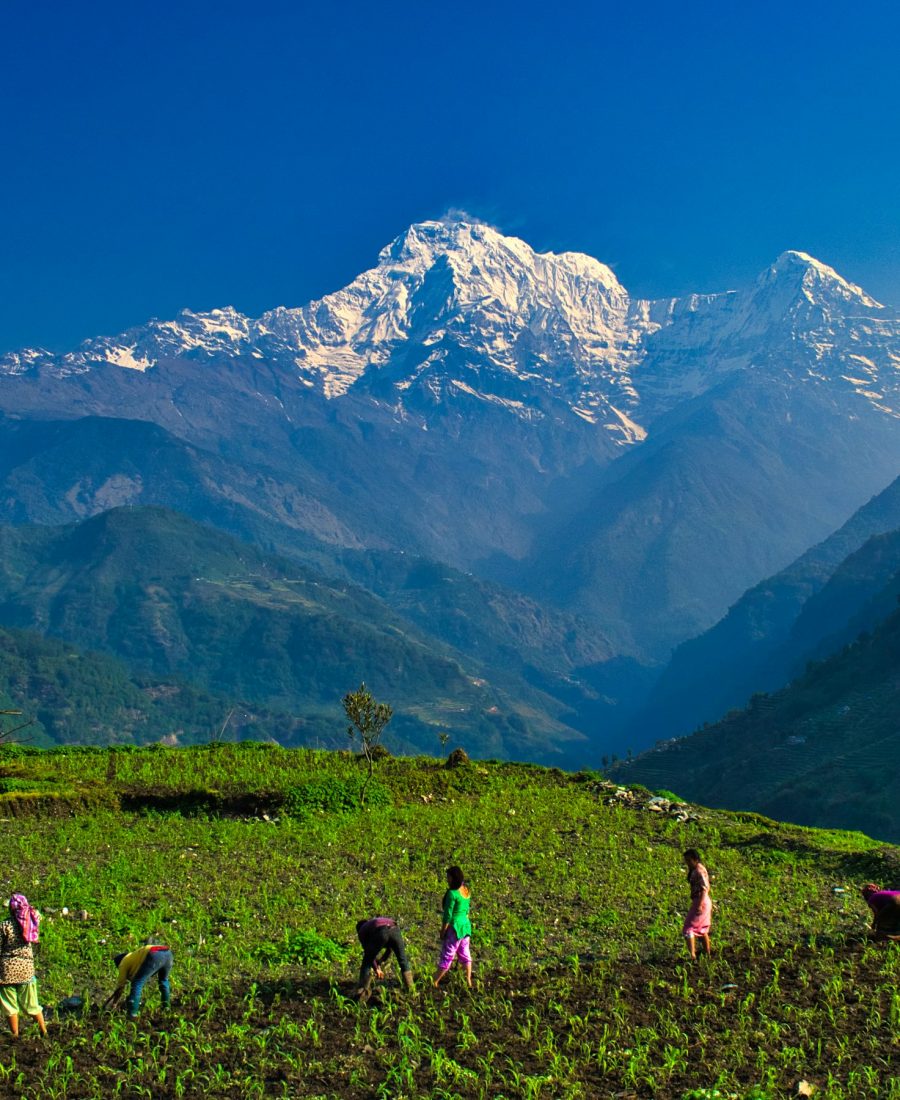
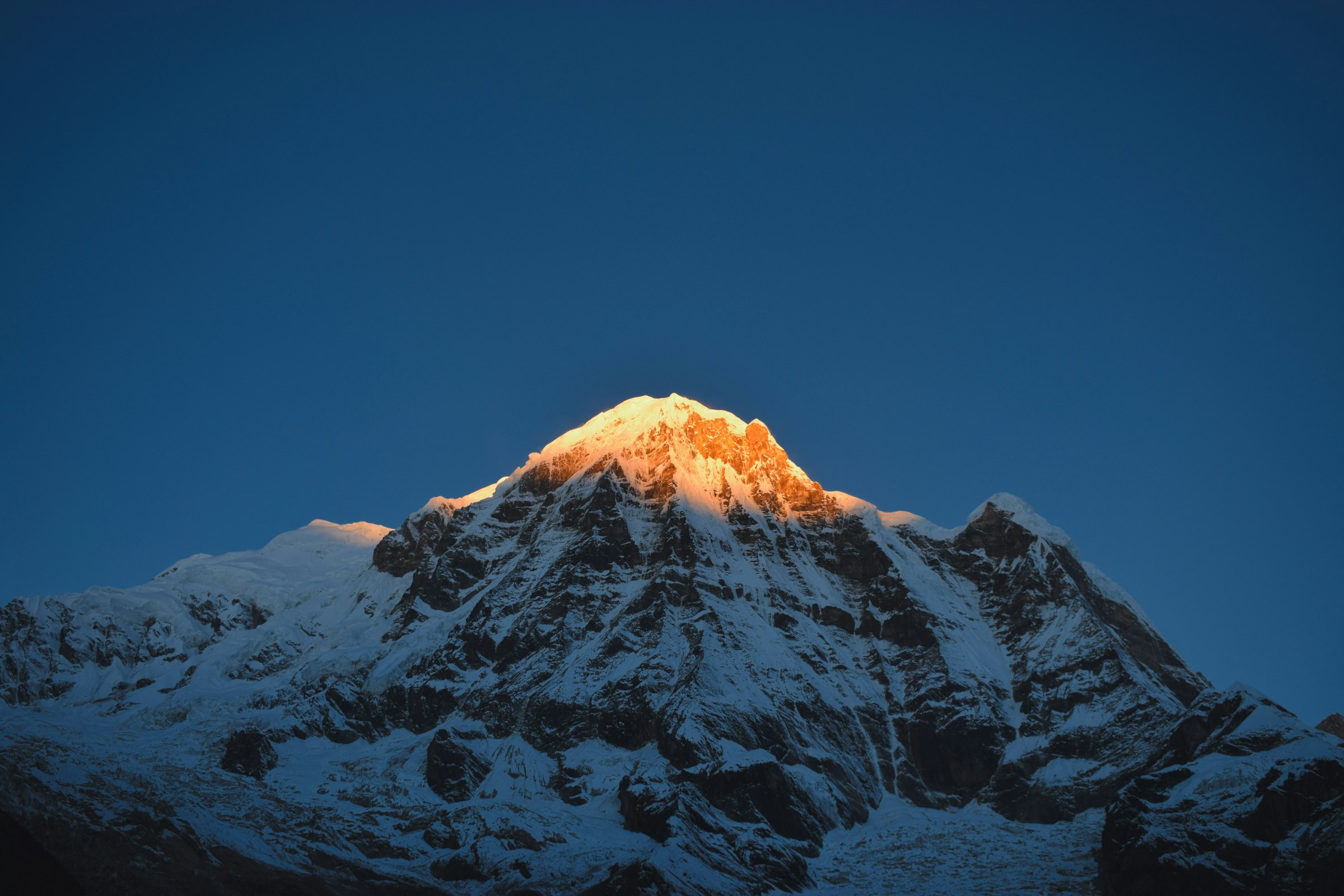
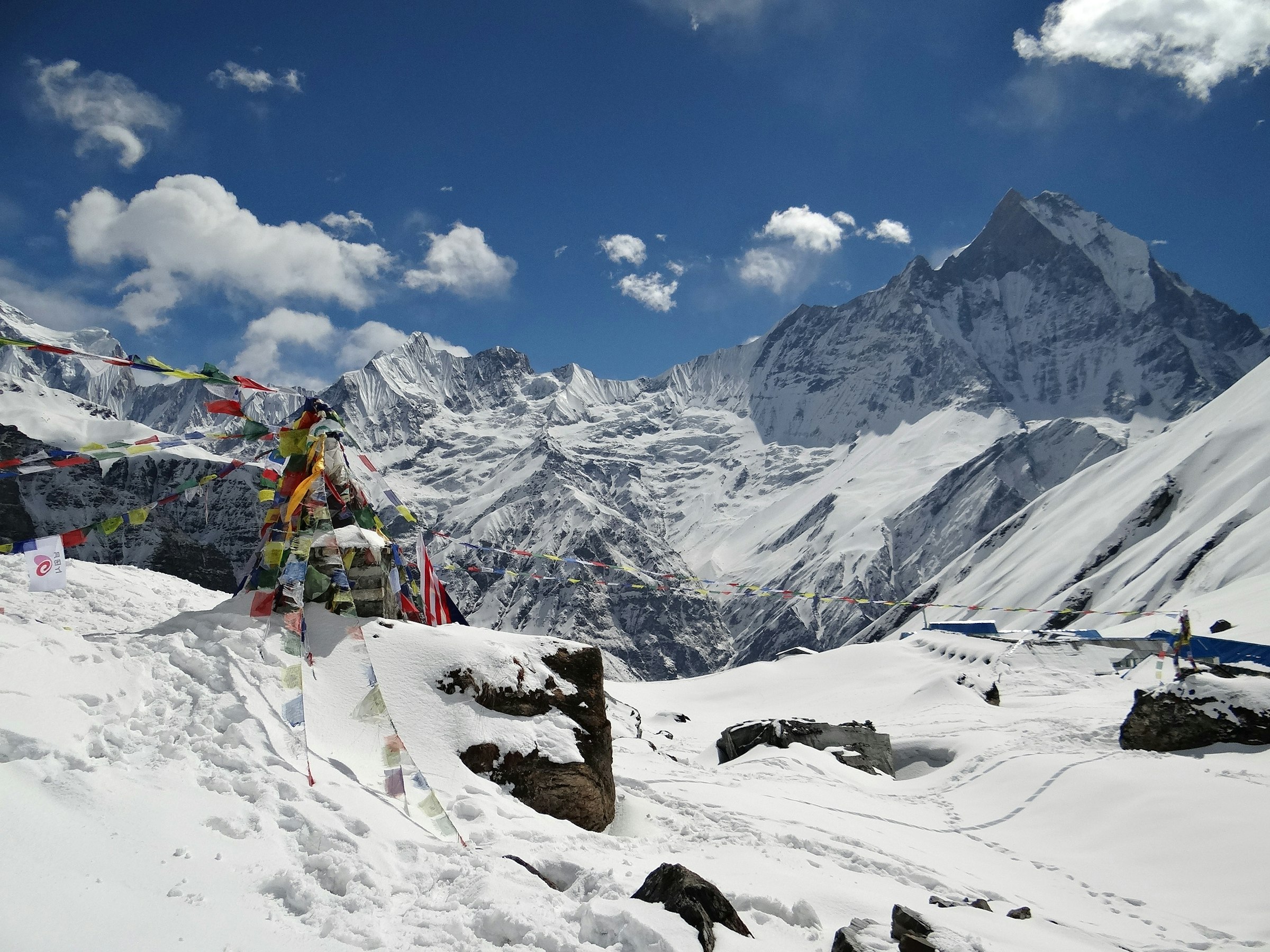
The Annapurna Base Camp Trek, often shortened to ABC, follows the Modi Khola gorge north from the Pokhara hills into the Annapurna Sanctuary, a high glacial basin enclosed by a ring of peaks. At its head, at 4,130 m, base camp sits beside the moraine beneath the south face of Annapurna I (8,091 m), with Hiunchuli, Annapurna South, Gangapurna and the sharp summit of Machhapuchhre (Fishtail) all around. Few treks in Nepal take you so deep into a mountain amphitheatre in such a short time.
The route begins in the terraced farmland of the middle hills, where Gurung villages such as Ghandruk and Chhomrong look straight across at Annapurna South and Hiunchuli. Above Chhomrong the trail enters the gorge, climbing stone staircases through bamboo, rhododendron and oak forest to Bamboo and Deurali. The valley then narrows and the vegetation thins until you reach Machhapuchhre Base Camp (3,700 m), with the final, gentler climb to Annapurna Base Camp ahead. Sunrise there, when the light slides down the walls of the Sanctuary, is the moment most trekkers remember.
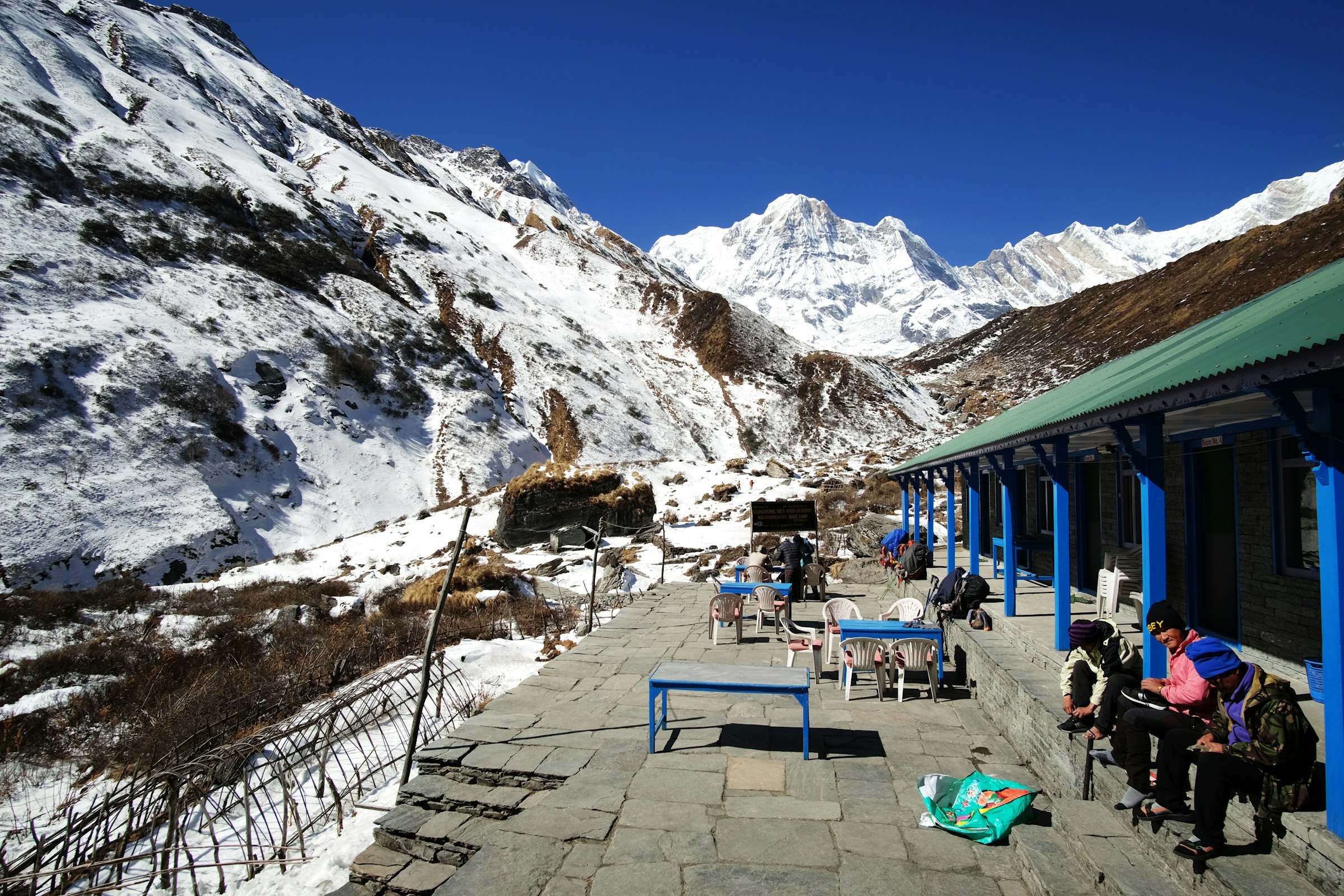
On the way down we stop at Jhinu Danda, where natural hot springs beside the Modi Khola lie a short walk below the village and make a welcome treat for tired legs. Throughout the trek you stay in family-run teahouses, eat freshly cooked meals and walk with a government-licensed guide who knows the trail, the lodges and the mountain weather.
Who is this trip for?
ABC is graded moderate. You do not need previous trekking or climbing experience, but you should be comfortable walking 5-7 hours a day on uneven ground, with many stone steps both up and down. The maximum altitude of 4,130 m is reached gradually over several days, which suits first-time high-altitude trekkers. Regular walking, hill training or stair climbing in the weeks before you travel will make the trek far more enjoyable.
Nima Adventure is a Kathmandu-based operator led by Managing Director Kanchha Sherpa, a career Himalayan guide. We keep groups small, pace the climb sensibly and look after the details, from ACAP and TIMS permits to transport and teahouse bookings, so you can concentrate on the walk. The best seasons are spring (March to May), when the rhododendrons flower, and autumn (late September to November), when skies are usually at their clearest.
Trip highlights
- Sunrise at Annapurna Base Camp (4,130 m) inside the Annapurna Sanctuary
- Close views of Annapurna I, Annapurna South, Hiunchuli, Gangapurna and Machhapuchhre
- Walk past Machhapuchhre Base Camp (3,700 m) beneath the sacred Fishtail peak
- Gurung villages of Ghandruk and Chhomrong facing Annapurna South
- Bamboo, rhododendron and oak forest along the Modi Khola gorge
- Natural hot springs at Jhinu Danda on the way down
- A steady, well-paced ascent suited to first-time high-altitude trekkers
Itinerary
Arrival in the Tribhuvan International Airport, Kathmandu, is followed by checking in to the hotel. You can relish authentic Nepali cuisine and rest adequately for the upcoming trek.
A 30 minute flight to the lake city of Pokhara is in itself a beautiful experience. This is followed by a drive to Nayapul where we start our trekking journey. From Nayapul we trek through the green forests into Ghandruk, a Gurung valley overlooking exquisite mountain views. Half hour flight. 1.5 hour drive. 5-6 hours trek.
This day includes trekking upwards into Chhomrong. Enjoying pristine views of the snow capped peaks like the Annapurna South, Hiunchuli, Macchapuchhre as well as the Gangapurna, we ascend up to Kimrungdanda. Following this, we ascend steeply upwards to the Kimrong Khola. After a steep descend down to Chere Danda, we again ascent to Chhomrong. Located at the lap of the Annapurna, it is an abyss of natural beauty. 5-6 hours trek.
Through 2500 steps made of stone via the Chhomrong Khola we ascend uphill to Sinuwa. The next stop is Kuldihar which is reached via a forest. From Kuldihar, the path is downhill to reach Bamboo. 4-5 hours trek.
Through damp and cold bamboo forests, we ascend to more sunny forests via the Himalaya Hotel. Pristine views of the glacial rivers below us makes us forget the troubles of a steep climb. We then reach the Hinku Cave through drier forests through which we ascend again upwards to Deurali. Deurali offers magical views of the scenic vegetations of the valley, the rivers flowing underneath and rocky formations that allure the eye. 3-4 hours trek.
The first task of the day is to walk through steep trails via the river bed to Bagar. From Bagar to Macchapuchre Base Camp, the trek is somewhat strenuous. Amalgamated with the pristine views of the snow capped peaks like the Macchapuchre, Hiunchuli, Annapurna I, Annapurna II, Gangapurna, Gandharvachuli and many others we move into the ABC. The vegetation becomes sparser and views become more intoxicating as we reach the ABC and witness views of the towering mountains above and around us. The 360 degree view will certainly be worth all the aching muscles spent to reach there. 5-6 hours trek.
A downhill trek accompanied by the mesmerizing views of the mountains makes us retrace the path back to Bamboo. 6-7 hours trek.
We follow zigzag tracks this day to reach Jhinu Danda. Firstly we trek upwards to Kuldighar and then move downhill to Chhomrong Khola. Descending further we reach Jhinu Danda famous for the natural hot springs present here. These springs will soothe away our pain of the journey.
Through villages of ethnic populations we trek downhill from Jhinu Danda to Nayapul. This brings an end to the trek as we drive into Pokhara form here. 5-6 hours trek. 1 hour drive.
A beautiful, scenic flight from Pokhara back to Kathmandu ends the enormously beautiful journey across the Annapurna Region to the Annapurna Base Camp. Upon reaching Kathmandu, the day can be spent doing shopping or visiting other incredible places of the capital. Half hour flight.
After an exquisite experience in Nepal, you can finally depart from this beautiful country and plan to come back for more.
What’s included
Cost Includes
14 items-
Airport pickup and drop by private vehicle.
-
2 nights hotel accommodation in Kathmandu (BB plan).
-
Tourist bus from Kathmandu - Pokhara - Kathmandu.
-
2 nights hotel accommodation in Pokhara (BB plan).
-
Sharing jeep from Pokhara - Jhinu - Pokhara.
-
Teahouse accommodation during the trek.
-
3 meals a day during the trek to basecamp and back.
-
Tea, coffee, hot water, etc. during the trek.
-
One government license holder guide.
-
Daily wages, salary, equipment, food, clothing and insurance for guide.
-
All necessary paperwork & trekking permits (ACAP, TIMS).
-
All government and local tax.
-
Lunch and dinner in Pokhara.
-
Welcome or farewell dinner in Kathmandu.
Cost Excludes
10 items-
International airfare from/to your country.
-
Nepal entry visa fee.
-
Extra nights’ accommodation in Kathmandu or Pokhara.
-
Lunch and dinner in Kathmandu.
-
Personal insurance (travel, medical, emergency evacuation).
-
Expenses of personal nature (soft drinks, laundry, internet, hot showers, etc.).
-
Changes in itinerary requested by the client.
-
Tips for guide.
-
Personal trekking equipment and medical kits.
-
Anything not mentioned in the “Includes” section.
Equipment list
Foot Wear
3- Normal Socks 3-4Pairs
- Trekking Shoes 1 Pair
- Slippers
Hands
2- Thin Fleece Gloves 1 Pair
- Wind Stopper Fleece Gloves
Upper Body
6- Light Weight Top / Thermo Coat
- Buff
- Fleece Jacket 1
- Gore Tex Jacket 1
- Down Jacket 1
- Cotton T-Shirt 2-3
Lower Body
4- Mid Weight Long Under Pants
- Under Wear 4-5 Pairs
- Gore Tex Pant. 1
- Water Proof Pant1
Head
4- Sun Cap
- Balaclava
- Fleece Hat
- Neck Gaiter 2-3
Sleeping Bags
1- Sleeping Bag rated to -20°C For base camp
Bag Packs
2- Rucksacks 45-55L
- Duffle Bag 90 L 1 Piece
Sun stuffs
4- Sunscreen Minimum SPF 50
- Lip balm with SPF 30
- Sunglasses UV protection
- Toiletries.
Medicines
7- Brufen / Ibuprofens
- Antibiotic
- Diamox
- Paracetamol
- Handy Plaster
- Crack Bandage
- Tincture Iodine
Miscellaneous
2- Walking Stick
- Umbrella / Rain Coat
Frequently asked questions
It is a moderate trek that suits fit beginners and experienced walkers alike. Days involve 5-7 hours on foot, with long stone staircases, particularly around Chhomrong and between Bamboo and Deurali. There is no technical terrain, but the steep descents can be hard on the knees, so trekking poles help. If you can walk for several hours on consecutive days carrying a light daypack, you will manage well with some preparation.
Some trekkers feel mild symptoms such as a headache or poor sleep above 3,000 m, which is normal. The itinerary gains height steadily, sleeping at Deurali (3,230 m) before the final climb to base camp. Drink plenty of water, walk at a relaxed pace and tell your guide how you feel. Our guides watch for warning signs and will arrange a descent if symptoms worsen, which is the most effective treatment.
You need the Annapurna Conservation Area Permit (ACAP) and a TIMS card. Both are included in the trip and arranged by Nima Adventure before the trek starts; we simply need a clear copy of your passport in advance. Permits are checked at several points along the trail, and your guide carries them and handles the formalities at each checkpoint.
Autumn (late September to November) brings stable weather and clear mountain views, while spring (March to May) is warmer, with rhododendron forests in flower. Winter (December to February) is quiet and possible, but nights at base camp are very cold and snow can block the trail above Deurali. The monsoon (June to August) brings rain, leeches and cloud, although the trail stays open.
The section between Deurali and Machhapuchhre Base Camp runs beneath steep slopes that can release avalanches after heavy snowfall, mostly in late winter and early spring. Lodges and local authorities monitor conditions closely, and our guides check the latest information each morning. If the route is unsafe we wait or turn around: your safety always comes before reaching base camp.
Teahouses on the ABC trail are simple, clean lodges with twin rooms, shared toilets and a warm communal dining room. Rooms in the upper Sanctuary are basic and cold at night, so a good sleeping bag is important. Hot showers, Wi-Fi and device charging are available in most villages, usually at extra cost, and lodges serve a menu of Nepali and international dishes.
Yes, it is mandatory. Your policy must cover trekking to the trip maximum of 4,130 m, medical treatment and emergency helicopter evacuation, as a helicopter is the fastest way out of the Sanctuary in a serious emergency. Please send us your policy number and the insurer emergency contact before departure. We also recommend cover for trip cancellation, flight delays and lost baggage.
Trip Reviews
Submit your review | |
Plan Annapurna Base Camp Trek with our team
Tell us your dates and group size and we will reply within 24 hours with availability, a tailored itinerary and a group price.
- Reply within 24 hours
- No booking fees
- Free itinerary tailoring