
Mount Himlung Expedition (7,126 m)



Trip Overview
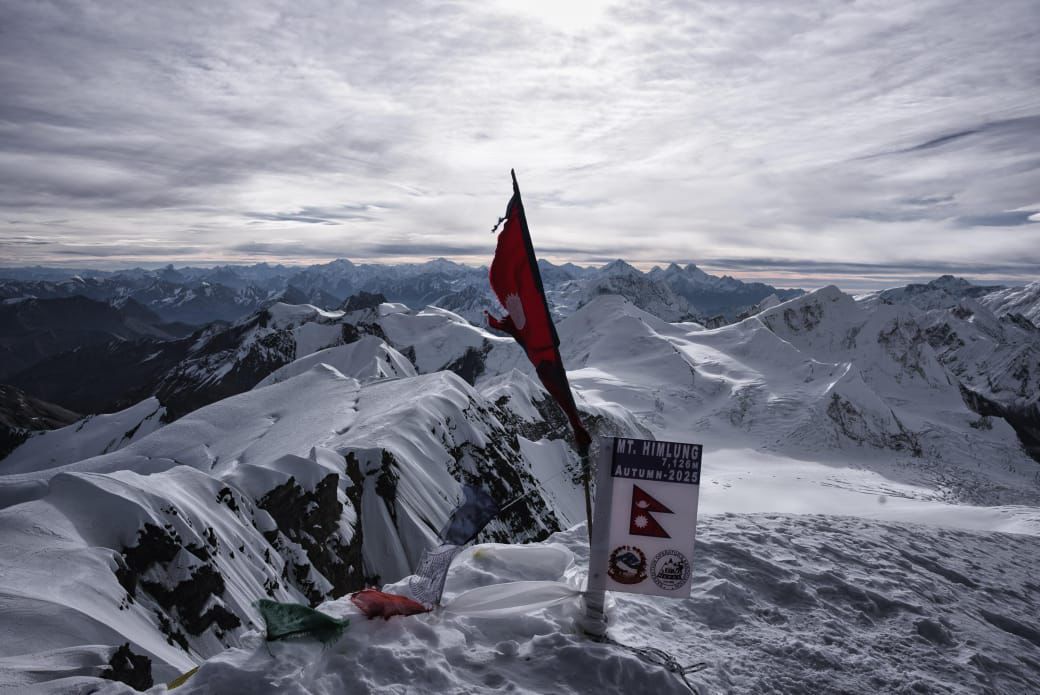
Mount Himlung (7,126 m), often called Himlung Himal, rises on the Tibetan border north of the Annapurna massif, at the head of the remote Nar-Phu valley in Manang. It has become one of Nepal’s most popular first 7,000-metre peaks for good reason: the route combines glacier travel, a rocky gully and long snow slopes with some technical sections, at an altitude that is serious but manageable. That balance makes it an excellent training climb for anyone thinking about an 8,000-metre summit, and a deeply rewarding expedition in its own right.
The approach is part of the appeal. From Koto on the Annapurna Circuit, we enter the restricted Nar-Phu valley through a narrow forested gorge, passing the high settlements of Meta and Kyang to reach Phu, a striking village of stone houses, chortens and prayer flags close to the Tibetan plateau. After an acclimatisation day at Phu, we climb to base camp at around 4,900 m on a grassy shelf above the valley. Our 32-day programme then allows 16 days for the climbing period, with Camp 1 at around 5,450 m, Camp 2 at around 6,100 m and Camp 3 at around 6,300 m below the final snow slopes to the summit.
We designed this expedition around safety and comfort. Every climber is supported by two experienced, government-licensed Sherpa climbing guides, and each member receives three 4-litre bottles of oxygen, one of them an emergency reserve, with a modern mask and regulator. In Kathmandu you stay four nights in a five-star hotel. At base camp you have your own spacious box tent with a double foam mattress and pillow, a heated dining tent, high-standard meals, generator back-up power and daily weather reports. The climbing permit, the Nar-Phu restricted area permit and the Annapurna Conservation Area Permit are all arranged by our team.
Who is this trip for?
Himlung suits climbers who have summited a 6,000 m trekking peak, such as Island Peak, Mera Peak or one of the Chulus, and who are comfortable with crampons, an ice axe and fixed ropes. Good aerobic fitness and the patience to wait for the right weather are more important than speed. We run Himlung mainly in autumn, when settled post-monsoon weather brings clear skies, with spring departures also possible. Nima Adventure is led by Managing Director Kanchha Sherpa, a career Himalayan guide whose team has guided Malaysian climbers on Everest, K2 and Manaslu.
Trip highlights
- An ideal first 7,000-metre peak with manageable technical sections
- Trek through the restricted Nar-Phu valley to the ancient village of Phu
- Two government-licensed Sherpa climbing guides for every climber
- Three bottles of oxygen per member with a modern mask and regulator
- Four nights in a five-star hotel in Kathmandu
- Individual box tent at base camp with double foam mattress and pillow
- Summit views across the Annapurna range and the Tibetan plateau
Itinerary
Our team meets you at Tribhuvan International Airport and transfers you to your five-star hotel. After you have settled in, we hold a short welcome meeting to introduce your climbing team, check passports and insurance and outline the programme. The rest of the day is free to recover from your journey. Boudhanath Stupa, near our office in Boudha, is a calm place for an evening walk among pilgrims and butter lamps.
We complete the Himlung climbing permit and the Nar-Phu restricted area permit, and attend the expedition briefing. Your climbing leader checks every item of personal equipment so that anything missing can be bought or hired in Thamel. Oxygen bottles, masks and regulators are tested and packed with the expedition food and group gear. In the evening we discuss the acclimatisation plan, communication and safety procedures over dinner.
After breakfast we drive west along the Trishuli river on the Prithvi Highway, then turn north at Dumre into the Marsyangdi valley to Besisahar, the gateway to the Manang district. The drive takes around 5-6 hours depending on traffic, with tea and lunch stops along the way. Besisahar is a busy market town surrounded by rice terraces, and we spend the night in a local hotel.
A 4WD jeep takes us up the Marsyangdi valley on the rough road of the Annapurna Circuit, past waterfalls and terraced villages, through Dharapani, where the valley turns west towards Manang. The road climbs into pine forest and reaches Koto, close to Chame, after around 6-7 hours. Koto is the entry point to the restricted Nar-Phu valley, and permits are checked here. Overnight in a lodge.
We cross the Marsyangdi and enter the Nar-Phu valley, following the Phu Khola through a dramatic gorge and dense forest of pine and fir. The trail passes waterfalls, crosses several bridges and climbs steadily past the small settlement of Dharamshala before emerging onto the open plateau at Meta, with views back to Annapurna II and Lamjung Himal. It is a long day of 7-8 hours, so we start early.
The trail continues north past chortens and the small settlement of Chyako, with the Phu Khola far below and glaciated peaks closing in on either side. Kyang is a winter settlement used by the people of Phu, set on a high plateau with wide views back towards the Annapurna range. A shorter day of about 4-5 hours helps acclimatisation. Overnight in a simple lodge or our tented camp.
Following the river along a narrow trail cut into the cliffs, we pass through the old entrance gate to Phu, guarded by chortens. The village itself is a remarkable cluster of stone houses stacked on the hillside, with prayer flags fluttering and yaks grazing all around. Walking time is about 4 hours. Phu feels remote and deeply traditional, with a culture closer to Tibet than to the lower valleys.
A rest day to adapt to the altitude before base camp. In the morning we visit Tashi Lhakhang Monastery, the village gompa, and take a hike above Phu to around 4,200 m, returning to the village to sleep. In the afternoon your climbing guides check equipment and run a refresher on fixed-rope techniques, jumar use and abseiling. Overnight in a lodge.
A steady climb leads out of the village along a narrow and in places unstable trail above the river, then onto the grassy pastures where base camp is pitched at around 4,900 m. The walk takes 5-6 hours. Our kitchen and Sherpa team will have set up the dining tent, kitchen and your individual box tent with mattress and pillow. Rest, eat well and drink plenty of fluids.
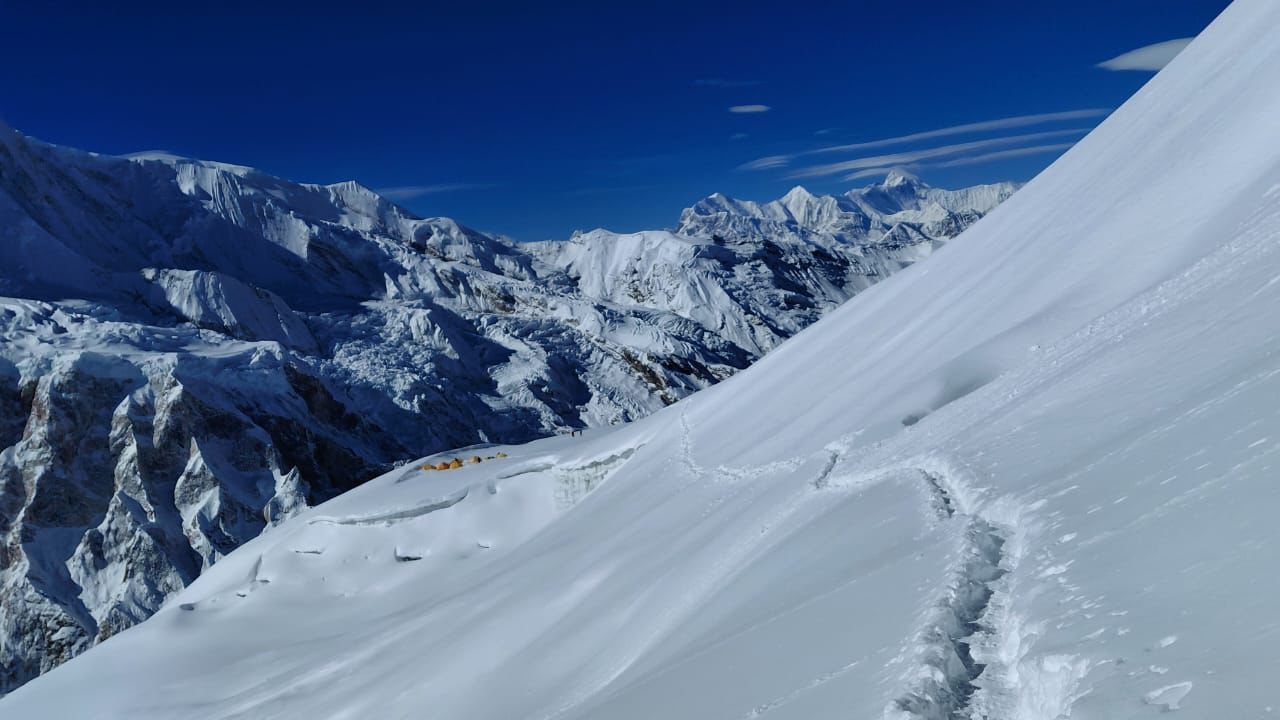
After a puja ceremony, the Sherpa team fixes ropes and establishes Camp 1 at around 5,450 m, Camp 2 at around 6,100 m and Camp 3 at around 6,300 m, crossing glacier, a rocky gully and broad snow slopes. Members complete acclimatisation rotations with their two Sherpa guides, returning to base camp to recover. With daily weather reports and satellite phone contact, we choose a window for the summit push, then descend safely to base camp.
We dismantle base camp, pack out all rubbish and descend to Phu. Losing around 800 m of height brings better sleep and a returning appetite, and the village lodges feel very comfortable after weeks under canvas. Walking time is around 4-5 hours. In the evening the whole team celebrates together, and there is time to visit the monastery again if you wish.
We retrace the trail through the Phu gate and down past Kyang and Chyako to Meta. The route is now familiar, and with more oxygen in the air the walking feels much easier, though it is still a full day of around 6-7 hours. Look back for final views of the peaks around Himlung and the long, bare ridges of the upper Nar-Phu valley.
A long descent of 6-7 hours brings us back past Dharamshala, through the forested gorge of the Phu Khola and out of the restricted area to Koto on the Annapurna Circuit. The warmer air, tall trees and birdsong are a pleasant change after the high country. In the evening we share a celebration meal with our porters and camp staff. Overnight in a lodge.
A 4WD jeep carries us back down the Marsyangdi valley on the rough road through Dharapani, Tal and Jagat, with the river crashing below and waterfalls tumbling from the cliffs. The drive takes 6-7 hours depending on road conditions. The warmth and green rice terraces of Besisahar make a striking contrast with Phu. Overnight in a local hotel.
We drive back along the Marsyangdi and Trishuli rivers to Kathmandu, a journey of about 6 hours depending on traffic, with stops for tea and lunch. On arrival, we transfer you to your five-star hotel for a long shower and a well-earned rest. The evening is free to enjoy Kathmandu's restaurants and reflect on the climb with your teammates.
A free day to explore the Kathmandu Valley at your own pace. You might visit Boudhanath Stupa, Swayambhunath, Pashupatinath or the old royal squares of Patan and Bhaktapur, or simply relax at the hotel. Our office in Boudha is happy to help with any arrangements. In the evening we host a farewell dinner to celebrate your Himlung expedition with the team.
Our team transfers you to Tribhuvan International Airport around three hours before your flight home. If your flight leaves later in the day, there is time for a final stroll around Boudha or some last souvenir shopping in Thamel. Thank you for climbing with Nima Adventure; we hope Himlung is the first of many Himalayan summits with us.
What’s included
Cost Includes
6 itemsComprehensive Expedition Support
The fee covers all necessary permits, premium guiding, and logistics.
- Guiding & Safety: Two experienced, licensed Sherpa guides (at least 04 times Himlung summiteer) per client. All wages, insurance, and equipment for Sherpa staff are covered. First Aid medical kits for the group and the staffs.
- Oxygen: 3 bottles of oxygen (4L each, including 1 emergency bottle) provided to each member. Latest model of Summit or Top out system mask and regulator.
- Permits & Fees: Peak royalty fee and climbing permit fee for Mt. Himlung. Nar Phu and Annapurna Conservation Area entry fee. Nar Phu Restricted Area permit fee. Trekking Permit (TIMS) and garbage deposit fees.
- Accommodation & Comfort: 4 nights hotel accommodation in 5-star hotel in Kathmandu on B/B basis. Individual box tent at Base Camp with double foam mattress and pillow. Heater provided at Base Camp for the dining room.
- Logistics: Land transportation from Kathmandu - Koto - Kathmandu. Arrival and departure transfer services to and from TIA. Per person 60kg baggage allowance carried by porter or mules.
- Food & Services: 3 meals a day during the trekking period. High standard food provided at Base Camp. Daily weather report services. Generator for back-up power.
Cost Excludes
5 itemsMember's Mandatory Responsibility
All clients must arrange the following items, with mandatory insurance being the most critical exclusion:
- Mandatory Insurance: Insurance covering both medical and high altitude evacuation costs (including high-altitude rescue and air evacuation) is mandatory.
- Travel Fees: Member’s international flight tickets. Nepal entry visa fee.
- Tips & Bonus: Summit bonus of minimum US$ 800 per climbing sherpa/guide. Tips for base camp staff (minimum US$ 200 per person).
- Personal Gear & Expenses: Personal climbing gears, clothing, and personal medical kit. Lunch and Dinner during your stay in Kathmandu. Items of personal nature, laundry expenses, tips, wifi/internet, etc..
- Contingency Costs: Any extra expenses arising out of unforeseen situations like natural calamities, political disturbances, or strikes. Extra transportation than displayed in the itinerary program.
Equipment list
Foot Wear
3- Normal Socks 3-4Pairs
- Trekking Shoes 1 Pair
- Slippers
Hands
2- Thin Fleece Gloves 1 Pair
- Wind Stopper Fleece Gloves
Upper Body
6- Light Weight Top / Thermo Coat
- Buff
- Fleece Jacket 1
- Gore Tex Jacket 1
- Down Jacket 1
- Cotton T-Shirt 2-3
Lower Body
4- Mid Weight Long Under Pants
- Under Wear 4-5 Pairs
- Gore Tex Pant. 1
- Water Proof Pant1
Head
4- Sun Cap
- Balaclava
- Fleece Hat
- Neck Gaiter 2-3
Sleeping Bags
1- Sleeping Bag rated to -20°C For base camp
Bag Packs
2- Rucksacks 45-55L
- Duffle Bag 90 L 1 Piece
Sun stuffs
4- Sunscreen Minimum SPF 50
- Lip balm with SPF 30
- Sunglasses UV protection
- Toiletries.
Medicines
7- Brufen / Ibuprofens
- Antibiotic
- Diamox
- Paracetamol
- Handy Plaster
- Crack Bandage
- Tincture Iodine
Miscellaneous
2- Walking Stick
- Umbrella / Rain Coat
Frequently asked questions
Himlung offers genuine high-altitude mountaineering, with glacier travel, a rocky gully and long snow slopes, but without the sustained technical climbing of peaks such as Ama Dablam or Pumori. Base camp is reached on foot through beautiful country, which helps natural acclimatisation. It is an excellent place to learn how your body responds above 7,000 m before an 8,000-metre expedition.
You need the Himlung climbing permit from the Department of Tourism, the Nar-Phu restricted area permit and the Annapurna Conservation Area Permit (ACAP). Restricted area permits are issued only through registered agencies, so our Kathmandu office applies for everything on your behalf. Please send a clear passport copy and photographs before arrival so that we can prepare the paperwork early.
Each member receives three 4-litre bottles of oxygen, one of which is kept as an emergency reserve, together with a modern mask and regulator system. Most climbers use oxygen on the summit push from the highest camp. Your Sherpa guides manage the bottles and flow rate with you, and oxygen is also available for any medical emergency on the mountain.
You should have climbed at least one 6,000 m peak and be confident using crampons, an ice axe and a jumar on fixed ropes, as well as abseiling. Experience of camping in cold conditions is useful. Good aerobic fitness matters most, because you will be moving for many hours at altitude. If you are unsure, tell us about your climbing history and we will advise honestly.
Autumn, from September to October, is the main season and the one we usually run, with stable weather after the monsoon and clear views. Spring, from April to May, is also possible and brings slightly warmer temperatures. Because Himlung lies north of the main Annapurna range, the Nar-Phu valley is drier than many other regions of Nepal.
The 16-day climbing period includes spare days so that we can wait out storms and strong winds at base camp. We receive daily weather reports, and your guides decide on timing with you based on snow conditions, avalanche risk and the health of the team. If a safe window does not come, we will not force a summit attempt; your safe return always comes first.
Yes. You must have insurance covering medical costs and high-altitude rescue, including helicopter evacuation, up to at least 7,200 m. Trip cancellation cover is also strongly recommended. Read the policy wording carefully, as many standard policies exclude mountaineering. We ask for a copy before departure so that our team can coordinate quickly with your insurer if needed.
Trip Reviews
Submit your review | |
Plan Mount Himlung Expedition (7,126 m) with our team
Tell us your dates and group size and we will reply within 24 hours with availability, a tailored itinerary and a group price.
- Reply within 24 hours
- No booking fees
- Free itinerary tailoring
You may also like

K2 Expedition: Conquering the Savage Mountain (8,611 m)
- 59 Days
- Challenging
- Nepal Expedition
