Chulu East Peak Climbing (6,584 m)

Trip Overview
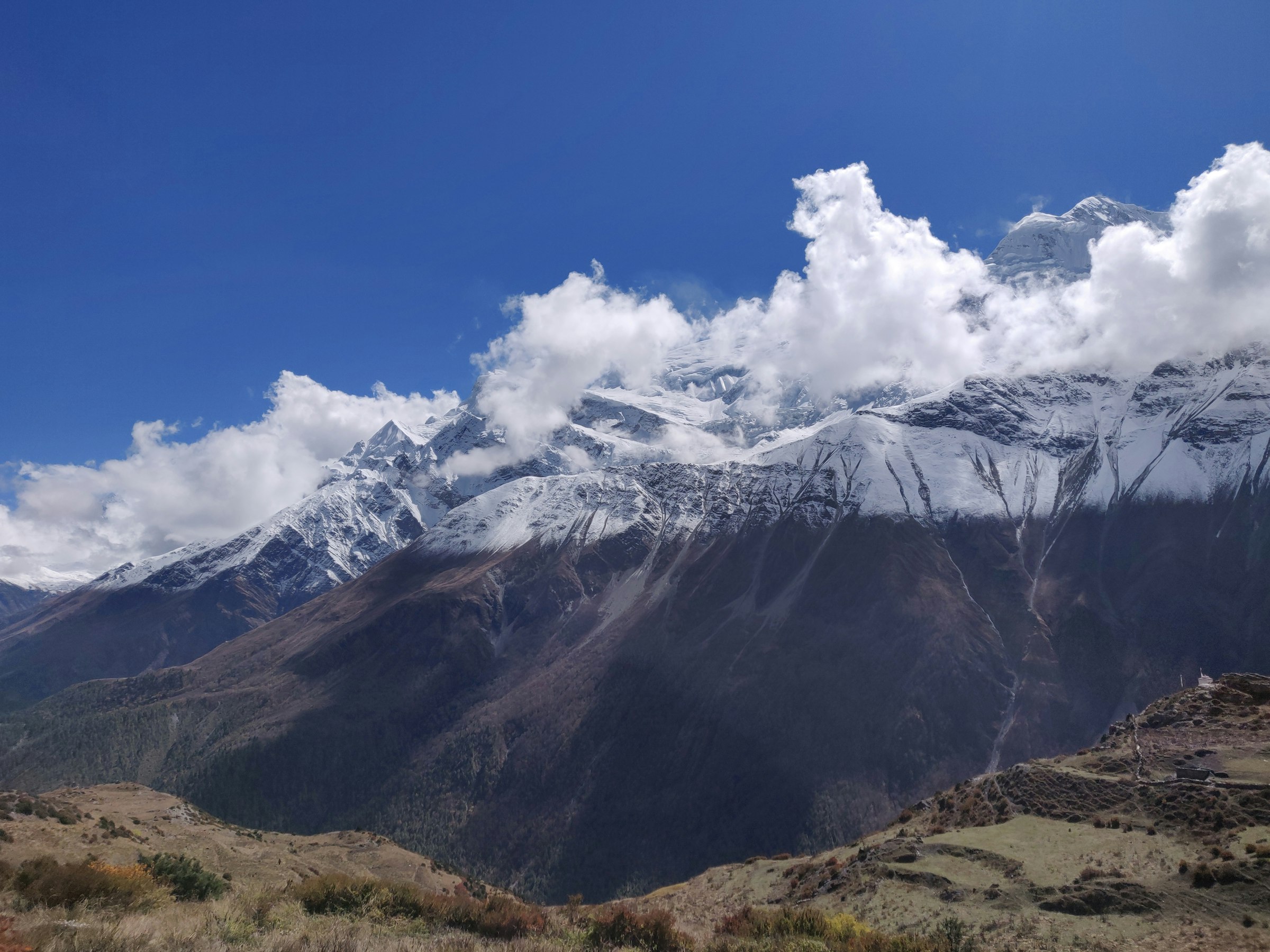
Chulu East (6,584 m) is one of the main summits of the Chulu group, the chain of glaciated peaks that rises above the villages of Ngawal and Manang on the north side of the Marsyangdi valley. Its broad glaciers and long snow slopes make it a classic trekking peak for climbers ready to go beyond 6,000 m, and the summit panorama is one of the finest in the Annapurna region: Annapurna II, III and IV, Gangapurna, Tilicho Peak and, far to the east, Manaslu. It combines real mountaineering with the culture and comfort of one of the world’s great treks.
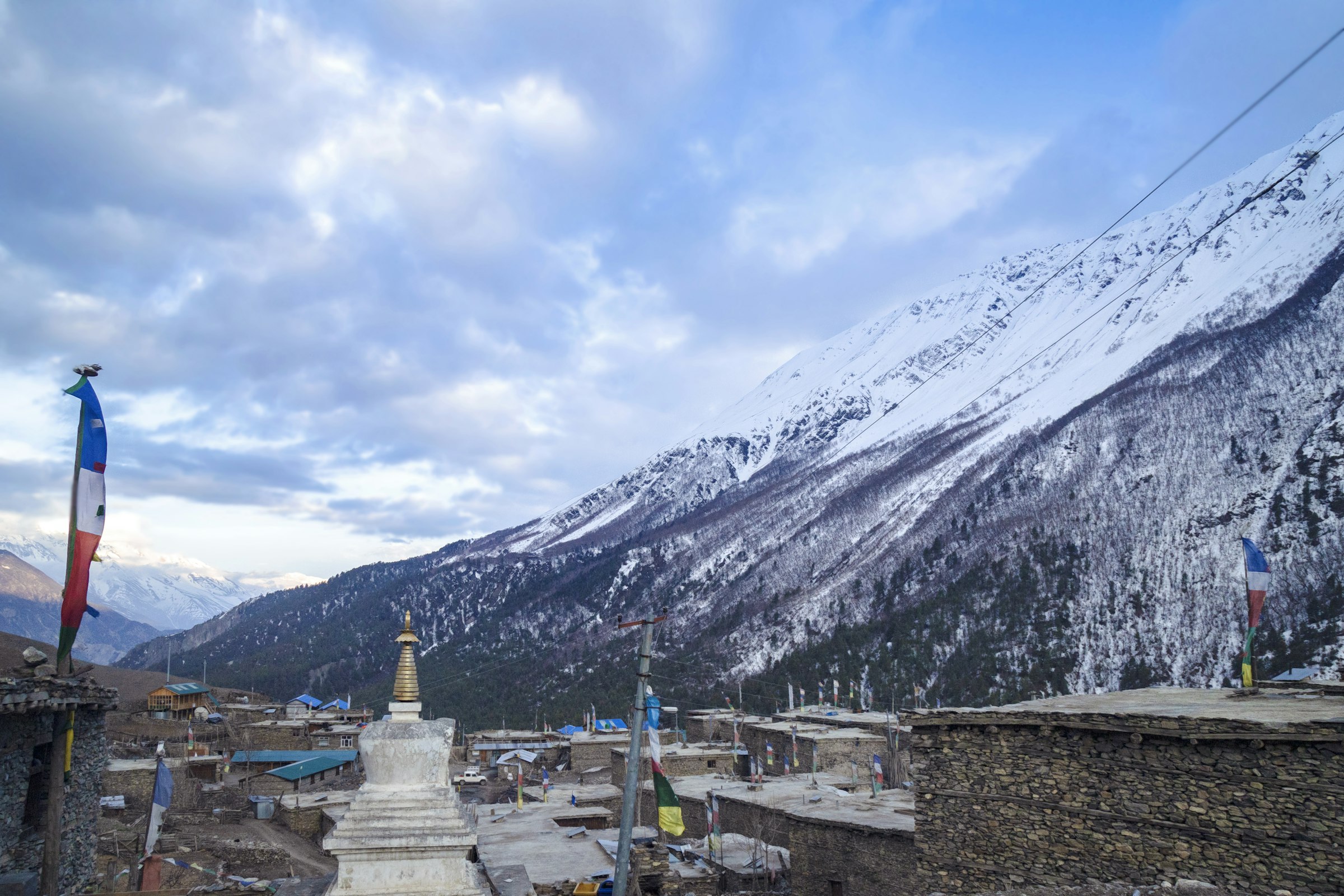
Our 20-day route follows the Annapurna Circuit from Chame to Upper Pisang, then takes the high trail through Ghyaru to Ngawal, a traditional village of flat-roofed houses and prayer flags. We spend an extra day at Ngawal to acclimatise, with a hike high above the village, before climbing north to base camp at around 4,700 m beneath the Chulu peaks. A rest and training day at base camp gives your climbing guide time to practise crampon, ice-axe and rope techniques with everyone in the team.
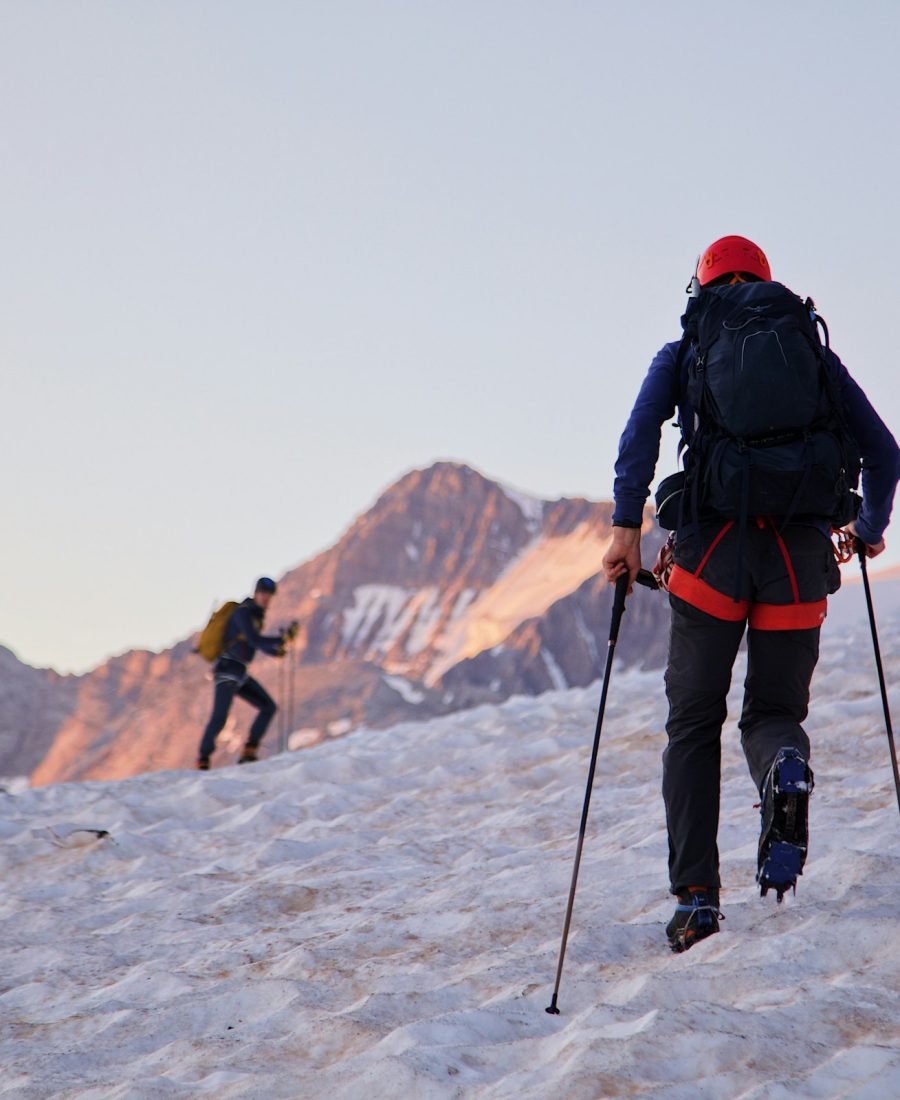
From base camp we move up to a high camp at around 5,400 m on rock and snow. Summit day begins in the dark, roped together across the glacier and up steadily steepening snow slopes to the summit ridge, with fixed ropes placed where needed. It is a long day of 9-12 hours from high camp to the top and back down to base camp. A reserve day allows for poor weather. Afterwards we descend to Manang and continue over the Thorong La (5,416 m) to Muktinath, then fly from Jomsom to Pokhara through the great gorge of the Kali Gandaki.
Who is this trip for?
Chulu East suits fit trekkers with some basic mountaineering skills who want a high, glaciated summit without highly technical climbing. Previous experience with crampons and an ice axe, or a peak such as Pisang or Island Peak, is a real advantage, and good stamina for long days at altitude is essential. Nima Adventure runs the trip from our office in Boudha, Kathmandu, under Managing Director Kanchha Sherpa, a career Himalayan guide, with experienced, government-licensed climbing guides and a fully equipped camp for the climb.
Trip highlights
- Summit Chulu East (6,584 m), a classic glaciated trekking peak
- Approach via the high villages of Ghyaru and Ngawal
- Acclimatisation day at Ngawal and a training day at base camp
- Summit views of the Annapurna range, Gangapurna, Tilicho Peak and Manaslu
- Cross the Thorong La (5,416 m) and visit the temples of Muktinath
- Fly through the Kali Gandaki gorge from Jomsom to Pokhara
Itinerary
Welcome to Nepal. Our team meets you outside the arrivals hall at Tribhuvan International Airport and drives you to your hotel. Later in the day your guide joins you for a short meeting to go through the itinerary, check your passport and insurance details and answer any questions. The rest of the day is free; the lanes of Thamel and the great stupa at Boudha are both close by.
While our office finalises your Chulu East climbing permit, ACAP and TIMS card, your climbing guide goes through your equipment piece by piece. Anything missing, from mountaineering boots to a warm down jacket, can be bought or hired in Thamel. In the evening we hold a full briefing covering the route, acclimatisation, summit day and what to expect at each stage of the trip.
An early start takes us out of the valley along the Prithvi Highway beside the Trishuli river. At Dumre we turn north into the Marsyangdi valley and continue to Besisahar, gateway to the Annapurna Circuit. Allow 5-6 hours for the drive, depending on traffic and road works. We spend the night in a local hotel, with time for a short walk around the busy bazaar.
We switch to a 4WD jeep for the rough road up the Marsyangdi gorge. The route climbs past terraced fields and roaring waterfalls, through the villages of Jagat, Tal and Dharapani, before turning west into forests of pine and fir. After 6-7 hours we reach Chame, the district headquarters of Manang, where snow peaks start to appear above the rooftops. Overnight in a teahouse.
Our first full trekking day follows the river through forest, passing apple orchards at Bhratang and the great sweeping rock slab of Paungda Danda. The valley then opens out and the landscape becomes drier and more Tibetan in feel. We cross to the north bank and climb to Upper Pisang, where the monastery looks straight across to Annapurna II. Walking time is 5-6 hours.
A steep zigzag climb leads to Ghyaru, perched high on the hillside with one of the best views on the whole circuit: Annapurna II, III and IV and Gangapurna in a single sweep. From here the trail contours gently past chortens, mani walls and fields to Ngawal, a peaceful village of flat-roofed stone houses. Walking time is 5-6 hours. Overnight in a teahouse.
An important day for acclimatisation before we head up to base camp. We hike above the village towards the Chulu slopes, gaining several hundred metres to around 4,200 m for close views of the Annapurna range, then return to sleep in Ngawal. The 3-4 hour walk follows the climb high, sleep low principle. In the afternoon your guide checks your climbing gear and answers questions about the climb.
We leave the villages behind and climb north on rough paths through juniper and alpine grassland, then over moraine to base camp at around 4,700 m beneath the Chulu peaks. The walk takes 4-5 hours, with the Annapurna range spread out across the valley behind us. Our crew has the dining and sleeping tents ready, and the afternoon is for resting and drinking plenty of fluids.
A day to adjust to the altitude and prepare for the climb. On the slopes near camp, your guide runs a practical session on fitting and walking in crampons, using the ice axe, travelling roped together on a glacier, ascending fixed ropes with a jumar and abseiling. We also check every piece of equipment and agree the plan and turnaround time for summit day.
The route to high camp climbs rocky ground and snow slopes to a camp at around 5,400 m, with superb views over the Manang valley. Allow 4-5 hours with a loaded pack, moving slowly and steadily. On arrival we melt snow for drinks, eat an early dinner and prepare clothing, harness and crampons for a pre-dawn start the next morning.
We set off in the early hours by headtorch, roped together across the glacier and up steadily steepening snow slopes to the summit ridge, with fixed ropes placed on the steeper sections. The summit view takes in Annapurna II, III and IV, Gangapurna, Tilicho Peak and Manaslu. After photos, we descend carefully to high camp and continue to base camp. Expect 9-12 hours in total.
This day is kept in hand in case wind, fresh snow or poor visibility delay the summit attempt. Having a spare day means we never need to climb in unsafe conditions just to keep to the schedule. If everything goes to plan on summit day, we use the day to rest at base camp or start the walk down to Manang at a more relaxed pace.
We break camp and descend to Ngawal, then follow the trail down past Braga, with its old cliffside monastery, to Manang, the largest village in the upper valley. Walking time is 5-6 hours. After nights in camp, the lodges, bakeries and hot showers of Manang feel like luxury, and the thicker air brings a welcome boost of energy for the trek ahead.
Leaving Manang, the trail climbs gently to the village of Gunsang and on across high pastures where yaks graze among juniper bushes, with Gangapurna and the Annapurnas behind. Yak Kharka is a small cluster of lodges on the route to the Thorong La. It is a short day of 3-4 hours, keeping a gentle pace and leaving the afternoon free to rest.
We continue up the valley past Ledar, cross the river on a wooden bridge and traverse a narrow trail above the gorge, passing a landslide-prone section quickly and in single file. Thorong Phedi sits at the foot of the pass, a busy stopping point for trekkers preparing for the crossing. Walking time is 3-4 hours, with an early night ahead of tomorrow's big day.
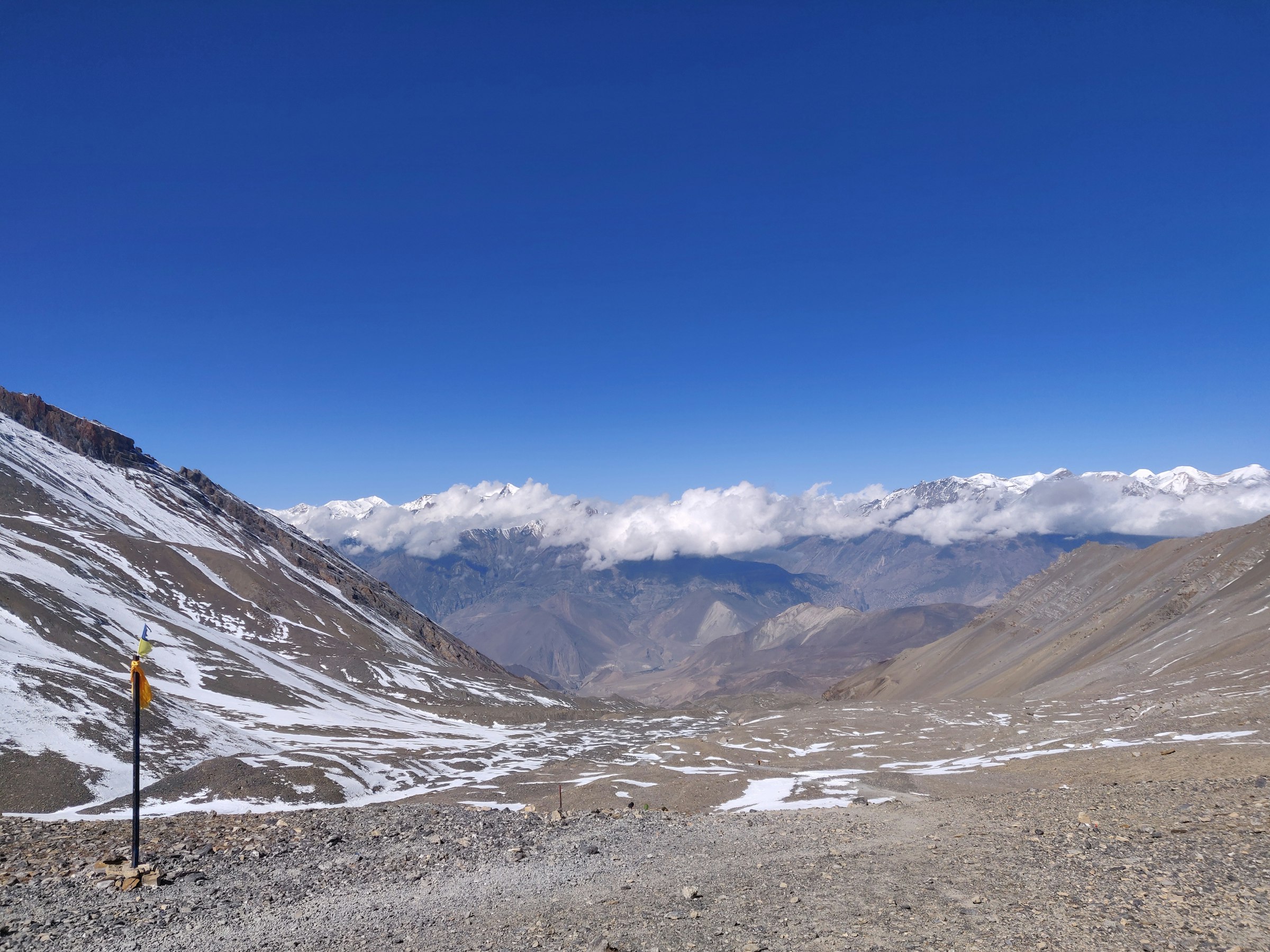
We start before first light, climbing steeply to Thorong High Camp and then along a long series of rises to the Thorong La, decorated with prayer flags and a large chorten. The view from the pass sweeps across the Annapurnas and the barren hills of Mustang. A long, knee-testing descent leads to Muktinath, a sacred pilgrimage site. Walking time is 8-9 hours.
After an early visit to the temple complex at Muktinath, holy to both Hindus and Buddhists, we drive by jeep down into the Kali Gandaki valley through Jharkot and Kagbeni, gateway to Upper Mustang. The drive takes about 1-2 hours. In Jomsom the afternoon is free; many travellers enjoy the short trip to Marpha, a neat village of whitewashed houses and apple orchards.
A short morning flight weaves down the Kali Gandaki between Dhaulagiri and Annapurna I, landing in Pokhara around 20-25 minutes later. If high winds or cloud cancel the flight, we drive to Pokhara by road instead. The afternoon is free to relax at Lakeside, paddle a boat on Phewa Lake or simply enjoy a coffee with the mountains reflected in the water.
A tourist bus carries us back to Kathmandu along the Prithvi Highway, a scenic journey of 6-7 hours through river valleys and hill villages, with stops for meals. If you would rather fly, a short flight from Pokhara can be arranged. After checking in to your hotel, join us in the evening for a farewell dinner to celebrate your summit.
Your trip ends today. Our team transfers you to Tribhuvan International Airport around three hours before your flight home. If you have a few spare hours beforehand, Boudhanath Stupa and Thamel are good places for last souvenirs. Thank you for climbing with Nima Adventure; we hope to welcome you back to the Himalaya soon.
What’s included
Cost Includes
15 items- Airport arrival and departure transfers in Kathmandu by private vehicle
- Three nights in a Kathmandu hotel on a bed and breakfast basis, plus a farewell dinner
- One night in a hotel in Besisahar and one night in Pokhara with breakfast
- Private vehicle from Kathmandu to Besisahar and 4WD jeep from Besisahar to Chame
- Jeep from Muktinath to Jomsom, flight from Jomsom to Pokhara and tourist bus from Pokhara to Kathmandu
- Chulu East climbing permit
- Annapurna Conservation Area Permit (ACAP) and TIMS card
- Experienced, government-licensed climbing guide for the whole trip
- Porters to carry trekking and climbing baggage
- Teahouse accommodation and all meals during the trek
- Tented camp at base camp and high camp, with cook, kitchen staff, dining and toilet tents and all meals
- Fixed ropes, snow bars, ice screws and other group climbing equipment
- Wages, equipment, food, and medical and accident insurance for all Nepali staff
- Comprehensive first-aid kit and a pulse oximeter for daily health checks
- Government taxes and our service charges
Cost Excludes
10 items- International flights to and from Kathmandu
- Nepal entry visa fee (visas are available on arrival at Kathmandu airport)
- Travel insurance covering peak climbing, medical treatment and helicopter evacuation (mandatory)
- Personal climbing equipment and clothing (most items can be hired in Kathmandu)
- Lunch and dinner in Kathmandu and Pokhara, except the farewell dinner
- Extra nights and meals due to early return, flight delays or route changes
- Summit bonus and tips for guides, porters and staff
- Personal expenses such as drinks, snacks, laundry, Wi-Fi, battery charging and hot showers
- Rescue and evacuation costs
- Any service not listed as included
Equipment list
Foot Wear
3- Normal Socks 3-4Pairs
- Trekking Shoes 1 Pair
- Slippers
Hands
2- Thin Fleece Gloves 1 Pair
- Wind Stopper Fleece Gloves
Upper Body
6- Light Weight Top / Thermo Coat
- Buff
- Fleece Jacket 1
- Gore Tex Jacket 1
- Down Jacket 1
- Cotton T-Shirt 2-3
Lower Body
4- Mid Weight Long Under Pants
- Under Wear 4-5 Pairs
- Gore Tex Pant. 1
- Water Proof Pant1
Head
4- Sun Cap
- Balaclava
- Fleece Hat
- Neck Gaiter 2-3
Sleeping Bags
1- Sleeping Bag rated to -20°C For base camp
Bag Packs
2- Rucksacks 45-55L
- Duffle Bag 90 L 1 Piece
Sun stuffs
4- Sunscreen Minimum SPF 50
- Lip balm with SPF 30
- Sunglasses UV protection
- Toiletries.
Medicines
7- Brufen / Ibuprofens
- Antibiotic
- Diamox
- Paracetamol
- Handy Plaster
- Crack Bandage
- Tincture Iodine
Miscellaneous
2- Walking Stick
- Umbrella / Rain Coat
Frequently asked questions
Chulu East is not technically difficult, but it is high and summit day is long, so it suits fit trekkers who already have some experience with crampons and an ice axe. Complete beginners can manage with the training day at base camp, provided they have excellent fitness and have trekked at altitude before. If you are unsure, Pisang Peak is a gentler alternative in the same valley.
We leave high camp in the early hours and climb roped together across the glacier, watching for crevasses, then up snow slopes that steepen towards the summit ridge. Fixed ropes are placed where needed. Most climbers take 5-7 hours to reach the top, then descend to high camp and on to base camp, making a total day of 9-12 hours.
You need a climbing permit for Chulu East, the Annapurna Conservation Area Permit (ACAP) and a TIMS card. All are included in the trip and arranged by our Kathmandu office before departure. Please send a passport copy and two photographs in advance. Your guide carries the documents and deals with the checkpoints along the Annapurna Circuit.
You need mountaineering boots compatible with crampons, crampons, a harness, an ice axe, a helmet, a jumar and abseil device, warm down clothing and a sleeping bag rated to around minus 20 degrees Celsius. Most technical items can be hired in Kathmandu. Group equipment such as fixed ropes, snow bars and tents is provided by us.
The best seasons are spring, from April to May, and autumn, from late September to November. Autumn brings the clearest views and settled weather after the monsoon, while spring is a little warmer and the lower forests are in bloom. Winter conditions on the Thorong La are harsh, and the monsoon brings cloud and rain to the lower valley.
Safety comes first. If a climber feels unwell or is moving too slowly to summit safely, an assistant or the guide will accompany them back to base camp while the others continue where it is safe to do so. Serious altitude sickness means immediate descent, and helicopter evacuation is arranged through your insurer if needed.
Trip Reviews
Submit your review | |
Plan Chulu East Peak Climbing (6,584 m) with our team
Tell us your dates and group size and we will reply within 24 hours with availability, a tailored itinerary and a group price.
- Reply within 24 hours
- No booking fees
- Free itinerary tailoring
You may also like

Everest Base Camp Trek with Lobuche Peak (6,119 m)
- 17 Days
- Challenging
- Nepal Peak Climbing
Everest Base Camp Trek with Island Peak (6,189 m)
- 18 Days
- Challenging
- Nepal Peak Climbing