
Gasherbrum II Expedition (8,035 m)

Trip Overview
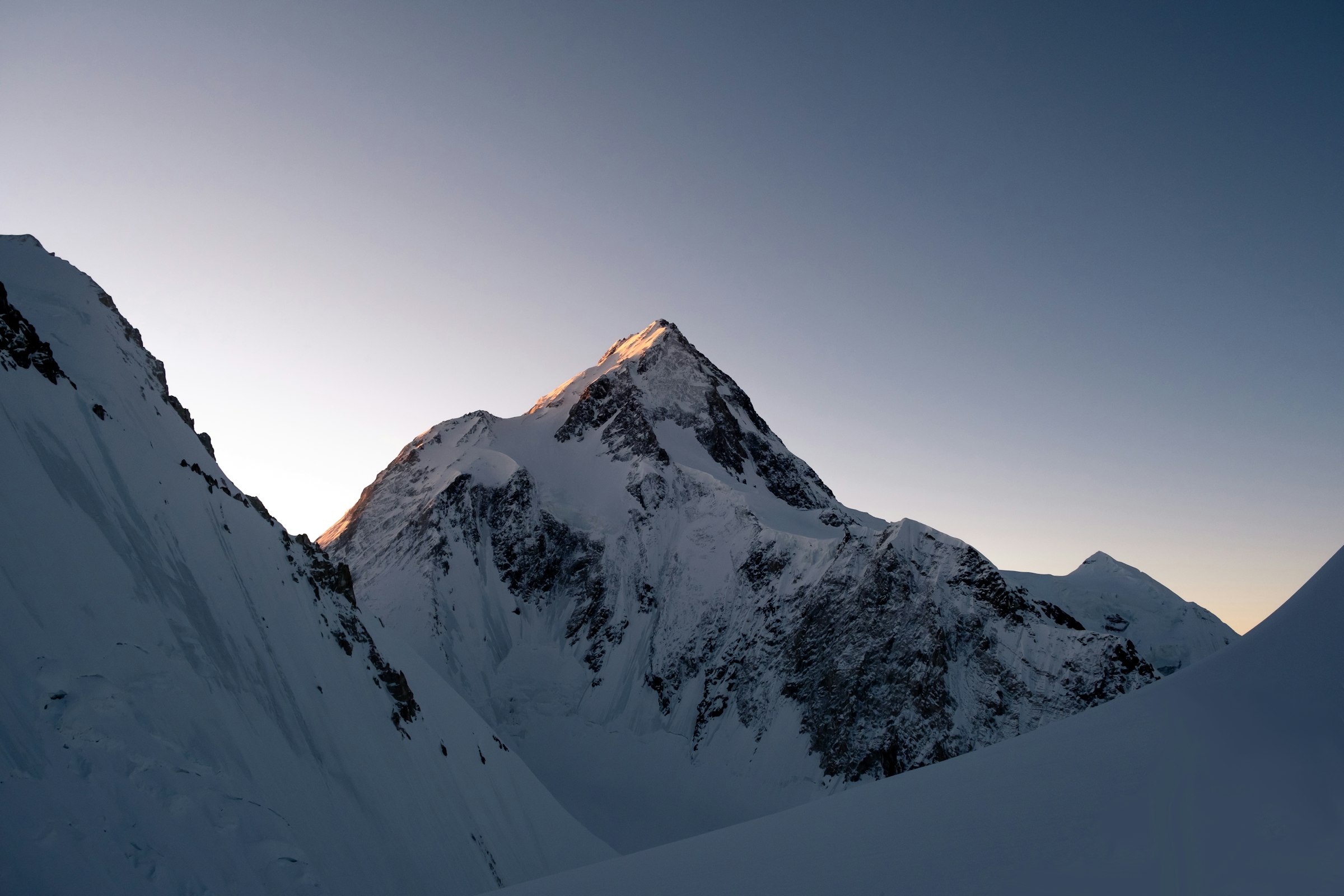
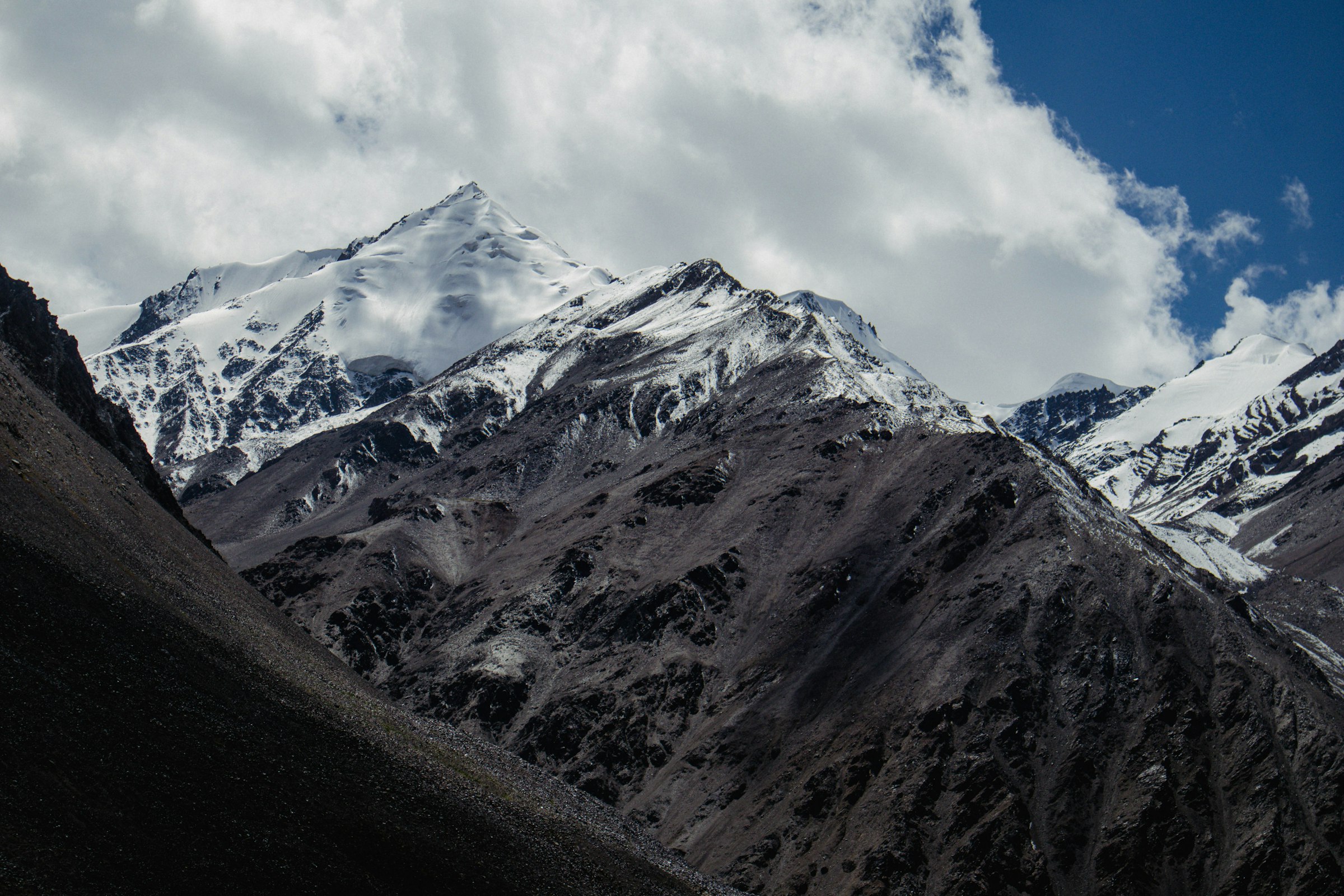
Gasherbrum II (8,035 m) is the thirteenth-highest mountain in the world and is widely regarded as one of the most accessible of the Karakoram 8,000-metre peaks. It stands at the head of the Baltoro Glacier in Pakistan, close to its higher neighbour Gasherbrum I, and was first climbed in 1956 by an Austrian expedition via the south-west ridge, which is still the standard route. Accessible is relative, however: this is a big, cold mountain with an icefall, avalanche-prone slopes and a long summit day.
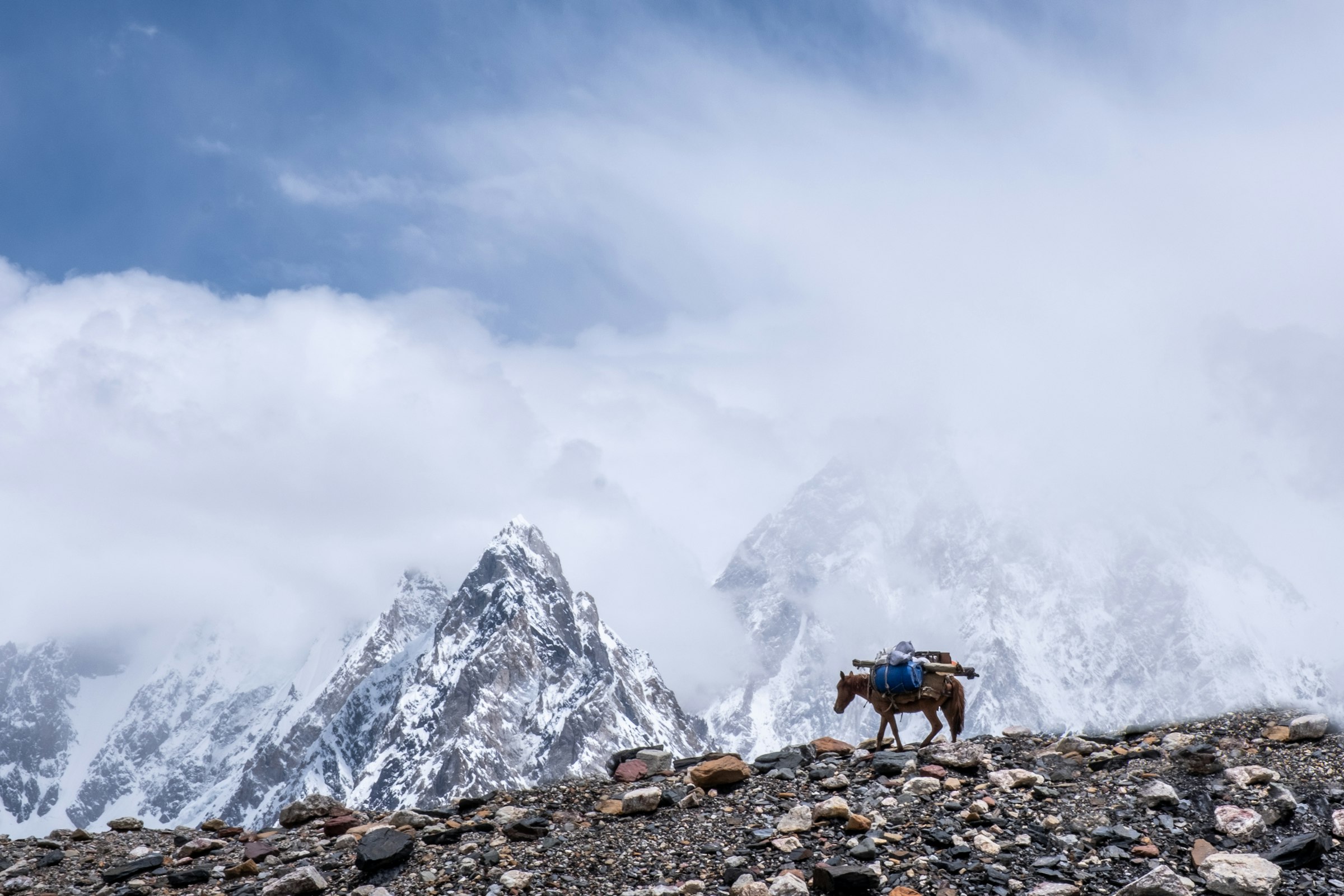
The expedition begins in Islamabad with formalities and a flight to Skardu, followed by a jeep ride to Askoli and the classic week-long trek up the Baltoro past the Trango Towers and Masherbrum to Concordia. We then turn east to Gasherbrum Base Camp at about 5,000 m. On the mountain, the route passes through the South Gasherbrum Glacier icefall to Camp 1 in the high basin, climbs the aptly named Banana Ridge to Camp 2 and continues up the south-west ridge and face to Camp 3, before a final push across the upper slopes and summit pyramid to the top.
Nima Adventure runs the climb with our own Nepali Sherpa team and an experienced Pakistani partner who handles the ground logistics. We take care of the expedition permit and the documents you need for your online Pakistan visa, the government liaison officer who normally accompanies Baltoro expeditions, Central Karakoram National Park formalities and porters. Base Camp is comfortable, with individual tents, a dining tent and a cook team serving fresh, varied meals, plus solar power and a satellite phone.
Who is this expedition for?
Gasherbrum II is a sound choice for a first Karakoram 8,000 m peak, or even a first 8,000 m peak for climbers with strong experience between 6,000 m and 7,000 m. You should be confident using fixed ropes, crampons and an ice axe, able to carry a moderate pack on consecutive long days and comfortable living in tents for several weeks. Your Sherpa guide will refresh rope skills at Base Camp before the first rotation.
The expedition is planned under the direction of Managing Director Kanchha Sherpa, a career Himalayan guide, with a generous climbing period and spare summit days so that the weather, not the calendar, decides when we go for the top.
Trip highlights
- Climb Gasherbrum II (8,035 m), a classic first Karakoram 8,000 m peak
- Trek the Baltoro Glacier to Concordia, beneath K2 and Broad Peak
- Standard south-west ridge route via the Banana Ridge
- Nepali Sherpa team fixing the route and climbing alongside you
- Comfortable Base Camp with individual tents and a dedicated kitchen team
- Permits, liaison officer and porters handled by our Pakistani partner
Itinerary
Welcome to Pakistan. Our Pakistani partner meets you at Islamabad International Airport and transfers you to your hotel, where Nima Adventure's Sherpa climbing team, flying in from Kathmandu, joins the group. The rest of the day is free to recover from your journey. In the evening we hold a short welcome meeting to check passports, insurance details and documents, and to outline the plan for the weeks ahead on Gasherbrum II. Overnight at the hotel on a bed-and-breakfast basis.
Today is set aside for formalities. We complete the paperwork connected with the expedition permit, attend the official briefing and meet the government liaison officer assigned to the team. There is also time for a thorough gear check with your Sherpa guide, last purchases in Islamabad's markets and repacking into porter loads for the Baltoro. If you have any doubts about your equipment, now is the moment to raise them, as the choice in Skardu is more limited. Overnight at the hotel.
An early flight of around one hour takes us north over the mountains to Skardu, the main town of Baltistan, passing close to Nanga Parbat on a clear morning. Flights depend on good visibility and are sometimes cancelled. If that happens, we travel by road along the Karakoram Highway instead, a journey of about two days with an overnight stop, and the spare days in this itinerary are designed to absorb such delays. Overnight at a hotel in Skardu.
A day in Skardu gives your body time to adjust and lets our partner's team finalise the logistics: weighing and labelling porter loads, buying fresh food and confirming the jeeps. You can wander through the bazaar, walk up to Kharpocho Fort for views over the Indus, or simply rest. Skardu is the last town before the mountains, so your Sherpa guide runs a final check of your high-altitude boots, down suit and climbing hardware. Overnight at the hotel.
We travel by 4x4 jeep up the Shigar valley and into the narrow Braldu gorge, a drive of around 6-7 hours on a rough mountain road with some airy sections. Askoli is the last permanent village on the way to the Baltoro, a cluster of Balti stone houses among barley fields and apricot trees. Our camp crew sets up the tents, the porters are registered and loads are shared out ready for an early start. Overnight in tents.
The trek begins. We follow the Braldu valley east from Askoli, crossing the rubble-covered snout of the Biafo Glacier and continuing on dusty trails above the river to the campsite at Jhula, near the bridge over the Dumordo river. The walking is not steep, but the valley can be hot and exposed, so carry plenty of water and use sun protection. Expect around 6-7 hours on foot. Overnight in tents.
Today's walk continues up the Braldu valley with the first views of Paiju Peak and the granite spires that guard the lower Baltoro. The trail is mostly gentle, with a few short climbs and stream crossings. Paiju is a shaded campsite with trees and fresh water close to the snout of the Baltoro Glacier, and one of the most pleasant stops on the whole approach. Around 6-7 hours of walking. Overnight in tents.
A rest day at Paiju is a long-standing tradition on the Baltoro. The porters bake bread and prepare for the glacier stages, and we use the time to rest, drink plenty and take a short acclimatisation walk on the slopes above camp. Your Sherpa guide checks how everyone is adapting to the altitude and helps you reorganise kit for the colder, higher days ahead. It is also a good chance to wash clothes and charge devices in the sun. Overnight in tents.
Beyond Paiju we climb onto the Baltoro Glacier itself, crossing its stony snout and following the moraine up the southern side. The walking is long and uneven, but the scenery is outstanding: the Trango Towers, Uli Biaho and the Cathedral group rise across the ice, some of the finest rock architecture in the world. Urdukas camp sits on grassy terraces above the glacier with wide views. Allow 7-8 hours. Overnight in tents.
From Urdukas the trail moves out onto the middle of the Baltoro, following a band of moraine over stony ice. Masherbrum towers to the south, and Gasherbrum IV comes into view at the head of the glacier. Goro II is a camp on the open ice, and it turns cold quickly once the sun drops, so keep warm layers to hand. The walk takes about 6-7 hours with steady height gain. Overnight in tents.
One of the great days of the approach. The route continues up the glacier past Mitre Peak to Concordia, the vast junction where the Baltoro meets the Godwin-Austen Glacier. K2, Broad Peak, the Gasherbrums and Chogolisa surround the camp in a panorama few places on Earth can match. Expect 5-6 hours on moraine and ice, with time in the afternoon to rest and photograph the evening light. Overnight in tents.
We leave the main Baltoro and head east up the Abruzzi Glacier towards the Gasherbrum group. It is a long day of 6-8 hours on rough moraine and stony ice, with some crevassed sections where the crew picks the safest line. Gasherbrum Base Camp lies at around 5,000 m beneath the icefall that guards the upper basin. Our crew sets up the kitchen, dining and individual tents, and we settle into our home for the coming weeks.
The first days at Base Camp are deliberately unhurried. We hold a puja, the Buddhist ceremony Sherpa climbers perform to ask for safe passage before setting foot on the mountain. Your Sherpa guide then reviews fixed-rope technique, ascender and descender handling, crampon work on the glacier and, if it forms part of your plan, the supplementary oxygen system. Meanwhile our climbing team scouts the lower route and starts carrying ropes and equipment towards the first camp.
Rotations start with the South Gasherbrum Glacier icefall, which we climb in the cold early hours when the ice is most stable. Above it, Camp 1 (around 5,900 m) sits in the broad Gasherbrum basin. From there the route climbs the Banana Ridge to Camp 2 (around 6,400 m) and continues towards Camp 3 (around 7,000 m), with our Sherpa team fixing rope on the steeper ground. Between rotations we return to Base Camp to rest and eat well.
With acclimatisation complete, we wait for a reliable forecast. The summit push normally takes four to five days: up through the icefall to Camp 1, on to Camps 2 and 3, and in some seasons a small higher camp at around 7,400 m. Summit day crosses the upper slopes and traverses beneath the summit pyramid before climbing the final ridge to the top at 8,035 m. Turnaround times are agreed and kept, and spare days allow a second attempt.
We pack up Base Camp, leaving the site clean, and set off back down the Abruzzi Glacier towards Concordia. The route is long and rough underfoot, but with weeks of acclimatisation behind us the walking feels easier than on the way in. Allow 5-6 hours. Arriving at Concordia, we spend a final evening surrounded by K2, Broad Peak and the Gasherbrums. Overnight in tents.
We retrace our steps down the Baltoro, this time with the big peaks at our backs and the effort of the climb behind us. With weeks of acclimatisation on our side the walking feels easier, although the moraine is still rough underfoot and needs care. We pass Goro II and continue to the grassy terraces of Urdukas for the night. Allow 7-8 hours. Overnight in tents.
A final day on the Baltoro Glacier takes us down to its snout and back to the trees at Paiju. The thicker air makes a noticeable difference, and the first green vegetation for weeks is a welcome sight. Expect 6-7 hours of walking, mostly downhill on uneven moraine. With the glacier stages over, the mood in camp is relaxed and there is sometimes singing among the porters in the evening. Overnight in tents.
We follow the Braldu valley downstream on the trail we walked on the way in, with views back towards the granite towers above Paiju. The going is easy, but the valley warms up quickly after the cold of the glacier, so we start early, carry water and wear sun protection. Around 5-6 hours of walking brings us to camp at Jhula beside the Dumordo river. Overnight in tents.
Our last trekking day crosses the Biafo snout once more and follows the river down to Askoli, the first village since we left. Depending on the state of the road, the jeeps may be able to meet us a little way above the village and shorten the walk. Allow 5-6 hours. In the evening we thank the porters and camp crew, whose hard work made the expedition possible. Overnight in tents.
Jeeps carry us back down the Braldu gorge and the Shigar valley to Skardu, a journey of about 6-7 hours. After weeks in tents, a hot shower and a proper bed feel like real luxury. Depending on current procedures, part of the expedition debriefing may take place here. The evening is free to relax and enjoy a meal in town with the team. Overnight at a hotel in Skardu.
We take the morning flight back to Islamabad, weather permitting. If the flight is cancelled, we switch to the road and drive back along the Karakoram Highway, which takes about two days, so this day and the next act as a buffer. Once in Islamabad, the rest of the day is free to rest, shop for souvenirs or visit the Faisal Mosque and the viewpoints of the Margalla Hills. Overnight at the hotel.
This day is held in reserve for delays on the flights or the road. If it is not needed, we complete the expedition debriefing with the liaison officer and the authorities, and you are free to explore Islamabad or neighbouring Rawalpindi with its busy bazaars. It is also a chance to look back on the Gasherbrum II expedition with the team, return any borrowed equipment and pack for the journey home. Overnight at the hotel.
After breakfast, our partner transfers you to Islamabad International Airport in good time for your onward flight, while members of the Sherpa team return to Kathmandu. We hope you leave with lasting memories of the Baltoro and of Gasherbrum II, and we look forward to climbing with you again, whether in the Karakoram or in the Nepal Himalaya.
What’s included
Cost Includes
15 items- Airport pick-up and drop-off in Islamabad
- Hotel accommodation in Islamabad and Skardu on a bed-and-breakfast, twin-sharing basis
- Islamabad-Skardu-Islamabad flights, or road transport if flights are cancelled
- 4×4 jeep transport between Skardu and Askoli, both ways
- Gasherbrum II expedition permit (peak royalty) and associated documentation
- Central Karakoram National Park entry and local camping and bridge fees
- Government liaison officer arrangements: equipment, food, transport and allowance
- Official expedition briefing and debriefing formalities, arranged by our Pakistani partner
- Experienced Nepali Sherpa climbing guide(s) from Nima Adventure's team, with ratios agreed at booking
- Porters carrying up to 75 kg of baggage per climber from Askoli to Base Camp, with a return allowance agreed at booking
- Head cook and kitchen team, with all meals on the trek and at Base Camp
- Individual tent for each climber at Base Camp, with foam mattress and pillow
- Dining, kitchen, storage and toilet tents at Base Camp
- Solar panels or generator power at Base Camp for lighting and charging
- Satellite phone at Base Camp for emergency use, and a comprehensive first aid kit
Cost Excludes
11 items- International flights to and from Islamabad
- Pakistan visa
- Travel insurance covering mountaineering to 8,035 m, medical treatment and helicopter rescue (compulsory)
- Personal climbing equipment and clothing
- Supplementary oxygen, masks and regulators, unless agreed as part of your expedition package
- Lunches and dinners in Islamabad and Skardu
- Extra hotel nights and costs caused by early return, flight cancellations or events beyond our control
- Customs clearance and freight charges for personal expedition cargo
- Personal expenses such as phone and internet use, drinks, laundry and souvenirs
- Summit bonus for Sherpa climbing guides and tips for porters and kitchen staff
- Any service not listed under included services
Equipment list
Foot Wear
3- Normal Socks 3-4Pairs
- Trekking Shoes 1 Pair
- Slippers
Hands
2- Thin Fleece Gloves 1 Pair
- Wind Stopper Fleece Gloves
Upper Body
6- Light Weight Top / Thermo Coat
- Buff
- Fleece Jacket 1
- Gore Tex Jacket 1
- Down Jacket 1
- Cotton T-Shirt 2-3
Lower Body
4- Mid Weight Long Under Pants
- Under Wear 4-5 Pairs
- Gore Tex Pant. 1
- Water Proof Pant1
Head
4- Sun Cap
- Balaclava
- Fleece Hat
- Neck Gaiter 2-3
Sleeping Bags
1- Sleeping Bag rated to -20°C For base camp
Bag Packs
2- Rucksacks 45-55L
- Duffle Bag 90 L 1 Piece
Sun stuffs
4- Sunscreen Minimum SPF 50
- Lip balm with SPF 30
- Sunglasses UV protection
- Toiletries.
Medicines
7- Brufen / Ibuprofens
- Antibiotic
- Diamox
- Paracetamol
- Handy Plaster
- Crack Bandage
- Tincture Iodine
Miscellaneous
2- Walking Stick
- Umbrella / Rain Coat
Frequently asked questions
For climbers with solid experience on 6,000-7,000 m peaks, Gasherbrum II is one of the better choices for a first 8,000 m summit in the Karakoram. The climbing is mostly on snow and ice of moderate angle, with fixed rope on steeper sections. It is still a serious mountain, with an icefall, avalanche risk and a long summit day, so fitness and rope skills matter.
Gasherbrum II is often climbed without supplementary oxygen, but many climbers choose to use it on summit day for extra warmth and a wider safety margin. The right choice depends on your experience and how you have acclimatised. We discuss the options with you before booking, and oxygen is arranged according to the package agreed.
Our licensed Pakistani partner applies for the Gasherbrum II expedition permit on behalf of the team. Once it is approved, we send you the supporting documents needed for a mountaineering visa, which you apply for online through Pakistan's official visa system. Approval can take several weeks, so we ask for passport details and your climbing record early. Your passport should be valid for at least six months beyond the end of the expedition.
Expeditions to the Baltoro peaks are normally accompanied by a government-appointed liaison officer, who travels with the team to Base Camp, helps at checkpoints and makes sure expedition regulations are followed. The liaison officer also takes part in the official briefing and debriefing. We arrange their equipment, food, transport and allowance as part of the expedition logistics, so there is nothing extra for you to organise.
Gasherbrum Base Camp sits at around 5,000 m on the glacier moraine. Each climber has an individual tent with a foam mattress and pillow, and there are dining, kitchen, storage and toilet tents. Our cook team prepares fresh, varied meals throughout the expedition. Solar panels or a generator provide power for charging, and a satellite phone is available for emergencies.
The Karakoram season runs from late June to mid-August, with most summit pushes in July. Weather can be unsettled, so our climbing period includes spare days. If a storm arrives, the team waits at Base Camp or descends from the high camps until the next window. The Skardu flight is also weather dependent, and the itinerary includes buffer days for road travel.
You need insurance that specifically covers mountaineering to 8,035 m, medical treatment, and helicopter rescue and evacuation from the Karakoram. In northern Pakistan, helicopter rescue has to be guaranteed in advance, so we register your insurance details with our partner before the expedition starts. Please make sure your policy also covers cancellation and curtailment, as weather and travel disruption are common in the region.
Trip Reviews
Submit your review | |
Plan Gasherbrum II Expedition (8,035 m) with our team
Tell us your dates and group size and we will reply within 24 hours with availability, a tailored itinerary and a group price.
- Reply within 24 hours
- No booking fees
- Free itinerary tailoring
You may also like

K2 Expedition: Conquering the Savage Mountain (8,611 m)
- 59 Days
- Challenging
- Nepal Expedition
