Thorong Peak Climbing (6,144 m)
Trip Overview
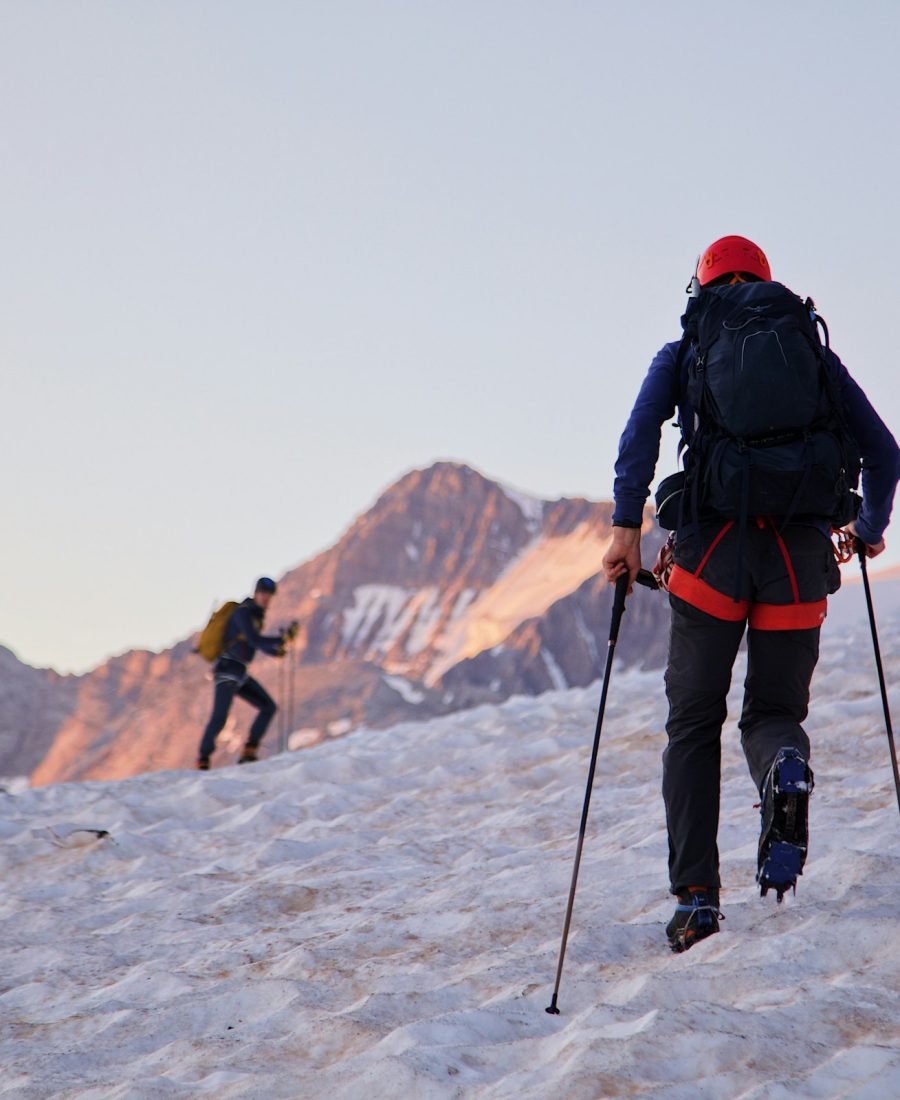
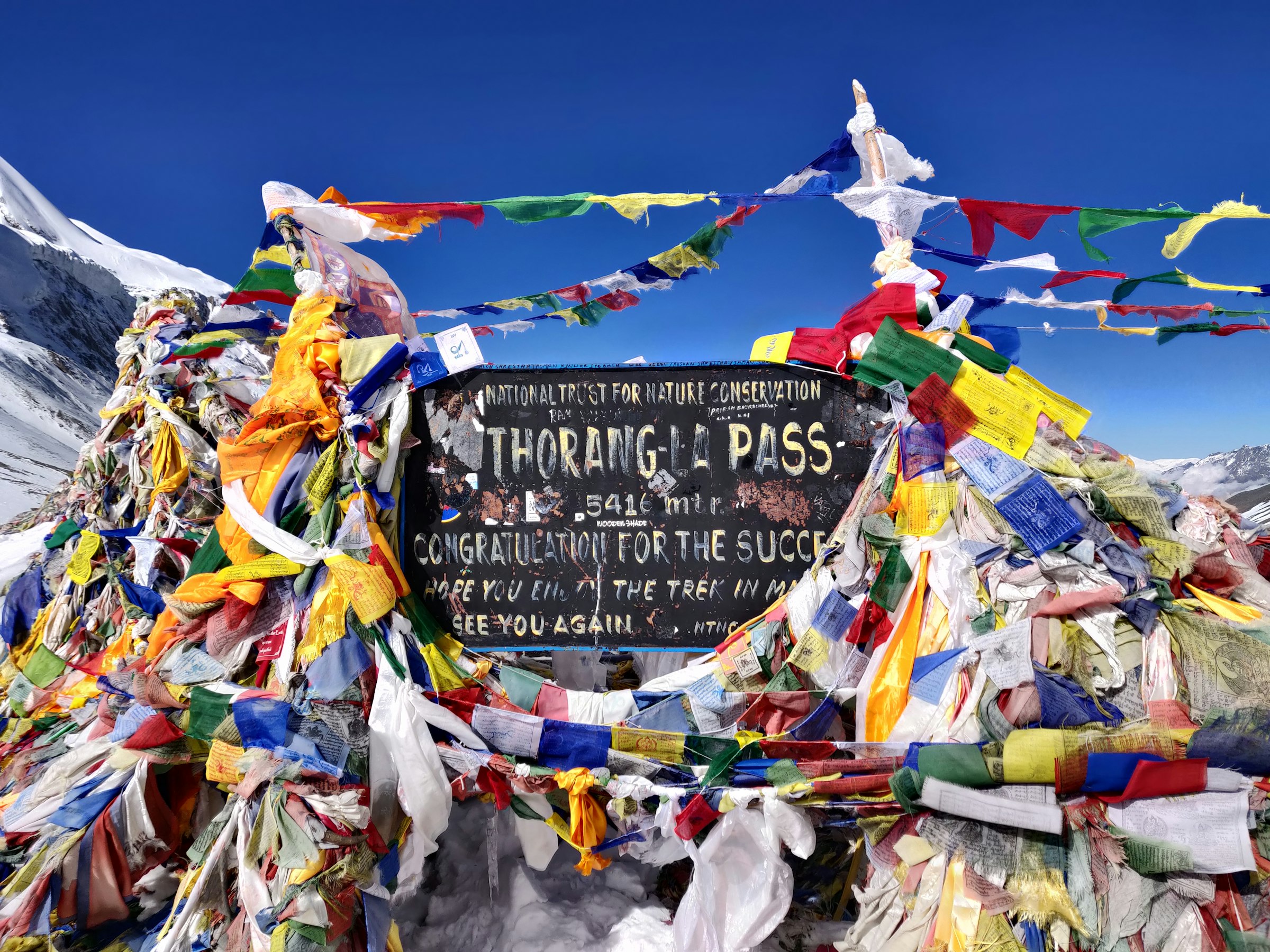
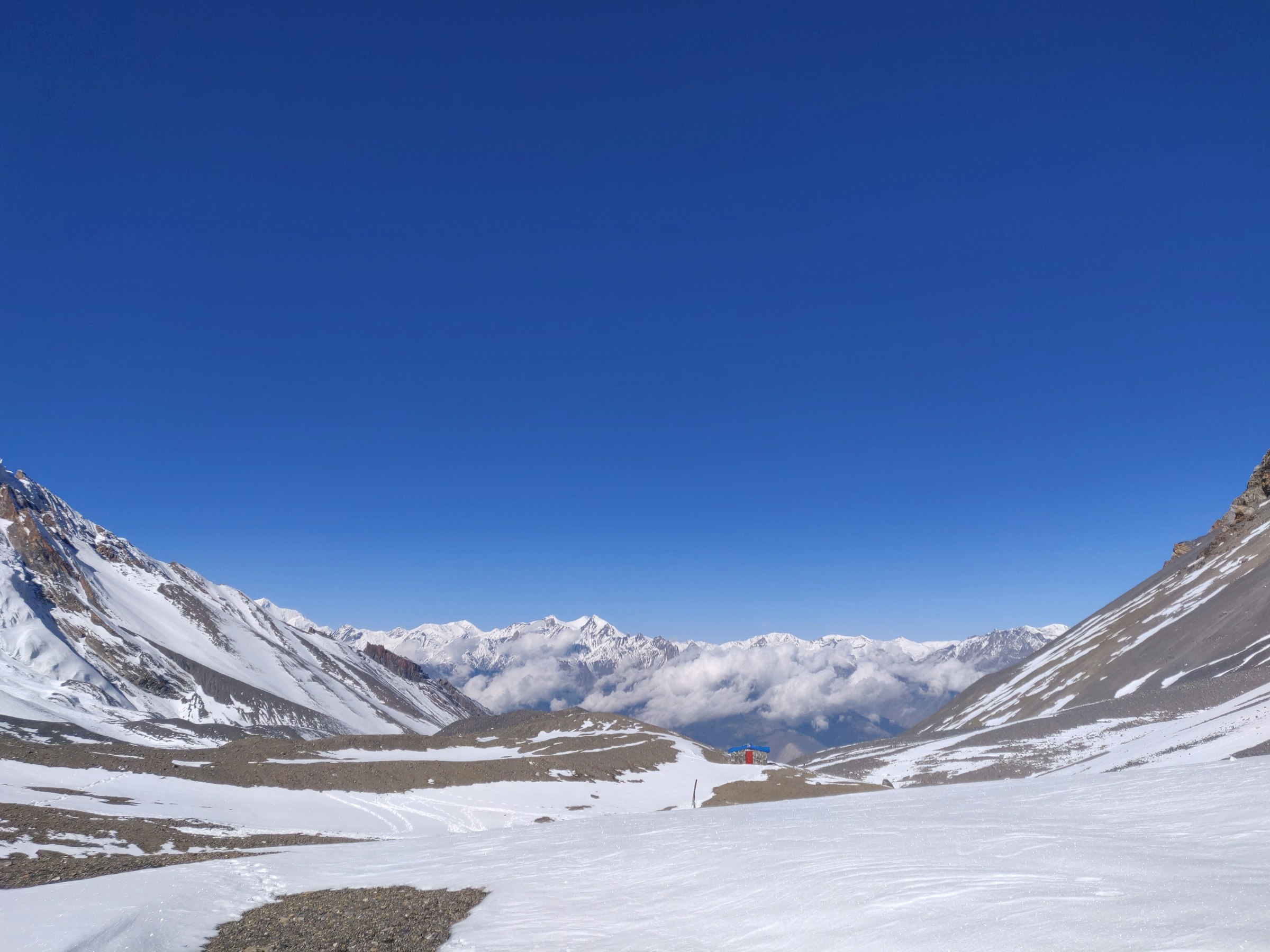
Thorong Peak (6,144 m) rises directly above the Thorong La, the famous 5,416 m pass at the top of the Annapurna Circuit. Thousands of trekkers cross the pass every year, but very few stand on the snowy summit just beside it. The climb adds a genuine 6,000-metre peak to one of the world’s great treks, with a summit view that stretches from the Annapurna range and Gangapurna to Dhaulagiri, the Chulu peaks and the brown hills of Mustang. Because the approach follows the circuit’s natural acclimatisation profile, it is a sensible and rewarding choice for a first Himalayan summit.
Our 19-day itinerary drives from Kathmandu to Chame and then follows the circuit on foot through Upper Pisang and the high villages of Ghyaru and Ngawal to Manang, where we take a full day to acclimatise. From there we walk to Yak Kharka and Thorong Phedi before leaving the main trail and climbing to base camp at around 5,100 m on the slopes beneath the peak. A rest and training day at base camp gives everyone time to practise crampon, ice-axe and rope techniques with the climbing guide before the summit attempt.
Summit day starts in the dark and climbs snow slopes and a glaciated ridge, with some steeper sections where fixed ropes are placed, to the summit at 6,144 m, then returns to base camp, a long day of 9-11 hours. A reserve day allows for poor weather. Afterwards we cross the Thorong La, now feeling easy after the climb, and descend to the temples of Muktinath. A jeep ride down the Kali Gandaki valley to Jomsom and a scenic morning flight to Pokhara complete the journey.
Who is this trip for?
Thorong Peak suits fit trekkers who have walked at altitude before and want to try mountaineering on a non-technical but high snow peak. Previous use of crampons and an ice axe is helpful but not essential, as your guide provides training at base camp. Nima Adventure organises the trip from our office in Boudha, Kathmandu, under Managing Director Kanchha Sherpa, a career Himalayan guide, with experienced, government-licensed climbing guides and a dedicated camp crew for the climb.
Trip highlights
- Summit Thorong Peak (6,144 m), the snow peak beside the Thorong La
- Trek the Annapurna Circuit through Upper Pisang, Ghyaru, Ngawal and Manang
- Full acclimatisation day in Manang and a training day at base camp
- Summit views of the Annapurna range, Dhaulagiri and the Chulu peaks
- Cross the Thorong La (5,416 m) and visit the temples of Muktinath
- Morning flight from Jomsom to Pokhara through the Kali Gandaki gorge
Itinerary
A Nima Adventure representative welcomes you at Tribhuvan International Airport and takes you to your hotel. Later, your guide meets you to introduce the trip, check passport and insurance details and answer any questions about the trek and climb. The rest of the day is free; Boudhanath Stupa, close to our office in Boudha, is a lovely place to spend the evening.
Our office arranges your Thorong Peak climbing permit, ACAP and TIMS card. Your climbing guide reviews your equipment, from mountaineering boots and crampons to sleeping bag and down jacket, and helps you buy or hire anything missing in Thamel. In the evening we hold a full briefing on the route, acclimatisation, summit day and what to expect at each stage.
We drive out of the Kathmandu Valley and west along the Prithvi Highway beside the Trishuli river, turning north at Dumre into the Marsyangdi valley. Besisahar, where the Annapurna Circuit traditionally began, is reached after 5-6 hours with stops for tea and lunch. The evening is free to wander the town's busy main street. Overnight in a local hotel.
A 4WD jeep climbs the Marsyangdi gorge on a rough mountain road, passing tall waterfalls and the villages of Jagat, Tal and Dharapani before turning west into the forests of Manang district. After 6-7 hours we arrive in Chame, a district headquarters with views of Lamjung Himal and Annapurna II. Overnight in a teahouse, with small hot springs nearby.
We set off through pine forest beside the Marsyangdi, passing the apple orchards of Bhratang and the enormous sweeping slab of Paungda Danda. The valley then widens into the drier upper Manang landscape. Crossing the river near Lower Pisang, we climb to Upper Pisang, an old village with a monastery facing Annapurna II. Walking time is 5-6 hours.
A steep climb on switchbacks brings us to Ghyaru, a village of stone houses with outstanding views of Annapurna II, III and IV. The trail then contours high above the valley, past chortens, prayer wheels and barley fields, to Ngawal, a traditional village with a large monastery. Walking time is 5-6 hours, and the high route helps acclimatisation.
A short descent through juniper and pine brings us past Braga, whose old monastery is built into the cliffs, to Manang, the largest village in the upper valley. Walking time is 3-4 hours. The afternoon is free to enjoy Manang's bakeries and shops, look across at Gangapurna and its glacier, or attend an altitude talk at the Himalayan Rescue Association aid post in season.
An essential acclimatisation day. We hike to the viewpoint above the Gangapurna glacier lake, to Praken Gompa, or towards the Ice Lake, gaining several hundred metres before returning to sleep in Manang. Allow 3-5 hours of walking. In the afternoon your guide checks your climbing equipment and explains how summit day on Thorong Peak will work.
We leave Manang on the trail to the Thorong La, climbing gently through the village of Gunsang and across open pastures where yaks graze among juniper. Yak Kharka is a small group of lodges with views back to Gangapurna and Annapurna III. It is a short day of 3-4 hours to keep the altitude gain modest, leaving the afternoon free to rest.
The trail continues past Ledar, crosses the river and traverses a narrow path above the gorge, with one landslide-prone section that we pass quickly and in single file. Thorong Phedi, at the foot of the pass, is a busy stop for trekkers preparing to cross the Thorong La. Walking time is 3-4 hours. The afternoon is for resting and hydrating.
We climb the steep trail above Thorong Phedi, then leave the main route towards the pass and head up rough slopes to base camp at around 5,100 m beneath Thorong Peak. The climb takes about 4 hours. Our crew sets up the dining and sleeping tents, and the afternoon is for resting, eating well and drinking plenty of fluids at this new altitude.
A day to adjust to the altitude and prepare for the climb. On the snow slopes near camp, your guide teaches and practises crampon technique, ice-axe use, roped glacier travel, ascending fixed ropes with a jumar and abseiling. We check every piece of equipment, agree the plan and turnaround time for summit day and have an early night.
We start in the early hours by headtorch, climbing snow slopes and a glaciated ridge, roped together and using fixed ropes on the steeper sections. From the summit, the Annapurna range, Gangapurna, Dhaulagiri, the Chulu peaks and the hills of Mustang spread out around you. After photographs, we descend carefully to base camp. Expect 9-11 hours in total.
This spare day is kept in case strong winds, fresh snow or poor visibility delay the summit attempt, so we never need to climb in unsafe conditions to keep to the schedule. If the summit goes to plan, it becomes a well-earned rest day at base camp before the crossing of the Thorong La and the long descent to Muktinath.
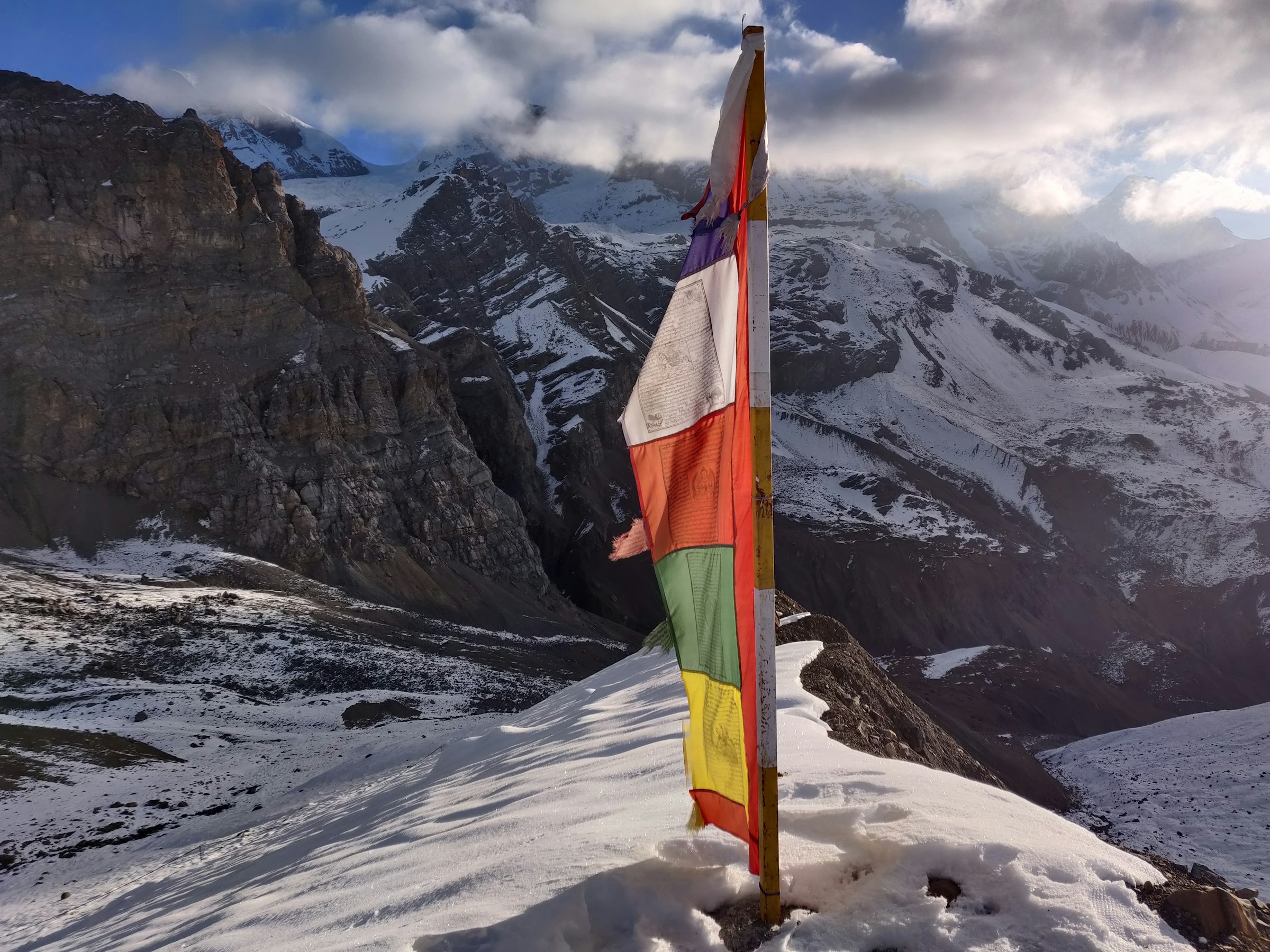
We break camp and rejoin the trail to the Thorong La, decorated with prayer flags and a large chorten, with views back to the Annapurnas and across to the hills of Mustang. Already acclimatised by the climb, most climbers find the pass much easier than expected. A long, steep descent then leads to Muktinath. Walking time is 6-7 hours.
In the morning we visit the temple complex at Muktinath, sacred to Hindus and Buddhists, with its 108 water spouts and a small flame of natural gas. A jeep then takes us down through Jharkot and Kagbeni to Jomsom in the Kali Gandaki valley, a drive of about 1-2 hours. The afternoon is free to explore Jomsom or the nearby village of Marpha.
A short morning flight threads down the Kali Gandaki gorge between Dhaulagiri and Annapurna I, landing in Pokhara after about 20-25 minutes. Flights operate early before the strong valley winds rise; if they are cancelled, we drive to Pokhara instead. The rest of the day is free to relax by Phewa Lake or explore Lakeside.
We return to Kathmandu by tourist bus along the Prithvi Highway, a journey of 6-7 hours through river valleys and hill towns, with stops for meals. If you would prefer to fly, a short flight can be arranged. After checking in to your hotel, join us in the evening for a farewell dinner to celebrate your summit.
Our team drives you to Tribhuvan International Airport around three hours before your flight home. If there is time beforehand, enjoy a final visit to Boudhanath Stupa or some souvenir shopping in Thamel. Thank you for climbing with Nima Adventure; we look forward to welcoming you back to the Himalaya for your next adventure.
What’s included
Cost Includes
15 items- Airport arrival and departure transfers in Kathmandu by private vehicle
- Three nights in a Kathmandu hotel on a bed and breakfast basis, plus a farewell dinner
- One night in a hotel in Besisahar and one night in Pokhara with breakfast
- Private vehicle from Kathmandu to Besisahar and 4WD jeep from Besisahar to Chame
- Jeep from Muktinath to Jomsom, flight from Jomsom to Pokhara and tourist bus from Pokhara to Kathmandu
- Thorong Peak climbing permit
- Annapurna Conservation Area Permit (ACAP) and TIMS card
- Experienced, government-licensed climbing guide for the whole trip
- Porters to carry trekking and climbing baggage
- Teahouse accommodation and all meals during the trek
- Tented base camp with cook, kitchen staff, sleeping, dining and toilet tents and all meals
- Fixed ropes, snow bars, ice screws and other group climbing equipment
- Wages, equipment, food, and medical and accident insurance for all Nepali staff
- Comprehensive first-aid kit and a pulse oximeter for daily health checks
- Government taxes and our service charges
Cost Excludes
10 items- International flights to and from Kathmandu
- Nepal entry visa fee (visas are available on arrival at Kathmandu airport)
- Travel insurance covering peak climbing, medical treatment and helicopter evacuation (mandatory)
- Personal climbing equipment and clothing (most items can be hired in Kathmandu)
- Lunch and dinner in Kathmandu and Pokhara, except the farewell dinner
- Extra nights and meals due to early return, flight delays or route changes
- Summit bonus and tips for guides, porters and staff
- Personal expenses such as drinks, snacks, laundry, Wi-Fi, battery charging and hot showers
- Rescue and evacuation costs
- Any service not listed as included
Equipment list
Foot Wear
3- Normal Socks 3-4Pairs
- Trekking Shoes 1 Pair
- Slippers
Hands
2- Thin Fleece Gloves 1 Pair
- Wind Stopper Fleece Gloves
Upper Body
6- Light Weight Top / Thermo Coat
- Buff
- Fleece Jacket 1
- Gore Tex Jacket 1
- Down Jacket 1
- Cotton T-Shirt 2-3
Lower Body
4- Mid Weight Long Under Pants
- Under Wear 4-5 Pairs
- Gore Tex Pant. 1
- Water Proof Pant1
Head
4- Sun Cap
- Balaclava
- Fleece Hat
- Neck Gaiter 2-3
Sleeping Bags
1- Sleeping Bag rated to -20°C For base camp
Bag Packs
2- Rucksacks 45-55L
- Duffle Bag 90 L 1 Piece
Sun stuffs
4- Sunscreen Minimum SPF 50
- Lip balm with SPF 30
- Sunglasses UV protection
- Toiletries.
Medicines
7- Brufen / Ibuprofens
- Antibiotic
- Diamox
- Paracetamol
- Handy Plaster
- Crack Bandage
- Tincture Iodine
Miscellaneous
2- Walking Stick
- Umbrella / Rain Coat
Frequently asked questions
No previous mountaineering experience is required, although it helps if you have used crampons and an ice axe before. Your guide runs a full training day at base camp. What matters most is fitness: you should be comfortable trekking 6-7 hours a day for consecutive days and have walked at altitude before. Regular hill walking with a pack is the best preparation.
Thorong Peak is a non-technical but demanding snow climb. The route follows snow slopes and a glaciated ridge, with some steeper sections where fixed ropes are placed and you ascend with a jumar. The challenge comes mainly from the altitude and the length of summit day. Conditions vary with snowfall, and icy slopes can make the upper section more difficult.
You need a climbing permit for Thorong Peak, the Annapurna Conservation Area Permit (ACAP) and a TIMS card. All three are included and arranged by our office in Kathmandu before departure. Please send a passport copy and photographs in advance. Your guide carries the documents and handles the checkpoints along the Annapurna Circuit.
The itinerary follows the natural rise of the Annapurna Circuit, with the high route via Ghyaru and Ngawal, a full acclimatisation day in Manang, and nights at Yak Kharka and Thorong Phedi before base camp. A rest and training day at base camp follows. Your guide checks your oxygen saturation and wellbeing daily and will adjust the plan if anyone struggles.
Spring, from April to May, and autumn, from late September to November, are the best seasons. Autumn offers clear skies and stable weather after the monsoon, while spring brings warmer temperatures and flowering rhododendrons lower down. In winter, heavy snow can make the Thorong La and the summit slopes dangerous, so we do not recommend climbing then.
We keep a reserve day at base camp so that we can wait for better conditions. Your climbing guide makes the final decision on whether to attempt the summit, based on the weather, snow conditions and the health of the group. If it is not safe, we skip the summit and continue over the Thorong La to Muktinath as planned.
Trip Reviews
Submit your review | |
Plan Thorong Peak Climbing (6,144 m) with our team
Tell us your dates and group size and we will reply within 24 hours with availability, a tailored itinerary and a group price.
- Reply within 24 hours
- No booking fees
- Free itinerary tailoring
You may also like

Everest Base Camp Trek with Lobuche Peak (6,119 m)
- 17 Days
- Challenging
- Nepal Peak Climbing
Everest Base Camp Trek with Island Peak (6,189 m)
- 18 Days
- Challenging
- Nepal Peak Climbing