
Mount Dhaulagiri Expedition (8,167 m)

Trip Overview
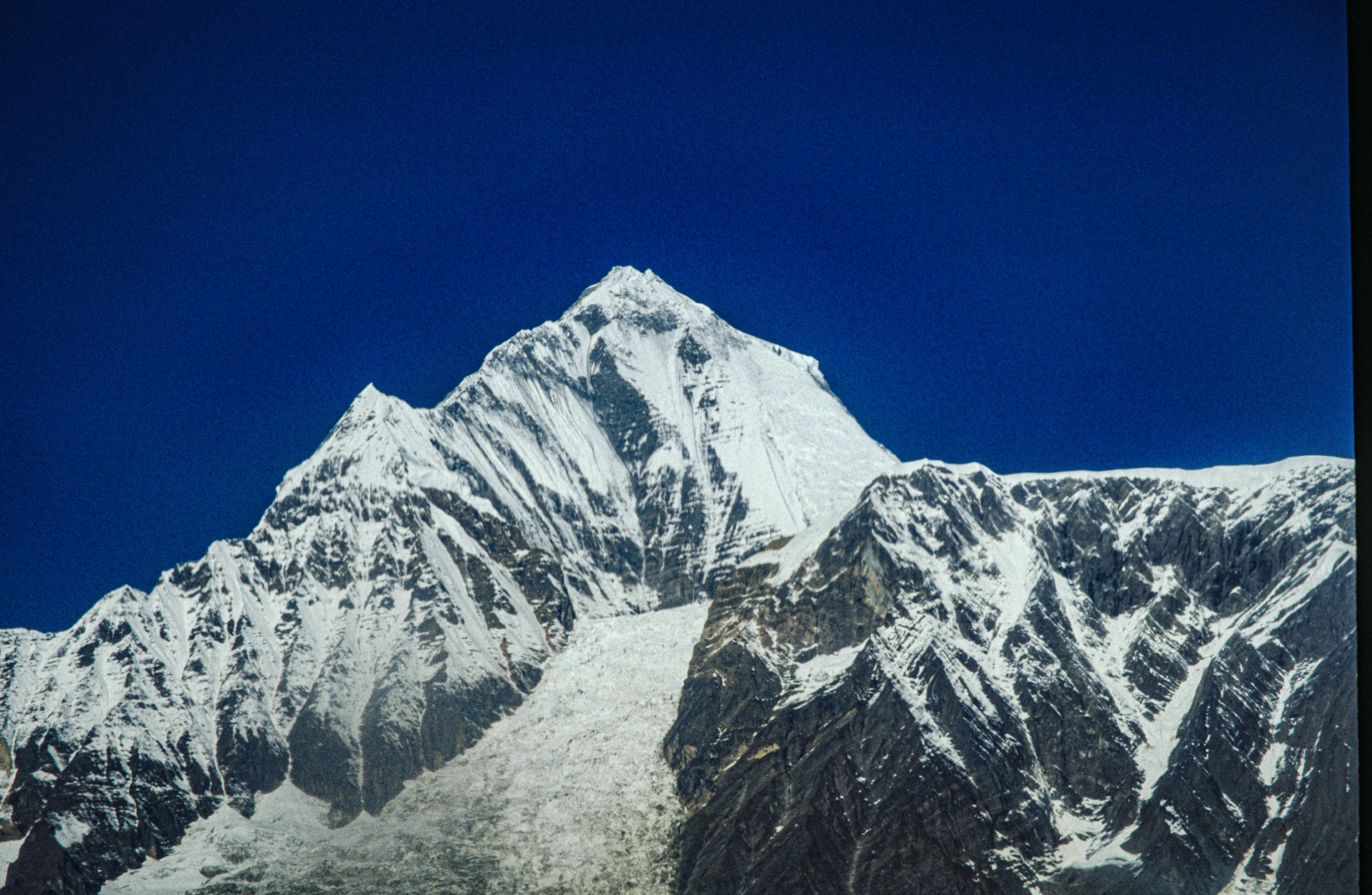
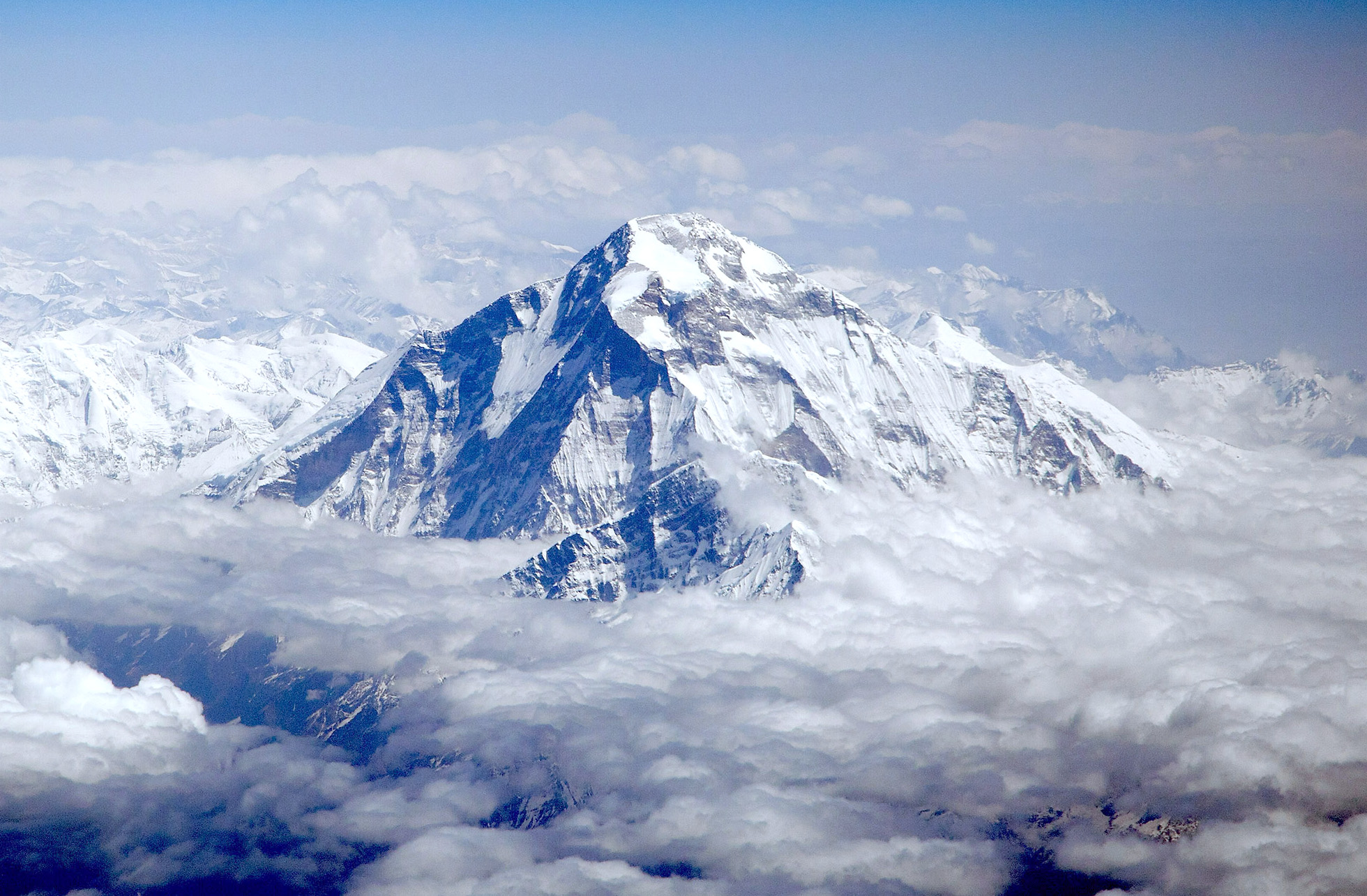
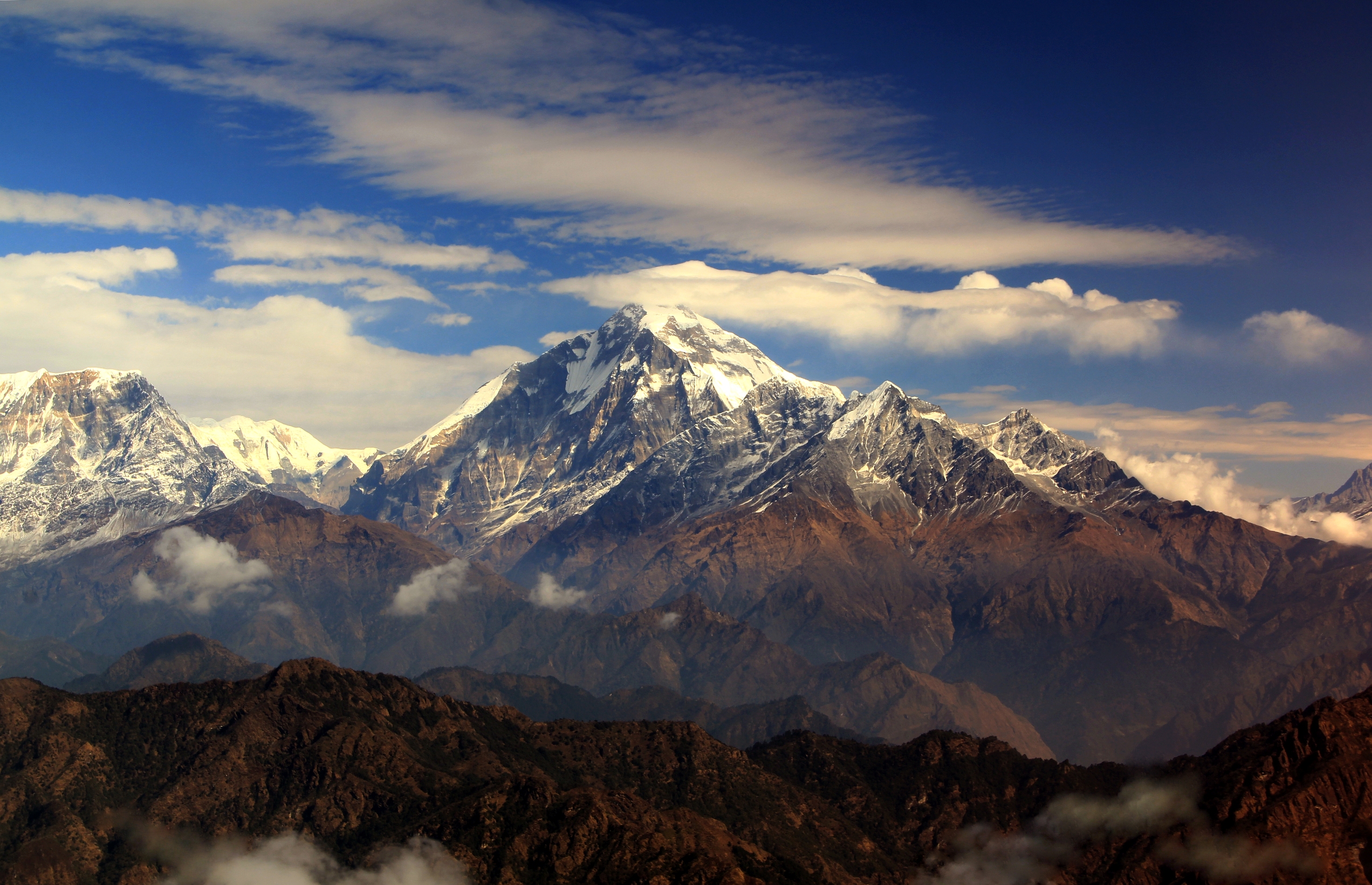
Dhaulagiri, the “White Mountain”, rises to 8,167 m above the Kali Gandaki gorge in western Nepal. It is the seventh-highest mountain in the world and the highest that lies entirely within a single country. Seen from the south, its huge walls tower above the foothills, while from the north it forms a vast, glaciated massif. The standard route follows the north-east ridge, a long, sustained climb with real avalanche and weather hazards, which makes Dhaulagiri a serious objective for experienced high-altitude mountaineers.
Our 40-day expedition starts in Kathmandu with briefings and permit formalities, then moves to the lakeside city of Pokhara and up the Kali Gandaki valley by road to the apple-growing village of Marpha. After an acclimatisation day exploring Muktinath, we trek to the high pastures of Yak Kharka and cross Thapa Pass, also called Dhampus Pass, at 5,244 m into the remote, high-walled Hidden Valley. A final crossing of French Pass leads down to Dhaulagiri Base Camp at about 4,740 m, beside the glacier beneath the mountain’s north face.
A long climbing period, from Day 09 to Day 35, provides time for acclimatisation rotations and more than one summit push if needed. From Base Camp the route climbs the glacier to Camp I near the north-east col, then follows the ridge to Camp II and Camp III, at roughly 6,500 m and 7,300 m, before the summit day. Each member climbs with a veteran, government-licensed climbing Sherpa, and the package includes supplementary oxygen with mask and regulator, Base Camp staff, a personal box tent, a heated dining tent, regular weather forecasts and satellite phone communication.
Who is this expedition for?
Dhaulagiri is for climbers with previous 8,000 m experience, or substantial experience on technical 7,000 m peaks, who are comfortable on fixed ropes, steep snow and ice in all weather. The approach over high passes is itself demanding, so you should arrive fit, healthy and ready for long days at altitude.
Nima Adventure, led by Managing Director Kanchha Sherpa, a career Himalayan guide, handles the expedition royalty, permits and liaison officer, plans the logistics carefully, keeps you informed and treats safety decisions as non-negotiable. The result is a well-supported framework for one of the great 8,000 m climbs.
Trip highlights
- Climb the world's seventh-highest mountain via the north-east ridge
- Drive through the Kali Gandaki valley, one of the world's deepest gorges
- Visit the sacred temple of Muktinath on an acclimatisation day
- Cross Thapa Pass (5,244 m) and French Pass via the remote Hidden Valley
- Personal veteran climbing Sherpa and supplementary oxygen included
- Long climbing period allowing rotations and more than one summit attempt
- Hotels in Kathmandu and Pokhara, individual box tent at Base Camp
Itinerary
A Nima Adventure representative meets you at Tribhuvan International Airport and transfers you to your 4-star hotel. The rest of the day is free to rest and recover from your journey. If you have energy, take a gentle walk around Thamel or visit the Boudhanath Stupa near our office in Boudha. In the evening we check your documents and insurance details and outline the programme for the following days.
Today is for getting ready. Your climbing Sherpa checks your personal equipment, from boots and crampons to down suit and sleeping bag, and helps you buy or hire anything missing in Kathmandu's mountaineering shops. We complete the climbing permit formalities, meet the government liaison officer and attend the official expedition briefing at the Department of Tourism. In the afternoon you pack your expedition bags, which travel with the team to Base Camp.
A short, scenic flight of about 25 minutes takes you west along the Himalaya to Pokhara, with views of the Annapurna and Manaslu ranges and, on a clear day, Dhaulagiri itself. Pokhara is Nepal's lakeside resort, and the afternoon is free to stroll along the shore of Phewa Lake, take a boat out on the water or enjoy a relaxed meal in a lakeside cafe. It is the last evening of easy comforts before the mountains.
A long jeep drive of 8-9 hours follows the road via Beni into the Kali Gandaki valley, one of the deepest gorges in the world, squeezed between the Dhaulagiri and Annapurna massifs. The landscape changes from subtropical terraces to pine forest and finally the dry, windswept terrain of Lower Mustang. Marpha is a charming Thakali village of whitewashed stone houses and flagstone lanes, famous for its apple orchards and dried fruit.
We drive up the valley via Jomsom and Kagbeni to Muktinath, a sacred pilgrimage site for both Hindus and Buddhists, where 108 water spouts and an eternal flame draw pilgrims from across South Asia. Walking around the temple complex and the villages nearby is ideal acclimatisation before returning to sleep in Marpha. The views of Dhaulagiri and Nilgiri from the upper valley are superb. Expect 4-5 hours of driving and 2-3 hours of walking.
Leaving the Kali Gandaki behind, the trail climbs steeply above Marpha through pine and juniper forest and onto open slopes with wide views of the Nilgiri peaks and the valley below. It is a steady, demanding ascent of about 5-6 hours, gaining well over 1,000 m to the high summer pasture of Yak Kharka, where we camp for the night. From here on, accommodation is in tents and our kitchen crew prepares all meals.
This is a long, high day of about 7-8 hours. The trail climbs steadily over moraine and scree to Thapa Pass, also known as Dhampus Pass, at 5,244 m, where prayer flags frame views of Dhaulagiri, Tukuche Peak and the Annapurna range. Beyond the pass we descend gently into Hidden Valley, a wide, remote basin ringed by peaks and often visited by blue sheep, and camp near the foot of Dhampus Peak at about 5,000 m.
From Hidden Valley the route climbs to French Pass at about 5,360 m, named after the French expedition of 1950 that explored the area, with a magnificent close view of Dhaulagiri's north face. We then descend over moraine beside the Chhonbardan Glacier to Dhaulagiri Base Camp at about 4,740 m, where the kitchen team sets up camp. Allow 7-8 hours. Settle into your individual box tent and enjoy a hot meal in the dining tent.
After a puja ceremony and refresher training, rotations begin. The route climbs the glacier above Base Camp, exposed in places to avalanche and serac fall, to Camp I near the north-east col, then follows the broad north-east ridge to Camp II and Camp III. Two rotations, each followed by rest at Base Camp, prepare you for the summit push, which climbs from Camp III over snow and rock to the summit at 8,167 m. Spare days allow for storms and a second attempt.
With the climb complete, the team strips the high camps and Base Camp and packs all rubbish and equipment for removal, leaving the site as clean as we found it. It is a busy but satisfying day, finished with a celebration dinner with the climbing Sherpas and kitchen crew. Oxygen masks and regulators are returned, and we confirm the arrangements for leaving Base Camp, whether by helicopter or on foot.
Weather permitting, most climbers leave Base Camp by helicopter, a short and spectacular flight down the valleys to Pokhara. The helicopter is not part of the standard package and can be arranged on request. If you prefer to walk out, the return trek retraces the route over French Pass and Thapa Pass to Marpha, followed by the drive to Pokhara, and adds three to four days to the itinerary. Either way, a comfortable hotel awaits in Pokhara.
A short morning flight returns you to Kathmandu, with a final look at the Himalayan skyline from the aircraft window. After transferring to your hotel, the rest of the day is free to rest, enjoy a long hot shower and catch up with friends and family. Members attend the expedition debriefing at the Department of Tourism, after which summit certificates are issued to successful climbers.
Enjoy a relaxed day in the capital. You might visit the Kathmandu Valley's UNESCO-listed sites such as Swayambhunath, Pashupatinath and Bhaktapur, or browse the shops of Thamel and Boudha for gifts. In the evening the team gathers for a farewell dinner to celebrate the expedition, share photographs and thank the climbing Sherpas for their support. It is a fitting end to a long and demanding climb.
After breakfast and final packing, a Nima Adventure representative transfers you to Tribhuvan International Airport in good time for your flight home. If you would like to stay longer in Nepal, our Kathmandu office can arrange a short trek, a wildlife safari in Chitwan National Park or a cultural tour of the Kathmandu Valley. We hope to see you back in the Himalaya before long.
What’s included
Cost Includes
0 items1. Government Taxes & Royalty Fees:
* Services includes expedition royalty fee, climbing and trekking permit.
* Fully paid government liaison officer includes his salary, lodging, food and
equipments.
2. Climbing Sherpa/Guide
* One veteran and government license holder climbing sherpa per member.
* Salary, equipment, and food for the climbing sherpa.
* Medical and emergency rescue insurance for all involved Nepalese staffs
such as climbing sherpas, porters, etc. during the trek and expedition.
3. Wages for involved Nepalese staffs
* Daily wages/ salary for porters, guide and basecamp staffs.
4. Accommodations
* 4 nights accommodation in 4-star hotel in Kathmandu and 2 nights
accommodation in 3-star hotel in Pokhara on bed and breakfast plan.
* Comfortable lodge/ tea house during trekking period.
5. Electric services at base camp:
* At base camp we provide solar panel or generator to charge cameras,
satellite phone, and batteries, etc.
6. Expedition Operates Based On:
* All expedition members will gather in Kathmandu, the capital of Nepal.
Your climbing Sherpa/Guide will check your equipments and brief you
about the expedition.
7. Transportation:
* Transfer from airport to hotel on arrival and departure.
* Flight from Kathmandu-Pokhara-Kathmandu
* Jeep from Pokhara-Marpha-Pokhara for members and Sherpas.
8. Oxygen
* 3 bottles oxygen per each climber (4 litres each bottle) and 1 bottle for
climbing sherpa
* One set of Summit Oxygen mask and regulator for each member and high
altitude sherpa, which has to be returned after the expedition.
* Extra oxygen or masks and regulator will be available incase of
emergencies (Subject to a charge)
9. Corresponds services:
* Corresponding with tourism department for climbing permit.
10. Basecamp Staffs
* Cook, Kitchen boy and helpers in the basecamp.
11. Porters/mules:
* Porters/mules to carry equipments to base camp up to 60 kg per member.
12. Kitchen Equipments:
* Comfortable chairs, tables, kitchen tents, dinning tents with inner, hot
shower tent and toilet tents. Kitchen utensils, lamp for light and cooking
stoves as per requirements.
13. Camping equipments
* Personal box tent for basecamp. Pillow and mattress will be provided.
* Twin sharing dome tent above basecamp.
14. Food Qualities:
* We provide the highest standard food possible, given the remoteness in
Base Camp, please informs us if you have any special dietary requirements.
* Coffee, green tea, black tea, masala tea is always available in dinning tent.
* Fresh fruit will be served during the trek and at base camp.
* Soft drinks like coca cola and other varieties at base camp.
* High altitude energy food for higher camps.
15. Additional services added:
* Fuel for generator at base camp for lighting and recharging cameras etc.
* Cargo clearance assistance but clearance cost is subject to a charge.
* Our dinning tent covered by inner, underlay and carpeted.
* Heating system at dinning tent in base camp.
* Weather forecast report regularly during the entire expedition.
* Walkie talkie for communication between the climber and expedition
manager.
* Thuraya satellite phone during the expedition and for use emergency.
* Internet facility will be available at the basecamp (subject to a charge)
16. Medical first aid kit
* First aid kits for remote mountain range need to be more comprehensive
because the drug store only available in city area, in addition to personal
medical items, our first aid box shall be containing items to help alleviate
the common symptoms of viral respiratory infections such as these: Fever,
Nasal congestion, Cough, Sore throat, Cuts, Mild pain, Gastrointestinal
problems, Skin problems, Allergies.
Cost Excludes
0 items* Nepal entry visa fees
* International airfares
* Lunch and dinner during your stay in Kathmandu.
* Use of helicopter
* Extra nights’ accommodation in Kathmandu and Pokhara in case of early
arrival or late departure, early return from the expedition, or due to any
other reasons than the scheduled itinerary.
* Expenses of personal nature such as usage of mobile recharge, internet
costs, hot showers, alcoholic beverages, laundry etc.
* Personal trekking/climbing gears, personal medical kits, toiletries, etc.
* Any extra expenses arising out of unforeseen events like natural
calamities, landslides, political disturbances, strikes, and so on.
* Insurance covering both medical and high altitude evacuation costs ( for the trip cancellation, interruption, high- altitude rescue, air evacuation,
medical treatment, etc) *Mandatory
* Any change in the itinerary if requested by the client other than the mentioned itinerary
* Drone Permits
* Tips for guide and porter during the trek.
* Tips and Gratuities to the base camp staff (US$250)
* Climbing Sherpa summit bonus (min US$1200)
* Any particulars not mentioned in the “Package Inclusions” section.
Equipment list
Foot Wear
3- Normal Socks 3-4Pairs
- Trekking Shoes 1 Pair
- Slippers
Hands
2- Thin Fleece Gloves 1 Pair
- Wind Stopper Fleece Gloves
Upper Body
6- Light Weight Top / Thermo Coat
- Buff
- Fleece Jacket 1
- Gore Tex Jacket 1
- Down Jacket 1
- Cotton T-Shirt 2-3
Lower Body
4- Mid Weight Long Under Pants
- Under Wear 4-5 Pairs
- Gore Tex Pant. 1
- Water Proof Pant1
Head
4- Sun Cap
- Balaclava
- Fleece Hat
- Neck Gaiter 2-3
Sleeping Bags
1- Sleeping Bag rated to -20°C For base camp
Bag Packs
2- Rucksacks 45-55L
- Duffle Bag 90 L 1 Piece
Sun stuffs
4- Sunscreen Minimum SPF 50
- Lip balm with SPF 30
- Sunglasses UV protection
- Toiletries.
Medicines
7- Brufen / Ibuprofens
- Antibiotic
- Diamox
- Paracetamol
- Handy Plaster
- Crack Bandage
- Tincture Iodine
Miscellaneous
2- Walking Stick
- Umbrella / Rain Coat
Frequently asked questions
Dhaulagiri is a serious, committing climb. The technical difficulty on the north-east ridge is moderate, but the lower glacier is exposed to avalanche risk, the ridge is long and windy, and the weather on the mountain changes quickly. It is considerably more demanding than Cho Oyu or Manaslu. We recommend at least one previous 8,000 m ascent, or several 7,000 m climbs, and confident use of fixed ropes on steep, icy ground.
You need a Dhaulagiri climbing permit issued by Nepal's Department of Tourism, with a government liaison officer assigned to the team, and the Annapurna Conservation Area Permit (ACAP), as the approach through Marpha and Hidden Valley lies within the conservation area. Our Kathmandu office handles every application, and the expedition royalty, climbing and trekking permits and liaison officer are included in the package.
Approaching from Marpha in the Kali Gandaki valley lets you drive high into the mountains and acclimatise around Muktinath before crossing Thapa Pass (5,244 m) and French Pass to Base Camp. It is also a beautiful route through the wild Hidden Valley. The crossings are high, so good acclimatisation is essential, and our crew carries all the camping equipment, as there are no lodges on the high section.
No. The standard package includes the flights between Kathmandu and Pokhara and the jeep from Pokhara to Marpha, but not a helicopter from Base Camp. Most climbers choose to fly out, and we can arrange a helicopter, often shared with other members, at extra cost. If you prefer to walk out, we will adjust the itinerary to add the days needed to cross the passes back to Marpha.
Spring, from April to May, is the main season, with summit windows usually appearing in late April or May. Autumn, from late September to October, is also used by some teams. Winter is extremely cold and windy, and the monsoon brings heavy snow and avalanche danger, so we avoid those periods. Our 40-day plan includes a long climbing period to make the most of the best weather window.
You need a specialist policy covering mountaineering to 8,167 m, including helicopter rescue, air evacuation and medical treatment, which is compulsory for this expedition. In terms of fitness, plan on six months or more of structured training with long hill days carrying a loaded pack, stair or step sessions and strength work. Arriving fit and healthy is the single best way to improve your safety and enjoyment on the mountain.
Trip Reviews
Submit your review | |
Plan Mount Dhaulagiri Expedition (8,167 m) with our team
Tell us your dates and group size and we will reply within 24 hours with availability, a tailored itinerary and a group price.
- Reply within 24 hours
- No booking fees
- Free itinerary tailoring
You may also like

K2 Expedition: Conquering the Savage Mountain (8,611 m)
- 59 Days
- Challenging
- Nepal Expedition
