Kanchenjunga Base Camp Trek



Trip Overview
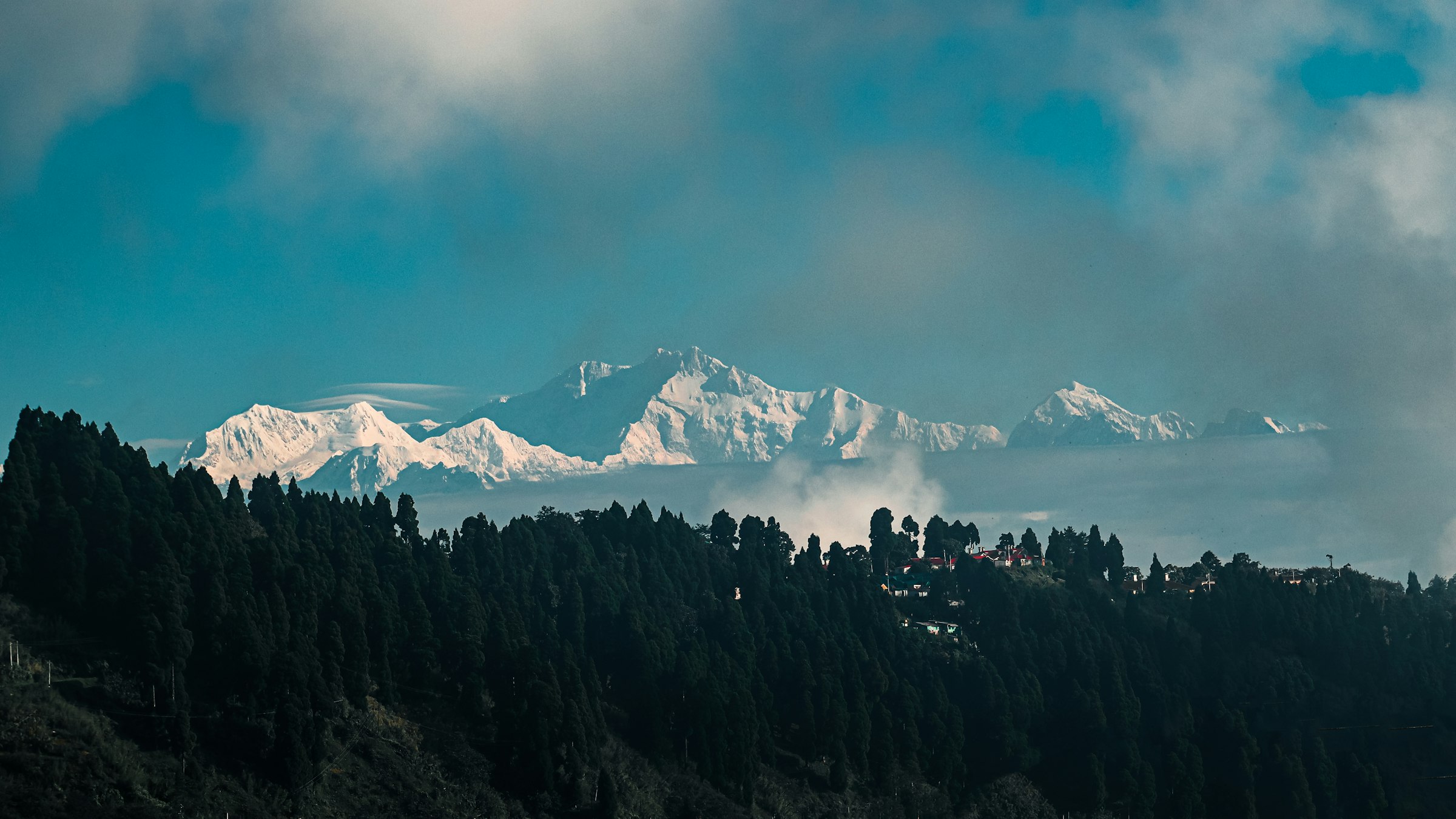
Kanchenjunga, at 8,586 m the third-highest mountain in the world, rises on the border between Nepal and the Indian state of Sikkim in the far east of the Himalaya. On the Nepal side its slopes fall into the Kanchenjunga Conservation Area in Taplejung district, a restricted region of deep valleys, glaciers and forest where only a small number of trekkers walk each year. This trek visits both of the mountain’s classic base camps: Pangpema on the north side and Oktang on the south, linked by a high traverse across a chain of passes.
The journey begins with a flight to Bhadrapur in the eastern Terai and a long drive through the hills via Ilam to Taplejung. From Sekathum we follow the Ghunsa Khola up through forests of bamboo, oak and rhododendron, past Limbu villages to Ghunsa, a Sherpa settlement of wooden houses, prayer flags and a small gompa. After acclimatisation days at Ghunsa and Kambachen, with Jannu (7,711 m) towering above, we walk beside the Kanchenjunga Glacier to Lhonak and on to Pangpema at 5,143 m, the highest point of the trek, where the north face of Kanchenjunga rises directly ahead.
Returning to Ghunsa, we climb to Sele Le and cross the Sinion La, Mirgin La and Sinelapche La in one long, spectacular day to reach Tseram on the south side. From here we follow the Yalung Glacier to Ramche and the viewpoint at Oktang, which looks up at the vast south-west face of the mountain. The return leads down through rhododendron forest via Torontan and Yamphudin, where mixed Limbu, Sherpa and Rai communities live, back to the roads of the eastern hills.
Who is this trip for?
This is a hard, remote trek for experienced walkers. Days are typically 5-8 hours, there are long ascents and descents and several nights above 4,000 m, and facilities are simpler than on Nepal’s busier trails. Teahouses now operate along the whole route, but some, especially at Lhonak, Sele Le and Ramche, are very basic. You should be comfortable with simple food and cold rooms and have previous multi-day trekking experience, ideally at altitude.
As Kanchenjunga is a restricted area, permits are issued only through a registered agency for a minimum of two trekkers with a licensed guide. Nima Adventure, led by Managing Director Kanchha Sherpa, handles permits, flights, jeeps, guides and porters, and builds in a reserve day for the weather and road conditions that are part of travel in eastern Nepal.
Trip highlights
- Stand at Pangpema (5,143 m), the north base camp, facing the north face of Kanchenjunga (8,586 m)
- Look out from Oktang over the Yalung Glacier to the mountain's south-west face
- Cross the Sele Le, Sinion La and Mirgin La passes between the two base camps
- Enjoy close views of Jannu (7,711 m) from Kambachen
- Stay in Limbu and Sherpa villages, including the mountain village of Ghunsa
- Walk through rhododendron, oak and bamboo forests in Nepal's far east
- Trek a restricted, little-visited region with very few other groups
Itinerary
A member of the Nima Adventure team meets you at Tribhuvan International Airport and transfers you to your hotel. Later we hold a briefing on the Kanchenjunga trek, collect your passport details for the restricted area permit and go through your equipment, as this is a long trek in a remote area. The rest of the day is free to rest or walk around Boudhanath Stupa. Overnight in Kathmandu.
The Kanchenjunga restricted area permit and Kanchenjunga Conservation Area Permit are processed in Kathmandu, so this day allows time for the paperwork and final preparations. You will meet your guide for a detailed briefing on the route, acclimatisation, teahouse conditions and the passes between the two base camps. Any missing gear can be bought or hired in Thamel. Overnight in Kathmandu.
A flight of about 45 minutes takes us east to Bhadrapur in the Terai, with views of the Himalaya on a clear morning. From there a long drive of 8-9 hours climbs into the hills on the winding road through the tea gardens of Ilam and on via Phidim to Taplejung, the district headquarters and gateway to Kanchenjunga. Overnight in a lodge in Taplejung.
A rough jeep road leads down to the Tamur river and follows the valley north through Mitlung and Chirwa to Sekathum, where the Ghunsa Khola joins the Tamur. The drive takes 6-7 hours and is slow and bumpy; depending on road conditions, we may walk some sections. Sekathum is a small riverside settlement and our starting point on foot. Overnight in a teahouse.
The trail enters the narrow gorge of the Ghunsa Khola, crossing the river and climbing steep, rocky sections cut into the hillside. Waterfalls tumble down the cliffs and the forest is thick with bamboo and broadleaf trees. After 6-7 hours of demanding walking we reach Amjilosa, a small settlement perched on the valley side. Overnight in a teahouse.
A gentler day of 5-6 hours climbs through forest of bamboo, oak and rhododendron, with views of waterfalls across the valley. The trail is quiet and you may spot langur monkeys or colourful birds in the trees. Gyabla is a small village on a terrace above the river, with a few houses and simple lodges. Overnight in a teahouse.
We continue up the valley through Phale, a small settlement with a monastery, and the forest gradually opens out into pasture and larch. Ghunsa, reached after 5-6 hours, is the largest village on the north side, a Sherpa settlement of wooden houses, prayer flags and a gompa, with a few shops and simple lodges. Overnight in a teahouse.
A rest day here helps your body adjust before going higher. We hike up to a viewpoint above the village, gaining 300-400 metres for views up and down the valley, and return to sleep in Ghunsa. In the afternoon you can visit the gompa, watch village life and rest. Your guide checks everyone's oxygen levels and wellbeing. Overnight in Ghunsa.
The trail climbs gradually beside the river through juniper and rhododendron scrub, then crosses a landslide-prone section where your guide sets a careful pace. As we gain height the north face of Jannu comes into view, one of the most striking sights of the trek. Kambachen, reached after 5-6 hours, is a seasonal settlement of stone huts and simple lodges. Overnight in a teahouse.
A second acclimatisation day before going above 4,500 m. We hike up the hillside or towards the Jannu side valley for closer views of the peaks and glaciers, then return to Kambachen to sleep. Blue sheep often graze on the slopes around the settlement. The rest of the day is for relaxing and preparing for the higher sections. Overnight in Kambachen.
We walk through open boulder fields and past the small settlement of Ramtang, then follow the lateral moraine of the Kanchenjunga Glacier to Lhonak, a wide, sandy plain surrounded by peaks. The walk takes 4-5 hours, but the altitude makes it feel harder, so we keep a slow, steady pace. Accommodation at Lhonak is very basic. Overnight in a teahouse.
An early start takes us along the moraine above the Kanchenjunga Glacier to Pangpema, the north base camp, reached in about 4 hours. The north face of Kanchenjunga rises directly in front of us, with surrounding peaks and glaciers on every side. After time to take in the view, we return the same way to Lhonak. Allow 7-8 hours in total. Overnight in a teahouse.
A long but mostly downhill day of 6-8 hours retraces our route past Kambachen and back to Ghunsa. Losing height quickly helps tired bodies recover, and the thicker air and green forest are a welcome change after the high moraines. In the evening we prepare for the crossing to the south side of the mountain. Overnight in a teahouse.
We leave the Ghunsa valley and climb steeply through forest of rhododendron and birch, then onto open slopes to Sele Le, a high camp below the passes. The walk takes 4-5 hours, and the short day lets us rest and prepare for the long crossing ahead. Facilities at Sele Le are very basic. Overnight in a teahouse.
The longest day of the traverse crosses a series of passes, including the Sinion La, Mirgin La and Sinelapche La, all at around 4,400-4,700 m. The trail rises and falls across ridges and boulder slopes, with Jannu and distant peaks visible on a clear morning. We descend through forest to Tseram in the upper Simbuwa Khola valley. Allow 7-8 hours. Overnight in a teahouse.
A shorter walk of 3-4 hours follows the valley and the edge of the Yalung Glacier past small lakes and grazing land to Ramche, a high meadow surrounded by peaks. The afternoon is free to rest and acclimatise, and blue sheep often graze nearby. Facilities here are very basic, so a good sleeping bag is essential. Overnight in a teahouse.
We walk along the lateral moraine of the Yalung Glacier to the viewpoint at Oktang, marked by prayer flags and chortens, where the south-west face of Kanchenjunga fills the view. After time to enjoy the panorama, we return past Ramche and continue down to Tseram. The day takes 6-7 hours in total. Overnight in a teahouse.
We descend the Simbuwa Khola valley through thick forest of rhododendron, fir and pine, the trail sometimes steep and slippery after rain. Bird life is rich here and the air is noticeably warmer. After 5-6 hours we reach Torontan, a small riverside settlement with simple lodges. Overnight in a teahouse.
The trail climbs over a forested ridge and then descends steeply through farmland to Yamphudin, a village of mixed Limbu, Sherpa and Rai families. The walk takes 6-7 hours and marks our return to terraced fields, cardamom gardens and village life. In the evening we celebrate the end of the walking with our guide and porters. Overnight in a teahouse.
A jeep collects us for the drive on a rough rural road back to Taplejung, usually 6-7 hours depending on conditions. If landslides or damage close the road, we walk to the nearest point a vehicle can reach and adjust the schedule using our reserve day. In Taplejung there is time for a hot shower and a relaxed evening. Overnight in a lodge.
We drive back down through Phidim and the tea gardens of Ilam to Bhadrapur in the eastern Terai, a journey of 8-9 hours on a winding road. On arrival you can rest in your hotel, enjoying the warm air of the plains after weeks in the mountains. Your guide confirms the next day's flight to Kathmandu. Overnight in a hotel in Bhadrapur.
A morning flight of about 45 minutes returns us to Kathmandu, with views of the eastern Himalaya on a clear day. After checking in to your hotel, the afternoon is free to relax, shop or visit a heritage site. In the evening, join us for a farewell dinner to celebrate completing one of the great treks of the Himalaya. Overnight in Kathmandu.
This day is kept in reserve in case of flight delays or road closures earlier in the trip. If everything runs to plan, you have a free day for sightseeing in Patan, Bhaktapur or Kathmandu Durbar Square, or simply to rest. Our team can help you arrange a guide or transport for any visits you would like to make. Overnight in Kathmandu.
Depending on your flight time, there may be a few hours for last-minute shopping or a final visit to Boudhanath. Our team transfers you to Tribhuvan International Airport in good time for your departure. If you would like to extend your stay with a safari in Chitwan or some quiet days in Pokhara, we are happy to arrange it.
What’s included
Cost Includes
14 items- Airport arrival and departure transfers in a private vehicle
- 4 nights in a Kathmandu hotel on a twin-sharing basis with breakfast
- 1 night in a hotel in Bhadrapur with breakfast
- Kanchenjunga restricted area permit and Kanchenjunga Conservation Area Permit (KCAP)
- Flights Kathmandu to Bhadrapur and Bhadrapur to Kathmandu
- Private jeep from Bhadrapur to Taplejung and Sekathum, and from Yamphudin to Taplejung and Bhadrapur
- Teahouse accommodation on trek, twin-sharing where available
- All meals on trek (breakfast, lunch and dinner) with tea or coffee
- Experienced, government-licensed English-speaking trekking guide
- Porters (one porter for two trekkers), including their wages, food, accommodation, insurance and equipment
- Down jacket, sleeping bag and duffel bag on loan for the trek
- Comprehensive first-aid kit and pulse oximeter carried by the guide
- Farewell dinner in Kathmandu
- Government taxes and office service charges
Cost Excludes
11 items- International flights and Nepal visa fees
- Travel insurance covering trekking to 5,500 m, medical treatment and emergency helicopter evacuation
- Lunch and dinner in Kathmandu and Bhadrapur, except the farewell dinner
- Excess baggage charges on domestic flights
- Entrance fees for sightseeing in Kathmandu
- Personal trekking gear and clothing
- Drinks, snacks and extra food beyond the set meals
- Hot showers, battery charging and Wi-Fi where teahouses charge for them
- Tips for guides and porters
- Extra nights in Kathmandu due to early arrival or late departure
- Costs arising from flight delays, road closures, landslides, illness or other events beyond our control
Equipment list
Foot Wear
3- Normal Socks 3-4Pairs
- Trekking Shoes 1 Pair
- Slippers
Hands
2- Thin Fleece Gloves 1 Pair
- Wind Stopper Fleece Gloves
Upper Body
6- Light Weight Top / Thermo Coat
- Buff
- Fleece Jacket 1
- Gore Tex Jacket 1
- Down Jacket 1
- Cotton T-Shirt 2-3
Lower Body
4- Mid Weight Long Under Pants
- Under Wear 4-5 Pairs
- Gore Tex Pant. 1
- Water Proof Pant1
Head
4- Sun Cap
- Balaclava
- Fleece Hat
- Neck Gaiter 2-3
Sleeping Bags
1- Sleeping Bag rated to -20°C For base camp
Bag Packs
2- Rucksacks 45-55L
- Duffle Bag 90 L 1 Piece
Sun stuffs
4- Sunscreen Minimum SPF 50
- Lip balm with SPF 30
- Sunglasses UV protection
- Toiletries.
Medicines
7- Brufen / Ibuprofens
- Antibiotic
- Diamox
- Paracetamol
- Handy Plaster
- Crack Bandage
- Tincture Iodine
Miscellaneous
2- Walking Stick
- Umbrella / Rain Coat
Frequently asked questions
You need the Kanchenjunga restricted area permit and the Kanchenjunga Conservation Area Permit (KCAP). Restricted area permits are issued only through a registered agency for a minimum of two trekkers walking with a licensed guide, and permits are checked at several points along the route. We arrange everything in Kathmandu using your passport and visa details, so please send us clear scans before you arrive.
Pangpema (5,143 m), the north base camp, sits beside the Kanchenjunga Glacier facing the north face of the mountain and is the higher, more remote of the two. Oktang (approx. 4,730 m), on the south side, looks over the Yalung Glacier to the vast south-west face. This itinerary visits both, but shorter treks to just one base camp can be arranged on request.
This is a hard trek of more than three weeks, with 5-8 hours of walking on most days, steep climbs and descents and several nights above 4,000 m. You should have previous multi-day trekking experience, ideally at altitude, and train for at least three months beforehand with long hill walks, stair climbing and endurance exercise. Mental resilience is as important as physical fitness on a trek this long.
Teahouses now operate along the whole route, but they are simpler than on the Everest or Annapurna trails. Rooms are basic, often with thin walls and shared toilets, and menus are limited to dal bhat, noodles, potatoes and eggs. At Lhonak, Sele Le and Ramche facilities are very basic and can be cold. A warm sleeping bag is essential, and electricity and internet are limited.
The best seasons are spring (March to May) and autumn (October to November). Spring brings rhododendron forests in full bloom, while autumn offers the clearest skies and most stable weather. In winter, snow often blocks the passes between Ghunsa and Tseram and many lodges close. The monsoon from June to September brings heavy rain, leeches, landslides and frequent cloud.
Our guides always put safety first. If snow makes the Sele Le crossing unsafe, we wait for conditions to improve or, if the passes stay closed, return the way we came. Roads in the eastern hills can be blocked by landslides, and flights from Bhadrapur can be delayed, so the itinerary includes a reserve day. We still recommend flexible international flight bookings.
Yes. Your policy must cover trekking to at least 5,500 m, medical treatment and emergency helicopter evacuation from remote areas. The upper valleys of Kanchenjunga are several days' walk from the nearest road, so a serious problem would usually require a helicopter rescue. Please send us your policy details and its emergency contact number before departure.
Trip Reviews
Submit your review | |
Plan Kanchenjunga Base Camp Trek with our team
Tell us your dates and group size and we will reply within 24 hours with availability, a tailored itinerary and a group price.
- Reply within 24 hours
- No booking fees
- Free itinerary tailoring