Mount Everest Expedition (8,849 m)




Trip Overview
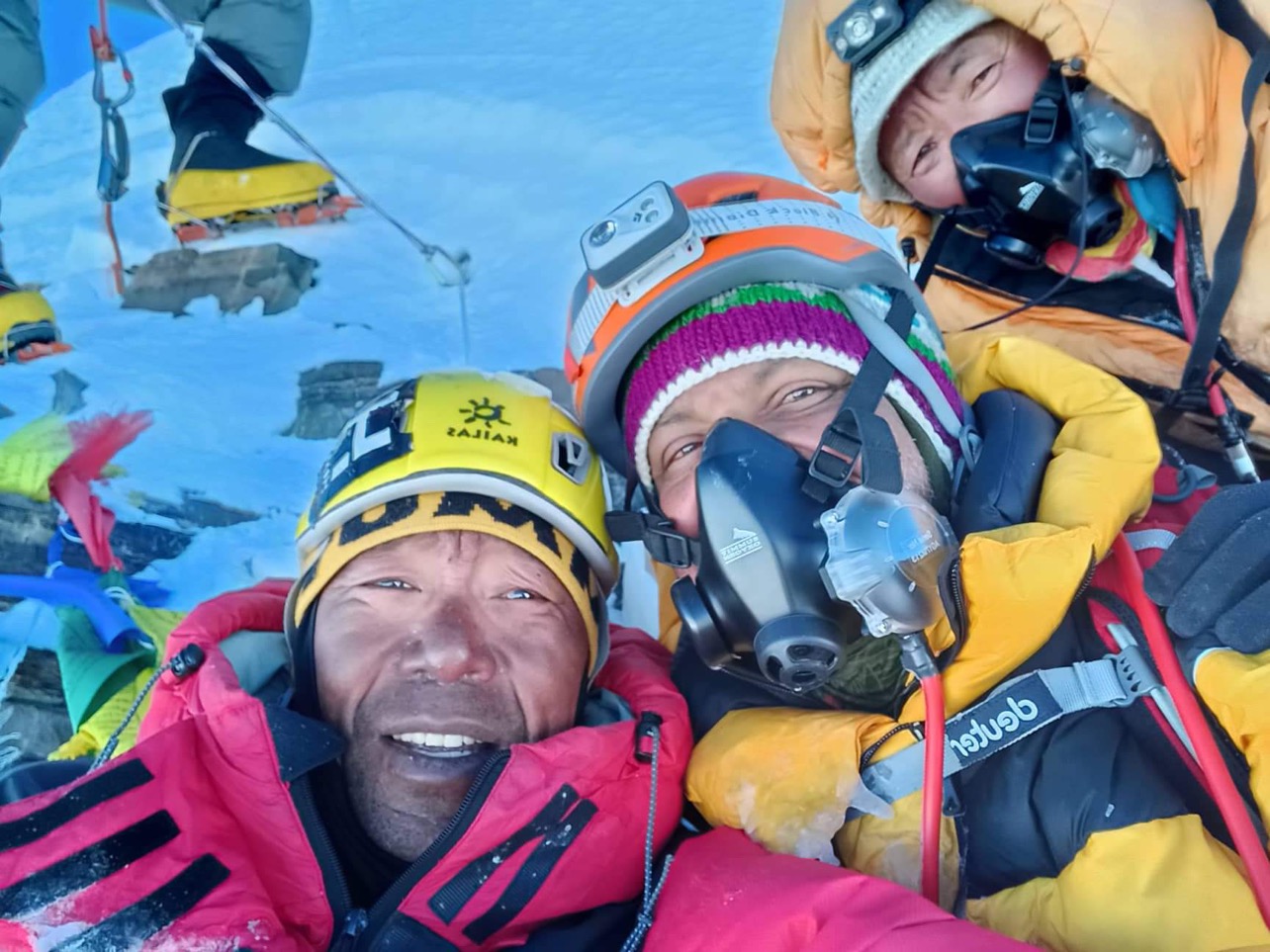
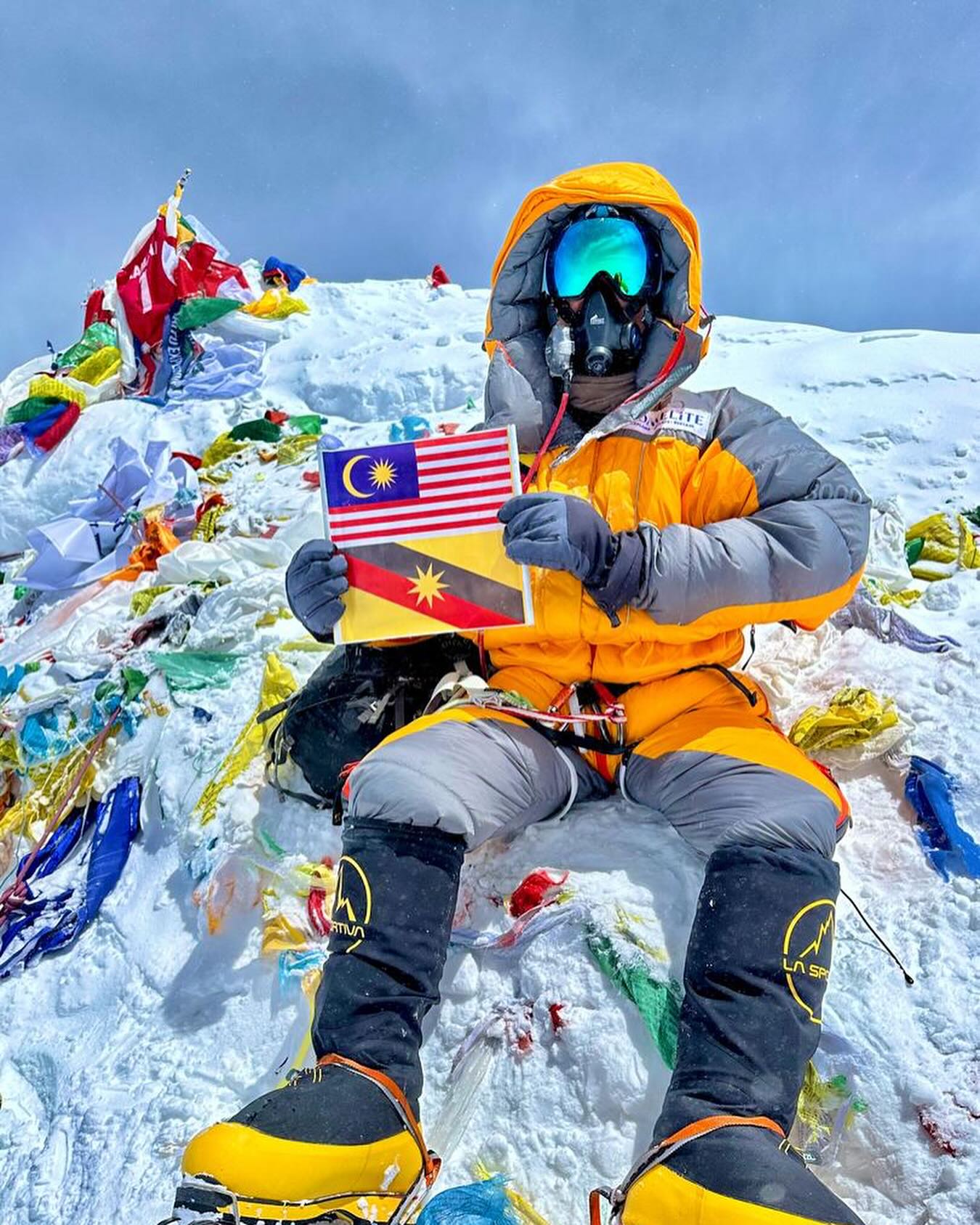
At 8,849 m, Mount Everest is the highest point on Earth and the defining goal for many mountaineers. Our expedition follows the classic South Col route from Nepal, the line taken by Tenzing Norgay and Edmund Hillary in 1953: up through the Khumbu Icefall, into the Western Cwm, across the Lhotse Face to the South Col and along the Southeast Ridge to the summit. It is a long and serious undertaking, and we plan it that way, with a 50-day itinerary that leaves room for proper acclimatisation and for waiting out the weather.
The journey begins with a flight to Lukla and a steady trek up the Khumbu valley through Namche Bazaar, Tengboche, Dingboche and Lobuche, with acclimatisation days built in along the way. From Base Camp at around 5,364 m, you make rotations through the icefall to Camp I and Camp II in the Western Cwm and up the Lhotse Face to Camp III, returning to Base Camp to recover between each. The summit push is timed for the settled weather that usually arrives in the second half of May, guided by daily forecasts.
Every member climbs with a personal, government-licensed climbing Sherpa on a one-to-one basis. You have your own tent at Base Camp with a mattress and pillow, a heated dining tent, freshly cooked meals, a kitchen team at Camp II and generator power for charging. Supplementary oxygen with a modern mask and regulator, fixed ropes, high-camp tents and fuel, satellite and radio communication are all part of the package, and the Himalayan Rescue Association clinic at Base Camp provides medical consultation during the season. We also handle the paperwork: the Everest climbing permit and liaison officer, Sagarmatha National Park entry, the Khumbu Pasang Lhamu Rural Municipality permit and the icefall route fee collected by the Sagarmatha Pollution Control Committee.
Who is this expedition for?
This expedition is for experienced mountaineers who have already climbed at high altitude, ideally on a 7,000 m or 8,000 m peak, and who are comfortable with crampons, fixed lines, jumars and ladder crossings. You need excellent endurance, the patience to sit out storms and the discipline to respect the turnaround time on summit day. If you are still building towards Everest, talk to us about a preparation climb such as Manaslu or Cho Oyu first.
Nima Adventure is led by Managing Director Kanchha Sherpa, a career Himalayan guide, and our team has guided Malaysian climbers on Everest, K2 and Manaslu. We keep groups small, communicate clearly and treat safety decisions as non-negotiable, so that you can put all of your energy into the climb itself.
Trip highlights
- Climb the South Col route through the Khumbu Icefall, Western Cwm and Lhotse Face
- Personal government-licensed climbing Sherpa on a one-to-one basis
- 50-day plan with acclimatisation rotations and a flexible summit window
- Individual tent at Base Camp, heated dining tent and cooked meals at Camp II
- Supplementary oxygen with a modern mask and regulator for the summit push
- Classic Khumbu approach via Namche Bazaar and Tengboche Monastery
- Daily weather forecasts and satellite communication throughout
Itinerary
Welcome to Nepal. A Nima Adventure representative meets you at Tribhuvan International Airport and transfers you to your hotel. After the long journey, the rest of the day is yours to rest, adjust to the time difference and perhaps take a gentle walk around the great stupa at Boudha, close to our office. In the evening we check that your travel documents and insurance details are in order and confirm the plan for the following day's briefing.
Today is set aside for preparation. Your climbing Sherpa goes through your personal equipment piece by piece, checking boots, crampons, harness, down suit and sleeping bag, so that anything missing can be bought or hired in Kathmandu. We complete the climbing permit formalities and attend the official expedition briefing at the Department of Tourism with the liaison officer. The afternoon is for packing your duffel bags for the porters and yaks and making any last purchases.
An early flight takes you to Tenzing-Hillary Airport in Lukla, a short and spectacular mountain flight. In the main seasons, Lukla flights often operate from Ramechhap (Manthali), a drive of around four to five hours from Kathmandu, and we will confirm the arrangement nearer the time. After meeting the porters, we follow the Dudh Koshi valley gently downhill past Sherpa villages, prayer walls and farmland to Phakding, a walk of about 3-4 hours.
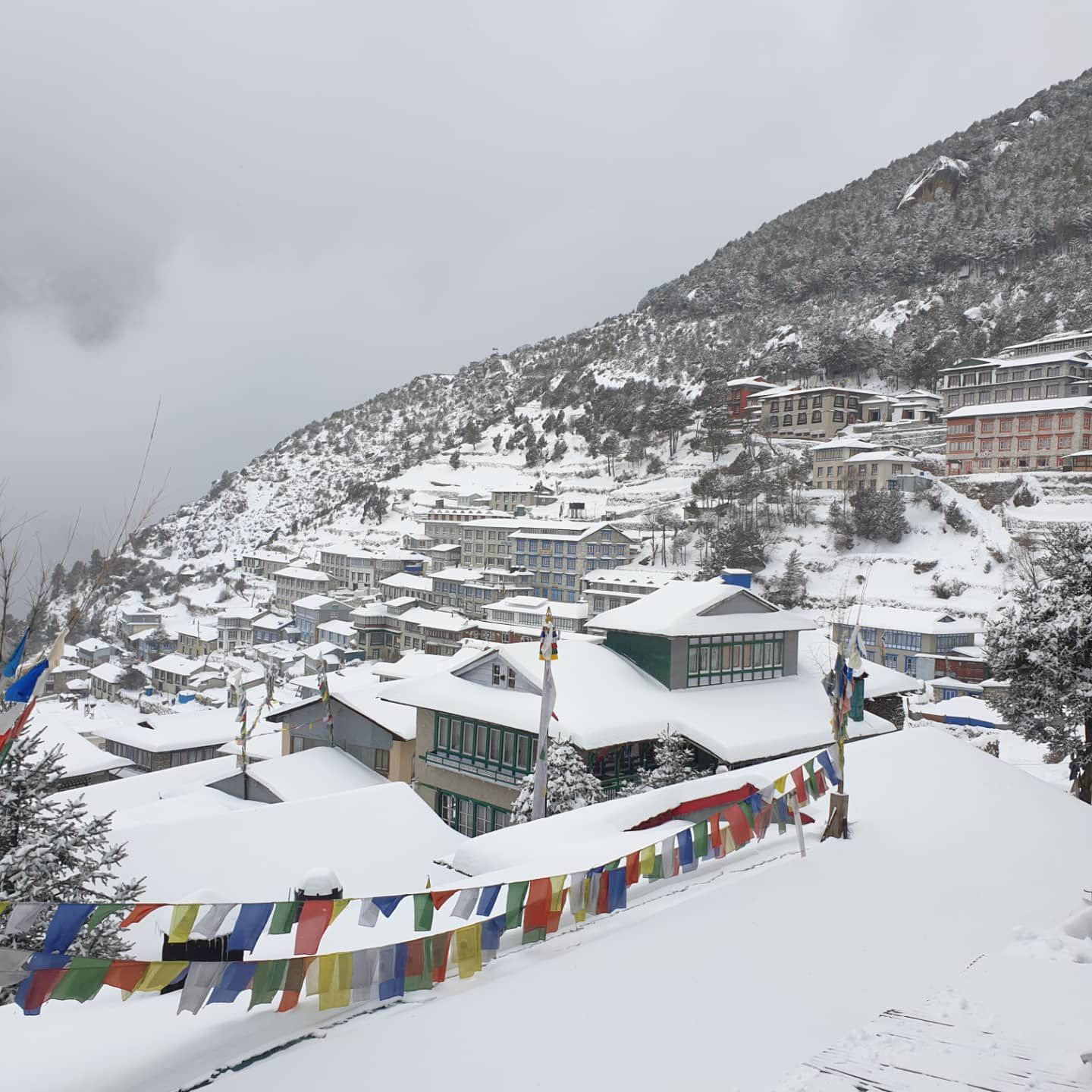
We continue up the Dudh Koshi, crossing the river several times on suspension bridges, and enter Sagarmatha National Park at Monjo, where permits are checked. After Jorsalle, the trail crosses the high Hillary Suspension Bridge and climbs steeply for the final two hours, with a first glimpse of Everest on a clear day. Namche Bazaar, the trading hub of the Khumbu, is reached after 6-7 hours of walking. Take it slowly: this is the first real height gain of the trip.
Following the principle of climbing high and sleeping low, we hike up to Syangboche and the Everest View Hotel at around 3,880 m for views of Everest, Lhotse and Ama Dablam, returning to Namche for the night. The round trip takes 3-4 hours. In the afternoon you can visit the Sagarmatha National Park visitor centre, browse the shops for last-minute gear or simply rest, drink plenty of fluids and let your body begin adapting to the altitude.
The trail contours high above the Dudh Koshi with fine views of Ama Dablam, Thamserku and Everest, before dropping to the river at Phunki Tenga. A steady climb through rhododendron and pine forest then brings us to Tengboche, home to the largest monastery in the Khumbu. If timing allows, we attend the monks' afternoon prayers and ask for blessings for the expedition, a meaningful moment for the whole team. Walking time is about 5-6 hours.
We descend briefly through forest to Debuche, cross the Imja Khola and climb past the village of Pangboche, where the trees give way to open yak pastures and stone-walled fields. The valley widens beneath the south face of Lhotse and the slender spire of Ama Dablam. Dingboche, a settlement spread across the Imja valley, is reached after 5-6 hours. From here the air is noticeably thinner, so keep the pace easy and stay well hydrated.
A second acclimatisation day is essential before moving higher. In the morning we climb the ridge of Nangkartshang behind the village, gaining several hundred metres for views of Makalu, Lhotse, Island Peak and, on a clear day, Cho Oyu. The hike takes 3-4 hours return. The rest of the day is for resting, reading and drinking plenty. Your climbing Sherpa will also use the time to talk through the plan for the coming weeks at Base Camp.
The trail climbs gently across open slopes above Pheriche to Thukla (Dughla), then makes a steep ascent of the terminal moraine of the Khumbu Glacier to the Thukla Pass. Here, stone memorials honour climbers and Sherpas who lost their lives on Everest, a sobering and moving place. Beyond the pass, the trail follows the valley to Lobuche, a small cluster of lodges beneath the Lobuche peaks and Nuptse. Expect about 4-5 hours of walking.
We follow the lateral moraine of the Khumbu Glacier to Gorak Shep (5,164 m), the last lodge settlement, in about 2-3 hours. After lunch, the trail continues over rough moraine to Everest Base Camp, where our camp has already been set up by the kitchen team. The walk takes 5-6 hours in total. Settle into your individual tent, meet the Base Camp staff and enjoy your first meal in the heated dining tent. This is home for the next five weeks.
The first days at Base Camp are for rest and preparation. A lama performs the traditional puja ceremony to ask the mountain deities for safe passage, an important ritual for every Sherpa on the team. Your climbing Sherpa runs refresher training on the glacier near camp, covering fixed-rope techniques with jumar and descender, crampon work on steep ice and crossing aluminium ladders. Oxygen masks and regulators are fitted and tested, and gentle hikes around camp continue your acclimatisation.
Starting before dawn, when the ice is coldest and most stable, you climb through the Khumbu Icefall on the route fixed by the Icefall Doctors, crossing crevasses on ladders, to reach Camp I at about 6,050 m. After a night or two there, you move up the Western Cwm to Camp II, also called Advanced Base Camp, at about 6,400 m, where our cook team provides hot meals. You spend several nights at Camp II, with short acclimatisation walks, before descending to Base Camp.
After the first rotation, the body needs time to recover and absorb the acclimatisation gained higher up. These days are spent eating well, sleeping, washing and resting at Base Camp. Some climbers choose to walk down to Pheriche or Dingboche for a couple of nights in thicker air, which can speed recovery, and your team leader will advise on this. Meanwhile, the Sherpa team carries loads and helps to stock the higher camps with tents, fuel and food.
The second rotation pushes higher. After moving back through the icefall to Camp II, you climb the steep blue ice of the Lhotse Face on fixed ropes to Camp III at about 7,100 m, where you spend a night, or touch the camp before descending, depending on how well you are acclimatising. This rotation is the key test of readiness for the summit. You then return through the Western Cwm and the icefall to Base Camp for a well-earned rest.
Back at Base Camp, the focus turns to recovery and to the forecasts. We receive daily weather reports and watch for the jet stream to lift off the summit, which usually brings a window of calmer days in the second half of May. Meanwhile, the Sherpa team completes the stocking of Camp IV on the South Col with tents, oxygen and food. You rest, eat well and prepare your summit kit so that you are ready to move at short notice.
When the window opens, you climb from Base Camp to Camp II, then up the Lhotse Face to Camp III, using supplementary oxygen from here. Next day, you cross the Yellow Band and the Geneva Spur to Camp IV on the South Col at about 7,950 m. Late that night you set out via the Balcony, the South Summit and the Hillary Step, reaching the top in the early morning before descending to the South Col or Camp II. Spare days cover weather delays.
Once the whole team is safely down from the mountain, we dismantle Base Camp and pack out all waste and equipment in line with Sagarmatha Pollution Control Committee rules. Porters and yaks carry the expedition gear down the valley. In the afternoon we walk down the Khumbu Glacier past Gorak Shep to Lobuche, about 4-5 hours, where the thicker air and a lodge bed feel like real luxury. It is a good moment to reflect on the expedition with your teammates.
The descent continues past the memorials at Thukla and down through Pheriche to Pangboche, one of the oldest Sherpa villages in the Khumbu, with a monastery said to be among the oldest in the region. The walk takes 5-6 hours, and with every step down you will feel stronger as the oxygen levels rise. Juniper scrub and rhododendron reappear around Pangboche, a welcome sign of life after weeks of ice and rock.
We pass Tengboche Monastery once more and descend through forest to the Dudh Koshi at Phunki Tenga, then climb gently along the contouring trail back to Namche Bazaar. The walk takes about 5-6 hours. Namche offers bakeries, hot showers and well-stocked shops, and many climbers enjoy their first proper celebration here. It is also a chance to thank the porters and yak herders who have supported the expedition from the start.
The final day on the trail descends steeply from Namche to the Hillary Suspension Bridge and follows the Dudh Koshi back through Monjo, Phakding and the villages of the lower valley, before a last short climb to Lukla. Allow 6-7 hours. In the evening we share a farewell meal with the trekking crew, many of whom live in the Khumbu, and confirm the flight arrangements for the following morning.
Weather permitting, we take an early flight from Lukla back to Kathmandu, or to Ramechhap followed by the drive to the city, and transfer to your hotel. Mountain flights are sometimes delayed by cloud, which is why we keep a spare day at the end of the itinerary. The afternoon is free to rest, enjoy a long hot shower and catch up with family and friends after weeks in the mountains.
This free day acts as a buffer for any delay to the Lukla flight. If all has gone to plan, you can explore Kathmandu's heritage sites such as Swayambhunath, Pashupatinath or the Boudhanath Stupa, or shop for souvenirs. Expedition members attend the debriefing at the Department of Tourism, after which summit certificates are issued to successful climbers. In the evening the whole team gathers for a farewell dinner to celebrate the expedition.
After breakfast, there is time for last-minute packing before a Nima Adventure representative transfers you to Tribhuvan International Airport for your flight home, usually about three hours before departure. If you would like to extend your stay with a wildlife safari in Chitwan, a few relaxing days in Pokhara or a tour in Bhutan or Tibet, our Kathmandu office will be happy to arrange it.
What’s included
Cost Includes
13 itemsWe are dedicated to providing a high-value, all-inclusive package that covers critical safety and regulatory expenses, ensuring peace of mind throughout your journey.
Climbing & Safety
- Expert Sherpa: One experienced, licensed, at least 5-time Everest Summiteer Sherpa per client (1:1 ratio). All Sherpa wages, insurance, and equipment are covered.
- Oxygen Supply: 8 Bottles (32L) of Poisk Oxygen per member for Everest (plus 5 bottles for Lhotse). Includes the latest model of Summit or Top-out system mask and regulator.
- Medical Support: Medical consultation services provided via the HRA clinic at Base Camp. First Aid kits are supplied for the group.
- High-Altitude Gear: Provision of common climbing equipment (fixed/main rope, ice bars, ice screws, snow bars).
Permits & Government Compliance
- All Royalty & Permits: Fully paid Peak Royalty Fee, Climbing Permit, and all required documentation fees.
- Official Liaison: Fully paid Government Liaison Officer, including domestic flights, wages, and equipment.
- Route Fees: All Trekking Permits (TIMS), Everest National Park entry fee, and Khumbu Icefall charges by the SPCC.
Premium Logistics & Comfort
- Base Camp Accommodation: Each member receives an individual box tent at Base Camp, complete with double foam mattress and pillow.
- Higher Camps: North Face/Kailas (2-man tent) provided for sharing with your Sherpa at higher camps.
- Food: Highest standard of food possible at Base Camp. Freshly cooked food and kitchen services at Camp II. EPI Cooking gas/stove provided for Camps I, III, and South Col.
- Transportation: Scheduled flight tickets for Kathmandu-Lukla-Kathmandu for members and staff. Airport arrival and departure transfers.
- Baggage: Generous 60kg baggage allowance per person carried by porter or Yak to Base Camp.
- Communication & Power: Satellite phone and walkie-talkies provided. Generator for back-up lighting and charging electronics at Base Camp. Heater provided for the dining room.
Cost Excludes
6 items- Mandatory High-Altitude Insurance: Coverage for all medical expenses and high-altitude rescue/air evacuation costs is compulsory.
- International Travel: Member’s international flight tickets and Nepal entry visa fee.
- Gratuities/Tips: Summit bonus for the Climbing Sherpa (minimum US$2,000 per mountain) and tips for Base Camp/Camp II kitchen staffs (US$350 per person).
- Personal Gear: Personal climbing gears, clothing, and individual medical kit.
- Personal Expenses: Lunch/Dinner during Kathmandu stays (except farewell dinner), packed snacks, aerated drinks, alcohol, Wi-Fi/internet costs, and laundry.
- Contingency Costs: Any extra expenses arising from unforeseen situations (e.g., weather delays, natural calamities, political disturbances).
Equipment list
Foot Wear
3- Normal Socks 3-4Pairs
- Trekking Shoes 1 Pair
- Slippers
Hands
2- Thin Fleece Gloves 1 Pair
- Wind Stopper Fleece Gloves
Upper Body
6- Light Weight Top / Thermo Coat
- Buff
- Fleece Jacket 1
- Gore Tex Jacket 1
- Down Jacket 1
- Cotton T-Shirt 2-3
Lower Body
4- Mid Weight Long Under Pants
- Under Wear 4-5 Pairs
- Gore Tex Pant. 1
- Water Proof Pant1
Head
4- Sun Cap
- Balaclava
- Fleece Hat
- Neck Gaiter 2-3
Sleeping Bags
1- Sleeping Bag rated to -20°C For base camp
Bag Packs
2- Rucksacks 45-55L
- Duffle Bag 90 L 1 Piece
Sun stuffs
4- Sunscreen Minimum SPF 50
- Lip balm with SPF 30
- Sunglasses UV protection
- Toiletries.
Medicines
7- Brufen / Ibuprofens
- Antibiotic
- Diamox
- Paracetamol
- Handy Plaster
- Crack Bandage
- Tincture Iodine
Miscellaneous
2- Walking Stick
- Umbrella / Rain Coat
Route Map
Frequently asked questions
Yes. We ask that you have climbed at least one 7,000 m peak, and ideally an 8,000 m peak such as Manaslu or Cho Oyu, before joining. You must be confident using crampons, an ice axe, jumar and descender on fixed ropes, and moving at altitude for long days. Nepal's rules on prior experience for Everest permits have been under review, so we will confirm the current requirement and review your climbing record before accepting your booking.
An Everest expedition requires a climbing permit issued by Nepal's Department of Tourism, a government liaison officer, Sagarmatha National Park entry and the Khumbu Pasang Lhamu Rural Municipality permit, plus the Khumbu Icefall route fee charged by the Sagarmatha Pollution Control Committee. All of these are arranged by our Kathmandu office and included in the expedition package. You only need to send us clear copies of your passport and photographs in good time.
Every member receives a personal oxygen allocation for the climb, together with a modern mask and regulator, and your climbing Sherpa climbs on oxygen too. The exact number of bottles is set out in the inclusions. Most climbers start using oxygen at Camp III and increase the flow rate on summit night. If you would like an extra margin of safety, additional bottles can be arranged on request before the expedition.
Almost all South Col expeditions take place in spring. Teams arrive at Base Camp in April, acclimatise through late April and early May, and summit in the window that usually opens in the second half of May, before the monsoon arrives in early June. Autumn attempts are possible but rare because of heavier snow and stronger winds. Our itinerary is designed around the spring season and builds in extra days for the summit window.
The itinerary includes a long climbing period precisely because Everest weather is unpredictable. We receive daily professional forecasts and only commit to the summit push when a suitable window appears. If a window closes, we descend and wait for the next one. Your climbing Sherpa and team leader also set firm turnaround times on summit day. Safety decisions are final: no summit is worth an avoidable risk, and the mountain will still be there.
You must carry insurance that specifically covers mountaineering up to 8,849 m, including helicopter rescue and evacuation, medical treatment and repatriation. Many standard travel policies stop at 4,000 m or 6,000 m, so check the wording carefully. We also recommend cover for trip cancellation and interruption. Please send us your policy details before you arrive in Kathmandu, as we cannot take you onto the mountain without valid high-altitude insurance.
At Base Camp each member has an individual tent with a mattress and pillow, and there are dining, kitchen, shower and toilet tents. The dining tent is heated, a generator provides lighting and charging, and our cooks prepare fresh meals daily. At Camp II the kitchen team serves hot cooked food. At Camp I, Camp III and the South Col you share a high-altitude tent with your climbing Sherpa, and meals are prepared on gas stoves.
Trip Reviews
Submit your review | |
Plan Mount Everest Expedition (8,849 m) with our team
Tell us your dates and group size and we will reply within 24 hours with availability, a tailored itinerary and a group price.
- Reply within 24 hours
- No booking fees
- Free itinerary tailoring
You may also like
K2 Expedition: Conquering the Savage Mountain (8,611 m)
- 59 Days
- Challenging
- Nepal Expedition