
Mount Cho Oyu Expedition (8,201 m)


Trip Overview
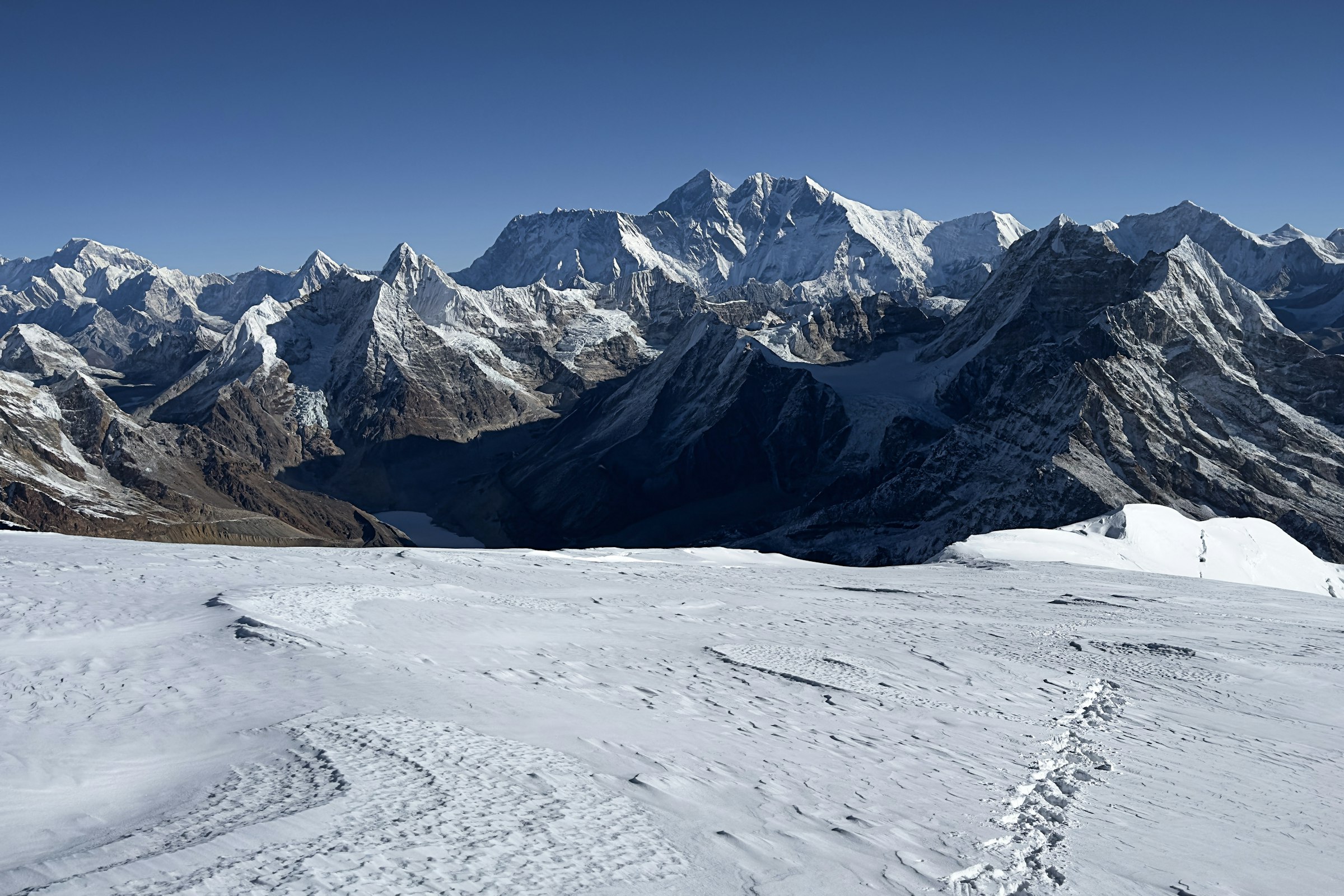
Cho Oyu, whose name is usually translated as “Turquoise Goddess”, is the sixth-highest mountain in the world at 8,201 m (some surveys give 8,188 m). It rises on the border between Nepal and Tibet, about 20 km west of Everest, and its standard north-west route from the Tibetan side is widely regarded as the most accessible of all the 8,000 m climbs. That makes it a natural first 8,000 m peak for strong climbers who have gained experience on 6,000 m and 7,000 m mountains, and an ideal stepping stone towards Everest.
Our 41-day expedition begins in Kathmandu, where we arrange your Chinese group visa for Tibet, the Tibet Travel Permit and the climbing permit from the China Tibet Mountaineering Association. We then travel overland via the Rasuwagadhi-Kyirong border crossing, a scenic journey that gains height gradually through Kyirong and on to Tingri on the Tibetan plateau, where we spend an extra night to acclimatise. From Tingri, a drive brings us to Chinese Base Camp at about 4,900 m, and yaks carry the expedition equipment via an intermediate camp to Advanced Base Camp at about 5,700 m.
A 21-day climbing period allows for proper acclimatisation rotations and time to wait for a good weather window. The route climbs to Camp I at about 6,400 m, then through a short ice cliff to Camp II at around 7,100 m and on to Camp III at about 7,450 m, before the summit push through the rock of the Yellow Band to the broad summit plateau, with its famous view of Everest. An experienced, government-licensed high-altitude Sherpa climbs with you throughout, and supplementary oxygen with a summit mask and regulator is included.
Who is this expedition for?
Cho Oyu suits fit, experienced mountaineers who are comfortable with crampons, an ice axe and fixed ropes, and who have climbed at least one 6,000-7,000 m peak. Technical difficulty is moderate by 8,000 m standards, but the altitude, cold and long summit day are as serious as on any of the giants, and good acclimatisation is the key to success.
Nima Adventure, led by Managing Director Kanchha Sherpa, a career Himalayan guide, takes care of the complex visa, permit and overland logistics from our office in Kathmandu, so that you can concentrate on acclimatising well and climbing strongly.
Trip highlights
- Climb the world's sixth-highest mountain, often seen as the most accessible 8,000 m peak
- Scenic overland journey from Kathmandu via Kyirong and Tingri in Tibet
- Gradual acclimatisation on the Tibetan plateau before reaching base camp
- Personal government-licensed high-altitude climbing Sherpa
- 21-day climbing period for rotations and the best weather window
- Summit plateau views of Everest and Lhotse
- Chinese group visa, Tibet permits and climbing royalty arranged for you
Itinerary
A Nima Adventure representative meets you at Tribhuvan International Airport and transfers you to your 4-star hotel. The rest of the day is free to rest after your journey. If you feel like stretching your legs, the Boudhanath Stupa, close to our office in Boudha, is a peaceful place for an evening walk. We will collect your passport details and photographs today, as these are needed for the Tibet visa application.
While our office prepares the documents for your Chinese group visa and Tibet permits, you have a relaxed day to recover from jet lag. Your climbing Sherpa checks your personal equipment, from boots and crampons to down suit and sleeping bag, so that anything missing can be bought or hired in Kathmandu. There is also time to visit Swayambhunath or Pashupatinath, or simply rest at the hotel.
Our team submits the visa application and permit paperwork, which requires your original passport. Meanwhile, we hold a full expedition briefing covering the overland journey, life at base camp, the climbing plan, oxygen use, communication and safety procedures. It is a good opportunity to meet your climbing Sherpa and fellow members properly and ask any questions about the weeks ahead. The afternoon is free for final shopping.
A final day in Kathmandu while the visa is processed. Use it to pack your expedition bags, which will travel by vehicle to Chinese Base Camp and by yak to Advanced Base Camp, and to buy snacks for the high camps. Pack a separate overnight bag for the drive through Tibet. In the evening we confirm the departure time and collect your passport with the visa, ready for the border crossing.
We leave Kathmandu early and drive north via Trishuli and Dhunche, through the Langtang region, to Syabrubesi and on to Timure near the Rasuwagadhi border. The road follows the Trishuli River through steep, forested hills and can be rough and slow in places, so the drive takes about 7-8 hours. We overnight in a simple lodge close to the border, ready for an early crossing in the morning.
After breakfast we cross the bridge at Rasuwagadhi into Tibet, complete immigration and customs formalities on the Chinese side and meet our Tibetan driver and liaison staff. A short drive up the forested Kyirong valley brings us to Kyirong town at about 2,700 m, a pleasant place with a mild climate. The rest of the day is free to rest and adjust, as the border procedures can take several hours.
Today the road climbs out of the green Kyirong valley onto the Tibetan plateau, crossing high passes above 5,000 m with sweeping views of the Himalaya and passing the turquoise lake of Peiku Tso, with Shishapangma rising beyond. The drive takes about 6-8 hours. We descend to Tingri at about 4,300 m, a small town on the open plains with a fine view of Cho Oyu on clear days. Drink plenty, as the altitude gain is considerable.
This important rest day helps your body adjust to the altitude of the plateau. We take a gentle hike to the hill above town, gaining a couple of hundred metres for wide views across the plains to Cho Oyu and Everest, before returning to rest. The afternoon is free for reading, final checks of personal equipment and getting to know the Tibetan staff who will support the drive and the yak transport.
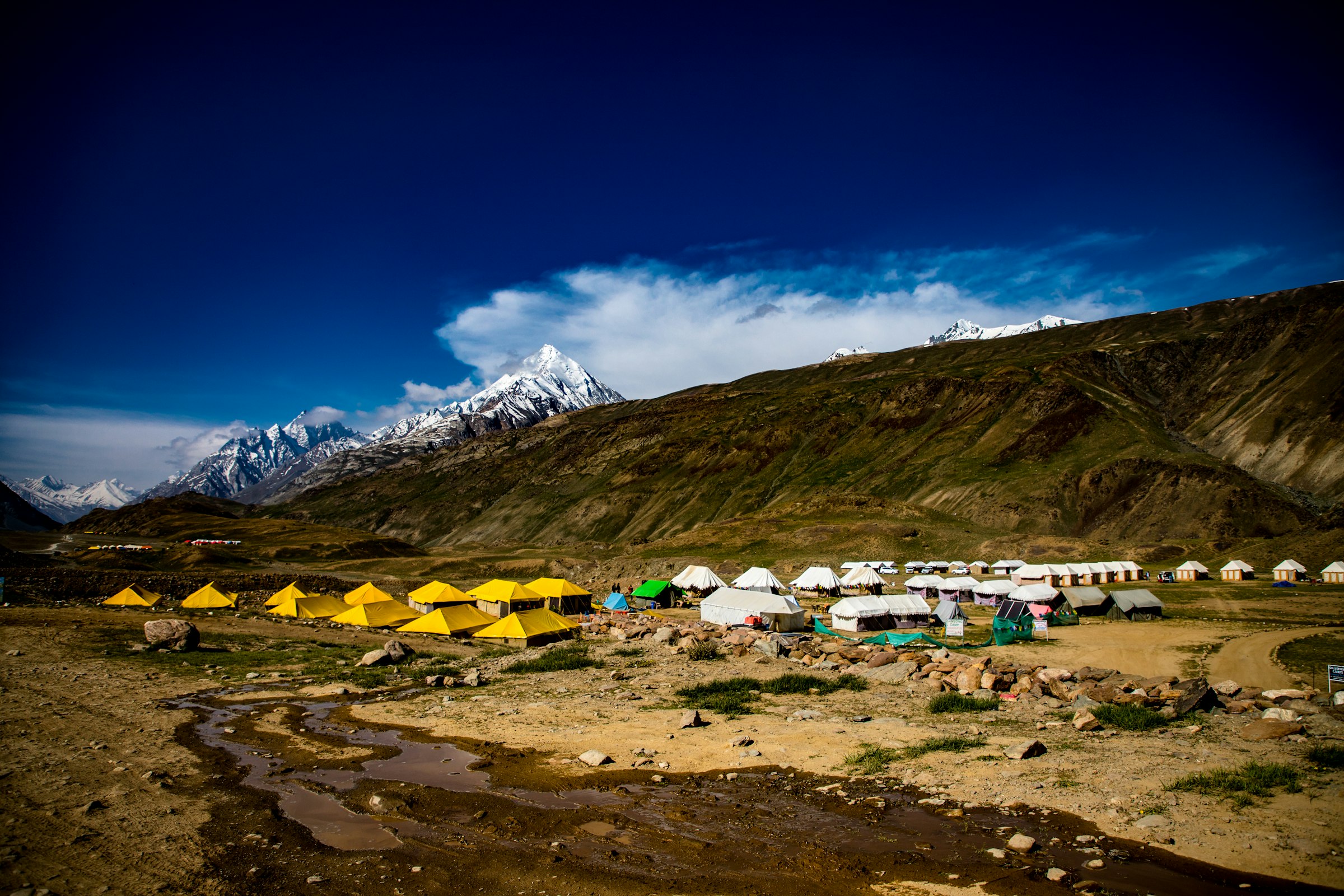
A drive of a few hours across the high plateau and along rough tracks brings us to Chinese Base Camp at about 4,900 m, where the road ends. Our kitchen team sets up camp, with individual tents and a dining tent, and we meet the yak herders who will carry the expedition loads higher. The landscape here is stark and beautiful, a high, open valley ringed by moraine and snow peaks, and a first taste of life in camp.
Three nights at Chinese Base Camp give your body time to adjust before moving higher. We take short acclimatisation hikes on the surrounding hills each day, following the principle of climbing high and sleeping low, while the yak loads are weighed and organised. Your climbing Sherpa runs refresher sessions on fixed-rope technique and checks crampons, harness and oxygen equipment. Meals are prepared by our cook team in the dining tent.
We set out on foot while the yaks follow with the loads, walking along the moraine and grassy slopes beside the Gyabrag Glacier for about 5-6 hours to Intermediate Camp at about 5,400 m. The pace is deliberately slow and steady. The camp is simple but comfortable, with the kitchen team serving hot food. This overnight stop breaks the ascent to Advanced Base Camp into two manageable stages for better acclimatisation.
A walk of about 4-5 hours over rocky moraine brings us to Advanced Base Camp at about 5,700 m, set at the foot of Cho Oyu's north-west face with a direct view of the route. The yaks deliver our equipment, and the team sets up individual tents, the dining tent and kitchen. This is home for the climbing period. Take it easy on arrival, drink plenty and rest well, as the altitude is now significant.
The first days at Advanced Base Camp are for rest and preparation. A puja ceremony is held to bless the team and ask for safe passage on the mountain, an important ritual for every Sherpa. Your climbing Sherpa leads short training sessions on the glacier nearby, practising jumar and descender work on fixed ropes and moving efficiently in crampons, and fits and tests your oxygen mask and regulator ready for the summit push.
The route climbs a steep scree slope and snow ridge to Camp I at about 6,400 m. After a night or two, you return to ABC to rest, then climb back through Camp I and the short ice cliff above it, protected by fixed ropes, to Camp II at about 7,100 m. Sleeping at Camp II is the key acclimatisation step. Between rotations you rest at ABC, while the Sherpa team stocks the high camps with tents, fuel, food and oxygen.
When the forecast shows a window of calm weather, you climb to Camp I, Camp II and Camp III at about 7,450 m, using supplementary oxygen on the upper mountain. Summit day starts before dawn, climbing through the Yellow Band on fixed ropes to the vast summit plateau, where the highest point offers a magnificent view of Everest and Lhotse. You descend to Camp II or lower, then on to ABC. Spare days cover weather delays.
After clearing Advanced Base Camp and packing all rubbish and equipment for the yaks, we walk down past Intermediate Camp to Chinese Base Camp in about 6-7 hours. With every step down, the air feels thicker and your legs stronger. In the evening we celebrate the expedition with the climbing Sherpas, cooks and yak herders, a fitting way to thank the whole team that has supported you on the mountain.
We load the vehicles and drive back across the plateau to Tingri, a few hours away. After weeks in tents, a guesthouse bed and a hot wash feel like real luxury. The afternoon is free to rest, sort personal equipment and enjoy the views of Cho Oyu from the plains, now seen with the satisfaction of having stood on its slopes. Overnight in Tingri.
The drive retraces the route across the high plateau, past Peiku Tso and over the passes, before descending into the forested Kyirong valley, a drive of about 6-8 hours. The change from dry, brown plateau to green forest and running streams is striking. We overnight in Kyirong town, where the lower altitude makes for a deep, comfortable night's sleep before the border crossing.
After a short drive to the border, we complete the exit formalities, cross back into Nepal at Rasuwagadhi and meet our vehicle for the drive to Kathmandu via Syabrubesi, Dhunche and Trishuli. The journey takes most of the day, often 8-9 hours including the border procedures, and the road is rough in places. On arrival in Kathmandu, we transfer you to your hotel for a well-deserved rest.
A free day in Kathmandu to rest, shop or explore. You might visit Patan Durbar Square, Bhaktapur or the Boudhanath Stupa, or simply relax in the hotel garden. This day also acts as a buffer in case of delays on the overland journey. In the evening the team gathers to celebrate the expedition, share photographs and say thank you to the Sherpa team for their hard work and support.
After breakfast and final packing, a Nima Adventure representative transfers you to Tribhuvan International Airport in good time for your flight home. If you would like to continue your travels, our Kathmandu office can arrange a trek, a safari in Chitwan National Park or a tour in Bhutan. We hope Cho Oyu is the first of many great Himalayan climbs with us.
What’s included
Cost Includes
5 itemsComprehensive Full Support
This cost covers the complex logistics of climbing in Tibet, ensuring you meet all mandatory requirements.
- Permits & Visa: Expedition Royalty and permit fee of the Chinese Government (CMA / TMA). Restricted area permit and fee. Tibet Visa fee.
- Guiding & Safety: An experienced government licensed high altitude climbing Sherpa during the entire climb. All wages, equipment, medical and accidental insurances for all involved staff. First Aid medical kits for the group and the staffs.
- Oxygen: 3 Bottles (12L) of Oxygen provided each member, and 1 bottle for the climbing sherpa. 1 Set of Summit Oxygen masks & regulator for each member and high-altitude Sherpa.
- Accommodation & Food: 6 Nights hotel accommodation in 4-star hotel in Kathmandu on B/B basis. Individual tent available in the Chinese and Advance Base Camp. 3 meals a day (Breakfasts, Lunch and Dinners with tea/ coffee) in available tea house/hotel/lodge during the trekking and base camp.
- Logistics & Equipment: Land transportation for members and staffs. Per person 60kg baggage allowance during trekking-up carrying by yaks. Common climbing equipment (fixed and main rope, ice bars, snow bar etc). Heater will be provided at base camp for heating the dining room.
Cost Excludes
6 itemsMember's Mandatory Responsibility
All clients must secure the following mandatory items, especially insurance:
- Mandatory Insurance: Insurance covering both medical and high-altitude evacuation costs (including high-altitude rescue & air evacuation, medical treatment, etc.) is mandatory.
- Tips & Bonus: Summit bonus for climbing Sherpa (minimum US$1500 per climbing Sherpa guide). Tips for base camp and high camp staff’s (minimum US$400 per person).
- Travel Fees: International airfare to and from Kathmandu. Nepal entry visa fee (Multiple entry).
- Personal Expenses: Lunch and dinner during your stay in Kathmandu. Expenses of personal nature such as soft drinks, battery charge, laundry, internet, alcoholic beverages, etc.. Any packed food/snacks during the trekking.
- Contingency & Gear: Expenses of extra nights’ accommodation in Kathmandu. Rescue, Repatriation, Medicines, Medical Tests and Hospitalization expenses. Personal climbing gears, clothing, personal medical kit, and camera/video fees.
- Communication Fees: Expenses incurred towards usage of satellite phone and Internet. Satellite phone is available for emergency use at an appropriate charge.
Equipment list
Foot Wear
3- Normal Socks 3-4Pairs
- Trekking Shoes 1 Pair
- Slippers
Hands
2- Thin Fleece Gloves 1 Pair
- Wind Stopper Fleece Gloves
Upper Body
6- Light Weight Top / Thermo Coat
- Buff
- Fleece Jacket 1
- Gore Tex Jacket 1
- Down Jacket 1
- Cotton T-Shirt 2-3
Lower Body
4- Mid Weight Long Under Pants
- Under Wear 4-5 Pairs
- Gore Tex Pant. 1
- Water Proof Pant1
Head
4- Sun Cap
- Balaclava
- Fleece Hat
- Neck Gaiter 2-3
Sleeping Bags
1- Sleeping Bag rated to -20°C For base camp
Bag Packs
2- Rucksacks 45-55L
- Duffle Bag 90 L 1 Piece
Sun stuffs
4- Sunscreen Minimum SPF 50
- Lip balm with SPF 30
- Sunglasses UV protection
- Toiletries.
Medicines
7- Brufen / Ibuprofens
- Antibiotic
- Diamox
- Paracetamol
- Handy Plaster
- Crack Bandage
- Tincture Iodine
Miscellaneous
2- Walking Stick
- Umbrella / Rain Coat
Frequently asked questions
Cho Oyu sits on the Nepal-Tibet border, and its standard north-west route starts on the Tibetan side, where vehicles can reach Chinese Base Camp and yaks can carry loads to Advanced Base Camp. This is the route with established camps, fixed ropes and logistics, and it is the one used by most expeditions. We organise the whole journey from Kathmandu, including the overland drive via the Rasuwagadhi-Kyirong border crossing.
You need a Chinese group visa for Tibet, which we arrange in Kathmandu, plus the Tibet Travel Permit, the relevant restricted area permits and the Cho Oyu climbing permit and expedition royalty from the China Tibet Mountaineering Association. Our office prepares all applications, which is why the first days are spent in Kathmandu. Your passport should be valid for at least six months, and we recommend a multiple-entry Nepal visa.
Yes, for the right climber. The standard route is less technical than most 8,000 m routes, with moderate snow slopes, one short ice cliff and the rock of the Yellow Band, all protected by fixed ropes. However, the altitude, cold and long summit day are serious. We recommend previous experience on at least one 6,000-7,000 m peak, such as Mera Peak, Island Peak or Ama Dablam, and solid crampon and jumar skills.
Cho Oyu is climbed in both autumn and spring. Autumn, from September to early October, is the traditional season, with summit windows usually appearing in late September or early October. Spring expeditions run from April to May. Opening dates and conditions on the Tibetan side are set by the Chinese authorities, so we confirm the season and permits well in advance and keep you updated if regulations change.
The overland journey helps a great deal: we gain height gradually through Kyirong and spend two nights in Tingri at about 4,300 m before driving to Chinese Base Camp, where we rest for several nights. An intermediate camp breaks the walk to Advanced Base Camp. On the mountain, rotations to Camp I and Camp II, followed by rest at ABC, prepare your body for the summit push, and your Sherpa monitors you throughout.
The 21-day climbing period is deliberately generous, so that we can wait out storms and high winds rather than force an attempt. We receive daily weather forecasts and choose the summit day carefully with your climbing Sherpa. If the weather does not allow a safe summit within the climbing period, we return to Kathmandu as planned. Extra costs caused by events beyond our control, such as road closures, are not included.
Trip Reviews
Submit your review | |
Plan Mount Cho Oyu Expedition (8,201 m) with our team
Tell us your dates and group size and we will reply within 24 hours with availability, a tailored itinerary and a group price.
- Reply within 24 hours
- No booking fees
- Free itinerary tailoring
You may also like

K2 Expedition: Conquering the Savage Mountain (8,611 m)
- 59 Days
- Challenging
- Nepal Expedition
