
Island Peak Climbing (6,189 m)

Trip Overview
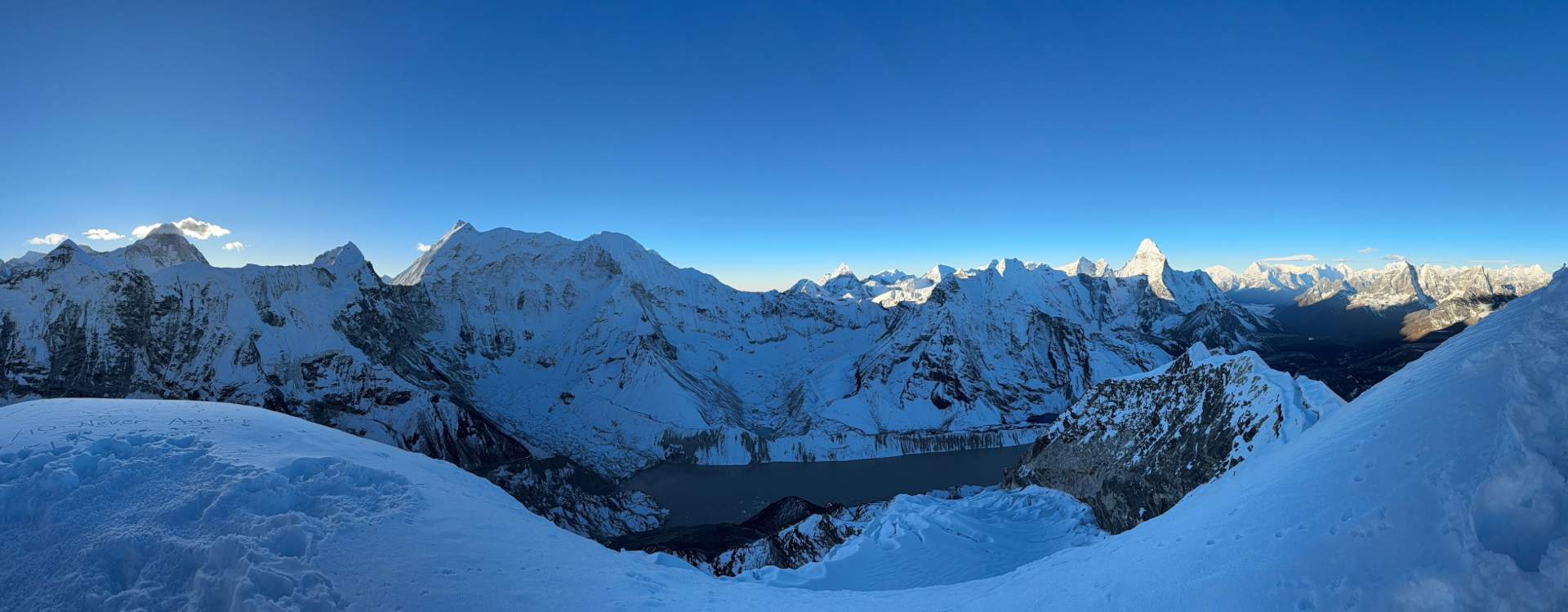
Island Peak (6,189 m), or Imja Tse, is one of the most popular climbing peaks in Nepal, and this 14-day programme is the most direct way to climb it. Designed for those who want a technical challenge in the heart of the Khumbu, the trip combines a classic teahouse trek up the Everest valley with a guided ascent from Island Peak Base Camp. The mountain stands at the head of the Imja valley, surrounded by the walls of Lhotse and Nuptse with Ama Dablam to the south, and its summit ridge gives a close, dramatic view of some of the highest mountains on Earth.
The trek follows the familiar route from Lukla through Phakding to Namche Bazaar, where you spend a full day acclimatising with a hike to the Everest View Hotel. From Tengboche, with its famous monastery, you continue to Dingboche for a second acclimatisation day and a hike up Nangkartshang Peak (5,083 m), with views of Ama Dablam, Lhotse, Makalu and Island Peak itself. A short walk then brings you to Chukung (4,730 m), the last settlement in the valley, before you move up to base camp beside the Imja Glacier.
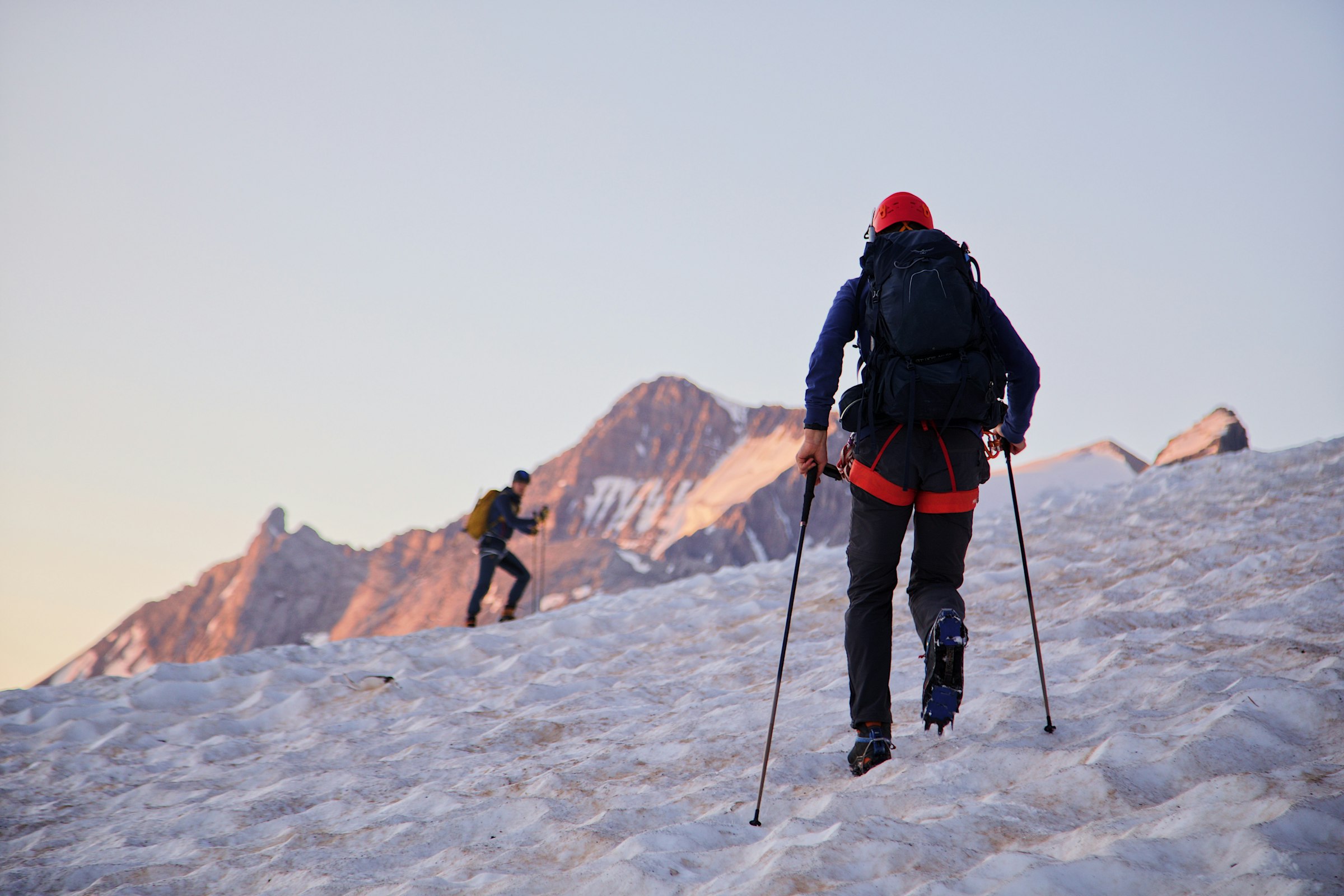
At base camp your climbing guide runs a practical training session on crampons, ice axe, harness, ascender and descender, and shows you how to move safely on fixed ropes. Summit day starts in the early hours. A rocky trail and gully lead up to the glacier, which you cross roped together, followed by a steep headwall of snow and ice climbed on fixed ropes. The final ridge leads to the summit, where the south face of Lhotse towers overhead and Makalu, Baruntse and Ama Dablam stand on the horizon. You then descend all the way back to Chukung, and the following days retrace the trail to Lukla.
Who is this trip for?
This is a compact itinerary for fit trekkers who already have some experience of walking at altitude and want a first taste of Himalayan climbing. No technical mountaineering experience is required, but you should be comfortable on long, demanding days and willing to learn new skills quickly. If you have never been above 4,000 m, consider our Everest Base Camp Trek with Island Peak, which adds extra acclimatisation. Nima Adventure, led by Managing Director Kanchha Sherpa, runs Island Peak climbs in spring, autumn and winter, and every ascent is led by a government-licensed climbing guide who puts safety ahead of the summit.
Trip highlights
- Guided ascent of Island Peak (Imja Tse, 6,189 m)
- Compact 14-day itinerary, ideal for a first 6,000-metre summit
- Acclimatisation hike to Nangkartshang Peak (5,083 m) above Dingboche
- Climbing skills training at base camp before summit day
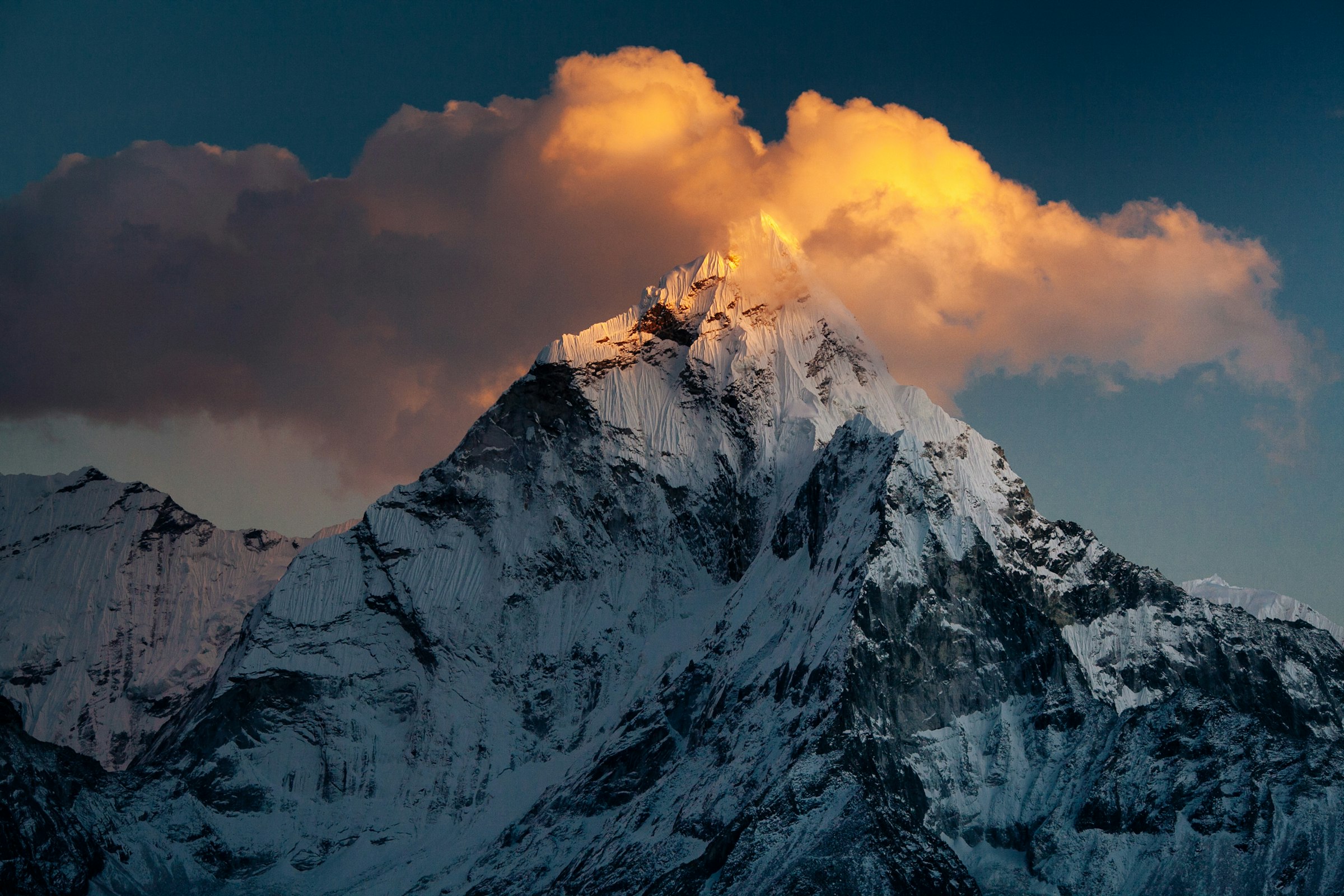
- Close views of Lhotse's south face, Makalu, Baruntse and Ama Dablam
- Tengboche Monastery and the Sherpa villages of the Imja valley
Itinerary
A Nima Adventure representative meets you at Tribhuvan International Airport and transfers you to your hotel. After checking in and freshening up, you meet your guide, who checks your trekking and climbing equipment and takes you to the shops of Thamel to buy or hire anything missing. In the evening we host a welcome dinner, where you can meet the team and talk through the climb ahead. Overnight in Kathmandu.
An early start takes you by road to Manthali Airport in Ramechhap, around 4-5 hours from Kathmandu, for the short flight to Lukla. Outside the busiest seasons, flights may operate directly from Kathmandu. After landing and meeting your porters, you begin with an easy walk, mostly downhill, through Chaurikharka and small farming villages to Phakding on the banks of the Dudh Koshi. Walking time 3-4 hours. Overnight in Phakding.
The trail follows the Dudh Koshi north, crossing the river several times on suspension bridges, to Monjo and the entrance to Sagarmatha National Park. Beyond Jorsale you cross the high Hillary Suspension Bridge and start the long climb to Namche Bazaar, with a first glimpse of Everest on a clear day. Namche, the busy trading town of the Khumbu, has bakeries, shops and comfortable lodges. Walking time 6-7 hours. Overnight in Namche.
A rest day here is essential before going higher. In the morning you hike above Namche to the Everest View Hotel ridge (3,880 m) for an up-close view of Everest, Lhotse and Ama Dablam, returning to sleep at a lower altitude. On the way back you can visit the national park visitor centre and its displays on the culture and wildlife of the Khumbu. The afternoon is free to rest. Walking time 3-4 hours. Overnight in Namche.
An easy, scenic traverse from Namche leads to Kyangjuma and Sanasa, with Ama Dablam ahead. The trail then descends to Phunki Thenga on the river before climbing steadily through pine and rhododendron forest to Tengboche. The village is famous for Tengboche Monastery, the largest in the Everest region, where you may be able to watch the monks at prayer in the afternoon. Walking time 5-6 hours. Overnight in Tengboche.
You begin on an easy path through birch, conifer and rhododendron forest, dipping down to Deboche and crossing the Imja Khola before climbing to Pangboche. From here the walk is moderate as you enter the Imja valley, which opens out gradually as you approach the confluence with the Lobuche Khola. A short descent to the river is followed by the climb up to Dingboche. Walking time 5-6 hours. Overnight in Dingboche.
After breakfast you hike up the ridge behind Dingboche towards Nangkartshang Peak, reaching a viewpoint at about 5,083 m. From here you can see Ama Dablam, Taboche, the Nuptse-Lhotse ridge, Makalu and Island Peak, giving you a first proper look at the mountain you are about to climb. You return to Dingboche for lunch and a restful afternoon. Walking time 3-4 hours. Overnight in Dingboche.
A short, gentle walk up the Imja valley takes you past the yak pastures of Bibre to Chukung, a small settlement about half an hour beyond. The Lhotse wall rises to the north and Island Peak comes into full view. Arriving by late morning gives you time to rest, drink plenty of fluids and, if you feel well, walk up the slopes above the village in the afternoon to help acclimatisation. Walking time 2-3 hours. Overnight in Chukung.
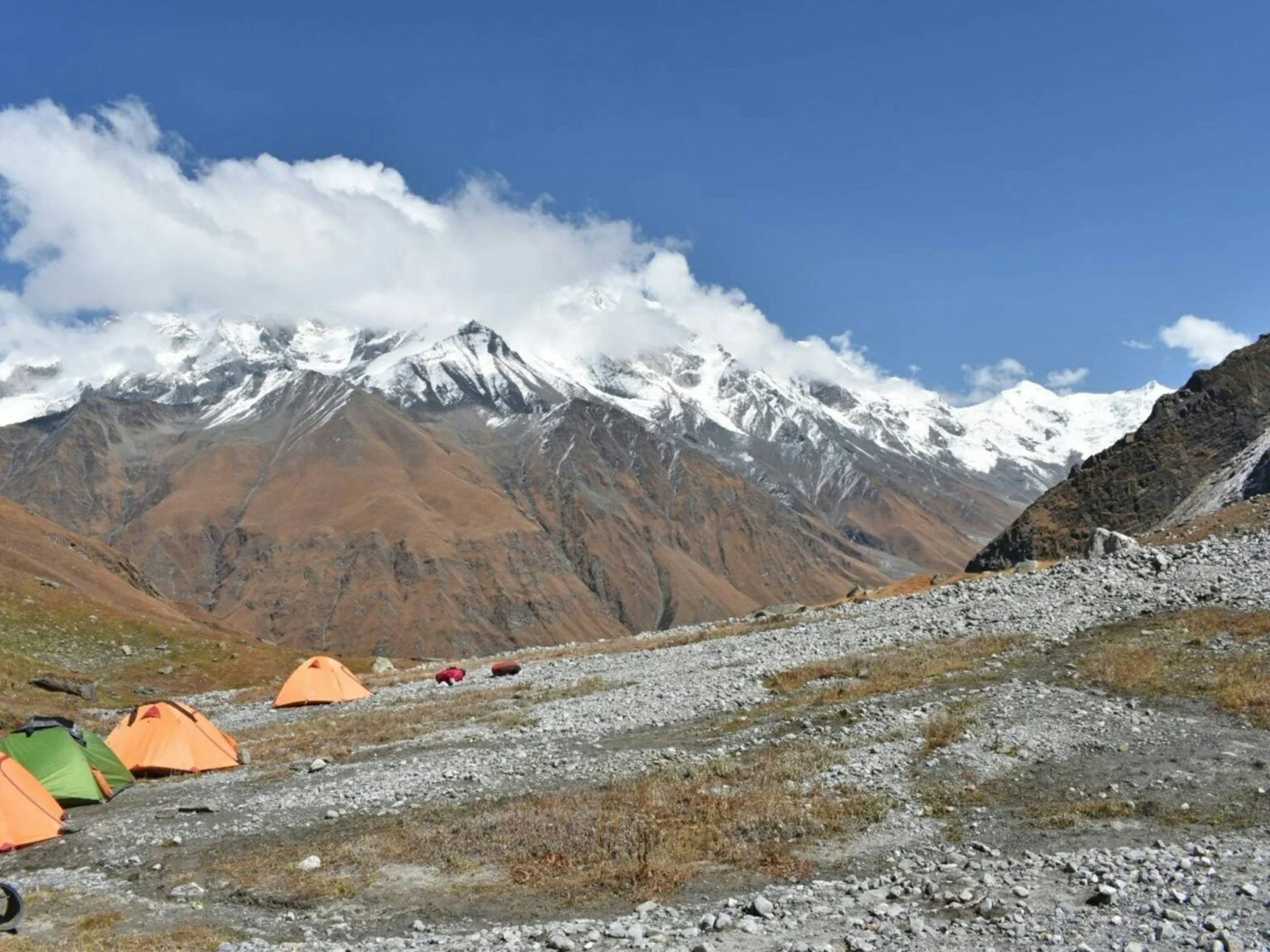
The trail heads east up the Imja valley, crossing the moraine of the Lhotse Glacier and climbing a fairly steep path to Island Peak Base Camp at around 5,100 m. After lunch your guide runs a hands-on training session on climbing techniques and equipment, covering crampons, ice axe, harness, ascender and descender, and how to move up and down fixed ropes. Early dinner and bed, ready for a pre-dawn start. Walking time about 3 hours. Overnight in tents at base camp.
You leave base camp around 1-2 am by headtorch. A rocky trail and a steep gully lead to the crampon point, where you rope up and cross the glacier, sometimes using ladders over crevasses. A steep headwall of snow and ice is climbed on fixed ropes to the narrow summit ridge, which leads to the top and its close view of Lhotse. After descending by abseil, you return to base camp for a break and walk on to Chukung. Total 10-12 hours. Overnight in Chukung.
A long day of descent takes you back down the Imja valley through Dingboche and Pangboche, then through forest to the Imja Khola and up to Tengboche. After crossing the Dudh Koshi at Phunki Thenga, the trail climbs through pine forest to Sanasa and follows the hillside past a chorten to Namche Bazaar. Thicker air makes the walking easier than on the way up. Walking time 7-8 hours. Overnight in Namche.
The trail descends steeply from Namche, so you need to walk carefully, especially on the stone steps. After crossing the suspension bridges over the fast-flowing Dudh Koshi and its tributaries, the trail becomes more level through Monjo and Phakding before a final gradual climb to Lukla. Celebrate your climb with your guide and porters on your last night in the mountains. Walking time 6-7 hours. Overnight in Lukla.
You catch an early morning flight from Lukla to Ramechhap and drive back to Kathmandu, or fly straight to Kathmandu when flights operate from there. Mountain weather can delay departures, so allow for some flexibility. Back at your hotel, you can return any hired gear, rest, or head out for some souvenir shopping in Thamel and a celebratory meal. Overnight in Kathmandu.
Your Island Peak expedition ends today. Depending on your flight time, there may be a chance for a final visit to Boudhanath Stupa or a last walk through Thamel. A Nima Adventure representative transfers you to Tribhuvan International Airport in good time for your departure. We recommend booking your international flight with a spare day or two in hand in case of weather delays at Lukla.
What’s included
Cost Includes
25 items-
All land transportation by private car or jeep (Pick up & drop).
-
2 nights hotel accommodations in 3-star hotel in Kathmandu (BB plan).
-
Schedule flight Ramechhap - LUK - Ramechhap.
-
Jeep from KTM - Ramechhap - KTM.
-
Accommodation in the comfortable lodge/ tea house during the whole trek.
-
2 nights in tented accommodation during the Island Peak summit time.
-
Breakfast, Lunch, Dinner and tea, coffee, etc in lodges during trekking to base camp and back
-
Nima Adventure’s duffel bag.
-
1 government license holder climbing guide and porter (2:1 ratio) on sharing basis.
-
Salary, equipment, transportation, food & clothing for guide and porter.
-
Medical & emergency rescue insurance for involved Nepalese staffs during the trek.
-
All kitchen, dining tents, table, chairs & cooking utensils for Island Peak BC.
-
Food and fuel at Base Camp.
-
Service of cook and kitchen boy at Base Camp.
-
Up to 20 kg baggage carried by the porter during the trek.
-
Emergency oxygen, mask and regulator provided on requirement of guest with appropriate charge.
-
Trekking permit (TIMS).
-
Sagarmatha National Park fee.
-
Pasang Lhamu VDC fee.
-
Island Peak permit fee.
-
Garbage Management Fee.
-
Climbing insurance for climbing guide.
-
Welcome or Farewell dinner in Kathmandu.
-
Agency service charge.
-
13% government tax.
Cost Excludes
12 items-
International airfare from/to your country.
-
Nepal entry visa fee (can be obtained at the airport at upon arrival).
-
Extra nights’ accommodation in Kathmandu in case of early arrival or late departure, early return from trekking, domestic flight cancellation than the scheduled itinerary.
-
Lunch and dinner during your stay in Kathmandu (also in case of early return from trekking).
-
Personal insurance such as travel, accident, medical, emergency evacuation (above 6000m) and lost luggage. *Mandatory.
-
Expenses of personal nature such as soft drinks, mineral water, hot shower, laundry, telephone, alcoholic beverages etc.
-
Any change in the itinerary if requested by the client.
-
Extra charge if additional staff added.
-
Tips for Guide and Porter.
-
Summit bonus for climbing guide (Minimum $250).
-
Personal trekking and climbing equipments and personal medical kits.
-
Anything that’s not mentioned in the “Package Includes” section.
Equipment list
Foot Wear
3- Normal Socks 3-4Pairs
- Trekking Shoes 1 Pair
- Slippers
Hands
2- Thin Fleece Gloves 1 Pair
- Wind Stopper Fleece Gloves
Upper Body
6- Light Weight Top / Thermo Coat
- Buff
- Fleece Jacket 1
- Gore Tex Jacket 1
- Down Jacket 1
- Cotton T-Shirt 2-3
Lower Body
4- Mid Weight Long Under Pants
- Under Wear 4-5 Pairs
- Gore Tex Pant. 1
- Water Proof Pant1
Head
4- Sun Cap
- Balaclava
- Fleece Hat
- Neck Gaiter 2-3
Sleeping Bags
1- Sleeping Bag rated to -20°C For base camp
Bag Packs
2- Rucksacks 45-55L
- Duffle Bag 90 L 1 Piece
Sun stuffs
4- Sunscreen Minimum SPF 50
- Lip balm with SPF 30
- Sunglasses UV protection
- Toiletries.
Medicines
7- Brufen / Ibuprofens
- Antibiotic
- Diamox
- Paracetamol
- Handy Plaster
- Crack Bandage
- Tincture Iodine
Miscellaneous
2- Walking Stick
- Umbrella / Rain Coat
Frequently asked questions
Island Peak is a good first climbing peak for fit trekkers with some experience of altitude. You do not need previous mountaineering experience, as your guide teaches the essential skills at base camp. However, summit day is long and physically hard, with glacier travel, a steep fixed-rope headwall and an exposed ridge, so strong fitness and a calm head for heights make a real difference.
This is a compact itinerary with rest days in Namche Bazaar and Dingboche, and it works well for fit trekkers who acclimatise normally. If you have never been above 4,000 m, or you know you acclimatise slowly, consider our 18-day Everest Base Camp Trek with Island Peak, which adds Kala Patthar and an extra rest day at Chukung, or ask us about adding a spare day.
You leave base camp around 1-2 am. A rocky trail and gully lead to the crampon point, followed by a roped glacier crossing and a steep snow and ice headwall climbed on fixed ropes with an ascender. A short, narrow ridge leads to the summit. You descend by abseil and walk back down to Chukung, so allow 10-12 hours in total.
You need the Sagarmatha National Park entry permit, the Khumbu Pasang Lhamu Rural Municipality permit and an Island Peak climbing permit. Nima Adventure arranges all three, along with the garbage management requirements for climbing peaks. Carry your passport throughout the trip, as permits are checked at several points on the trail.
Your guide watches the forecast and conditions closely. If wind, fresh snow or poor visibility make the climb unsafe, the attempt is delayed or the team turns back, because safety always comes before the summit. Adding a spare day to your plans gives the flexibility for a second attempt and helps absorb any flight delays at Lukla.
Yes, Nima Adventure runs winter Island Peak climbs for experienced and well-equipped climbers. From December to February the skies are often clear and the trails quiet, but it is very cold, especially on the pre-dawn summit push, and winds can be strong. You will need expedition-weight down clothing and warm boots. Spring and autumn remain the most popular seasons.
Comprehensive travel insurance is mandatory and must cover climbing to at least 6,200 m, including helicopter evacuation, medical treatment and repatriation. Many standard policies exclude mountaineering, so check the altitude limit and activity cover carefully. Please send us your policy details before you travel so we can act quickly on your behalf in an emergency.
Trip Reviews
Submit your review | |
Plan Island Peak Climbing (6,189 m) with our team
Tell us your dates and group size and we will reply within 24 hours with availability, a tailored itinerary and a group price.
- Reply within 24 hours
- No booking fees
- Free itinerary tailoring
You may also like

Everest Base Camp Trek with Lobuche Peak (6,119 m)
- 17 Days
- Challenging
- Nepal Peak Climbing
Everest Base Camp Trek with Island Peak (6,189 m)
- 18 Days
- Challenging
- Nepal Peak Climbing
