
Shishapangma Expedition (8,027 m)
Trip Overview
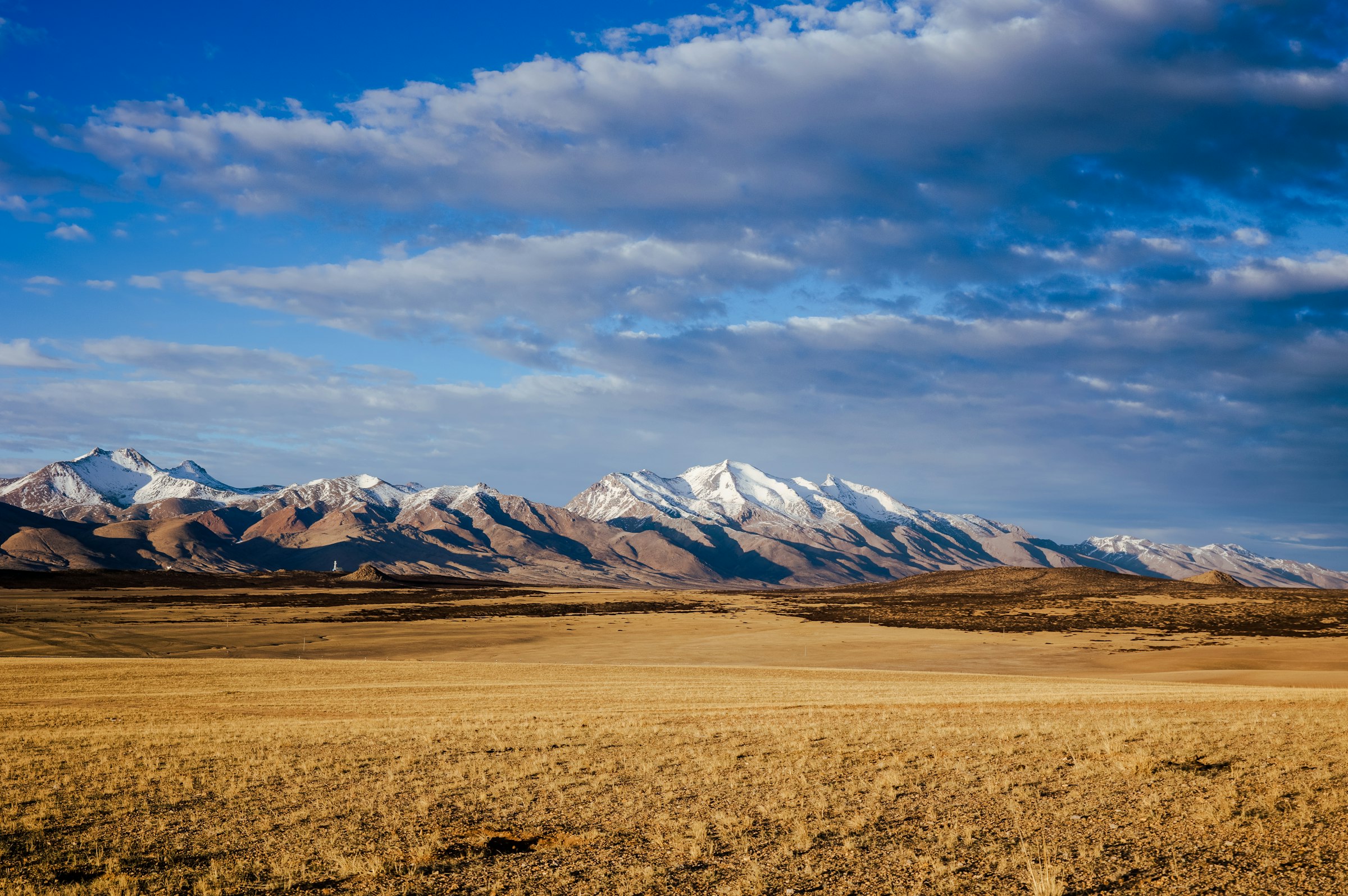
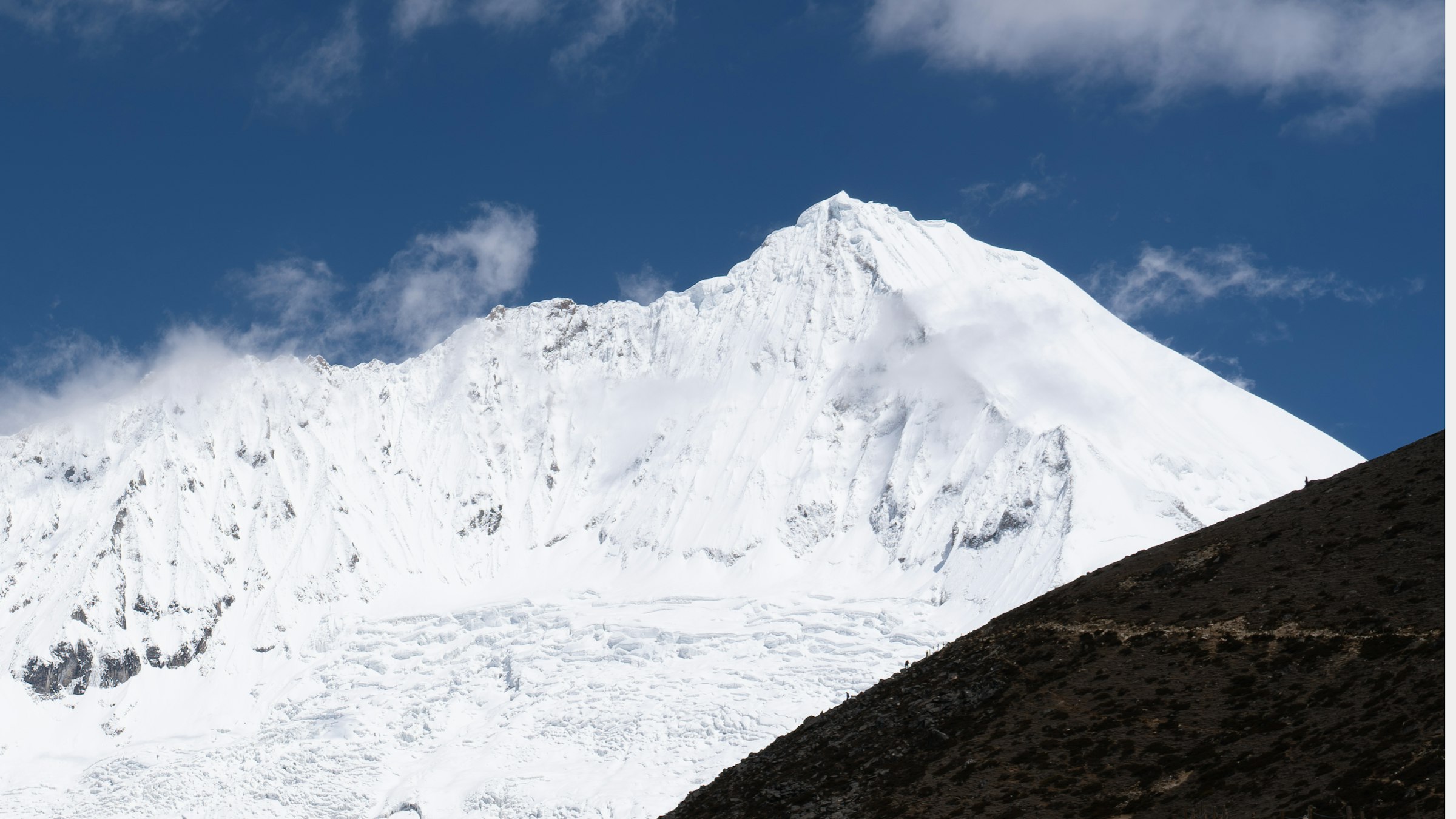
Shishapangma (8,027 m) is the fourteenth-highest mountain in the world and the only 8,000-metre peak that lies entirely within Tibet. Rising above the high plateau north of the main Himalayan chain, it was the last of the fourteen to be climbed, by a Chinese expedition in 1964. Its northern side offers a comparatively straightforward route on snow and ice, which makes it a popular choice for a first 8,000 m peak or as preparation for Everest, but the final summit ridge is a serious undertaking.
Our expedition begins in Kathmandu, where we arrange your Chinese group visa and Tibet permits, and then travels overland into Tibet through the Rasuwagadhi border crossing to Kerung (Gyirong). Staging the journey through Kerung at about 2,700 m and Tingri at about 4,300 m allows a gradual gain in altitude before we reach Base Camp at around 5,000 m, which is accessible by road. From there yaks carry the loads to Advanced Base Camp at about 5,600 m, the real starting point of the climb.
On the mountain, the standard route climbs glaciated slopes on the north side to Camp 1 at around 6,300 m, Camp 2 at around 6,800 m and Camp 3 at around 7,300 m. Summit day crosses a broad snow face to the summit ridge. The main summit at 8,027 m lies beyond the slightly lower central summit along an exposed ridge, and reaching it demands good conditions and enough reserve for the return. Your Sherpa guide will be clear about turnaround times from the start.
All mountaineering in Tibet is organised through the China Tibet Mountaineering Association (CTMA), which issues the climbing permit, provides a liaison officer and arranges the yaks. Nima Adventure handles the paperwork with CTMA and the Chinese authorities on your behalf, including the Chinese group visa issued in Kathmandu and the Tibet Travel Permit. Regulations can change at short notice, so we ask for passport details well in advance and keep you informed throughout.
Who is this expedition for?
Shishapangma suits climbers who have climbed at least one 6,000 m peak, and preferably a 7,000 m peak such as Himlung Himal (7,126 m), and who are comfortable with crampons, fixed ropes and glacier travel. Good fitness and the patience to wait for summit weather are essential. Our Sherpa team, under Managing Director Kanchha Sherpa, plans a conservative schedule with spare days built in.
Trip highlights
- Climb Shishapangma (8,027 m), the only 8,000 m peak entirely in Tibet
- Overland journey from Kathmandu into Tibet via Rasuwagadhi and Kerung
- Gradual acclimatisation through Kerung and Tingri on the Tibetan plateau
- Yak-supported approach from Base Camp to Advanced Base Camp
- Chinese group visa, Tibet permits and CTMA climbing permit arranged for you
- Clear summit plan for the exposed ridge to the true main summit
Itinerary
Welcome to Nepal. A Nima Adventure representative meets you at Tribhuvan International Airport and transfers you to your hotel in Kathmandu. After checking in, the rest of the day is free to recover from your journey or stroll through the lanes of Thamel. In the evening we meet at the hotel or our office in Boudha to check documents and insurance details and to introduce the plan for the Shishapangma expedition. Overnight at the hotel on a bed-and-breakfast basis.
Today we hold a full expedition briefing at our office in Boudha, covering the overland journey, the climbing plan and life at Base Camp. Your Sherpa guide then checks your equipment piece by piece, and anything missing can be bought or hired in Kathmandu's mountaineering shops. Meanwhile, our team finalises the Chinese group visa and Tibet permits, which require your original passport. In the afternoon you can visit Boudhanath Stupa, close to our office. Overnight at the hotel.
A second day in Kathmandu allows the Chinese group visa to be collected and the final permit documents to be checked. Expedition cargo is packed and loaded for the drive north. If you have free time, explore the old royal squares of Kathmandu or Patan, or visit Pashupatinath on the banks of the Bagmati. In the evening we go over the plan for the border crossing and the first days in Tibet. Overnight at the hotel.
We leave Kathmandu by private vehicle and drive north through Trishuli Bazaar and Dhunche into the Langtang region, a journey of around 7-8 hours on a road that is rough in places. The route climbs over forested ridges with views of Ganesh Himal and Langtang Lirung before dropping to Syabrubesi on the Bhote Koshi river. Syabrubesi is the last sizeable town before the Tibetan border. Overnight in a lodge.
A short drive up the Bhote Koshi valley brings us to the border at Rasuwagadhi. After Nepali exit and Chinese entry formalities, we meet our Tibetan liaison officer and transfer to vehicles in Tibet for the drive to Kerung (Gyirong), a valley town of forest and fields at around 2,700 m. Border procedures can take time, so patience helps. The afternoon is free to rest and explore. Overnight at a hotel in Kerung.
A full day in Kerung helps your body adapt before the big gain in height onto the plateau. We take an acclimatisation walk in the hills above the town, which is greener and more wooded than most of Tibet, and return for lunch. The rest of the day is for resting, drinking plenty of fluids and enjoying the relaxed pace of the valley. Your Sherpa guide checks how everyone is feeling. Overnight at the hotel.
Today we climb out of the Kerung valley over high passes onto the Tibetan plateau, a dramatic change in landscape from forest to vast open grassland and distant snow peaks. The drive takes around 6-8 hours with stops along the way. Tingri lies on the wide plains north of the main Himalaya, and on a clear day you can see Cho Oyu and the Everest group on the horizon. Take it easy on arrival. Overnight in a guesthouse.
A second acclimatisation day at around 4,300 m is essential before moving to Base Camp. In the morning we hike up one of the hills near Tingri, gaining a few hundred metres for views of Cho Oyu and Everest, then return to rest. Drink plenty, eat well and avoid exertion in the afternoon. This is a good time to repack your kit for Base Camp and the yak loads. Overnight in a guesthouse.
A drive of around 4-5 hours across the plateau brings us to Shishapangma Base Camp, often called Chinese Base Camp, at about 5,000 m. Set in a wide valley with views of the mountain, the camp is the end of the road and the point where yaks take over. Our crew sets up the dining, kitchen and individual tents, and the rest of the day is for settling in. Overnight in tents.
Two days at Base Camp give your body time to adjust to 5,000 m before going higher. We take short acclimatisation walks on the slopes around camp, rest and drink plenty. Meanwhile, the CTMA team arranges the yaks and our crew sorts loads for Advanced Base Camp. Your Sherpa guide uses the time to review rope skills and the plan for the climb, and to check that your boots and down clothing are ready.
Our trek to Advanced Base Camp is split into two days to help acclimatisation. Today we follow the valley up towards the mountain, walking over grassy slopes and moraine while the yaks carry the loads. The walk takes around 4-5 hours, and the intermediate camp sits at about 5,300 m beside the glacier. Take your time, keep a steady pace and drink often. Overnight in tents.
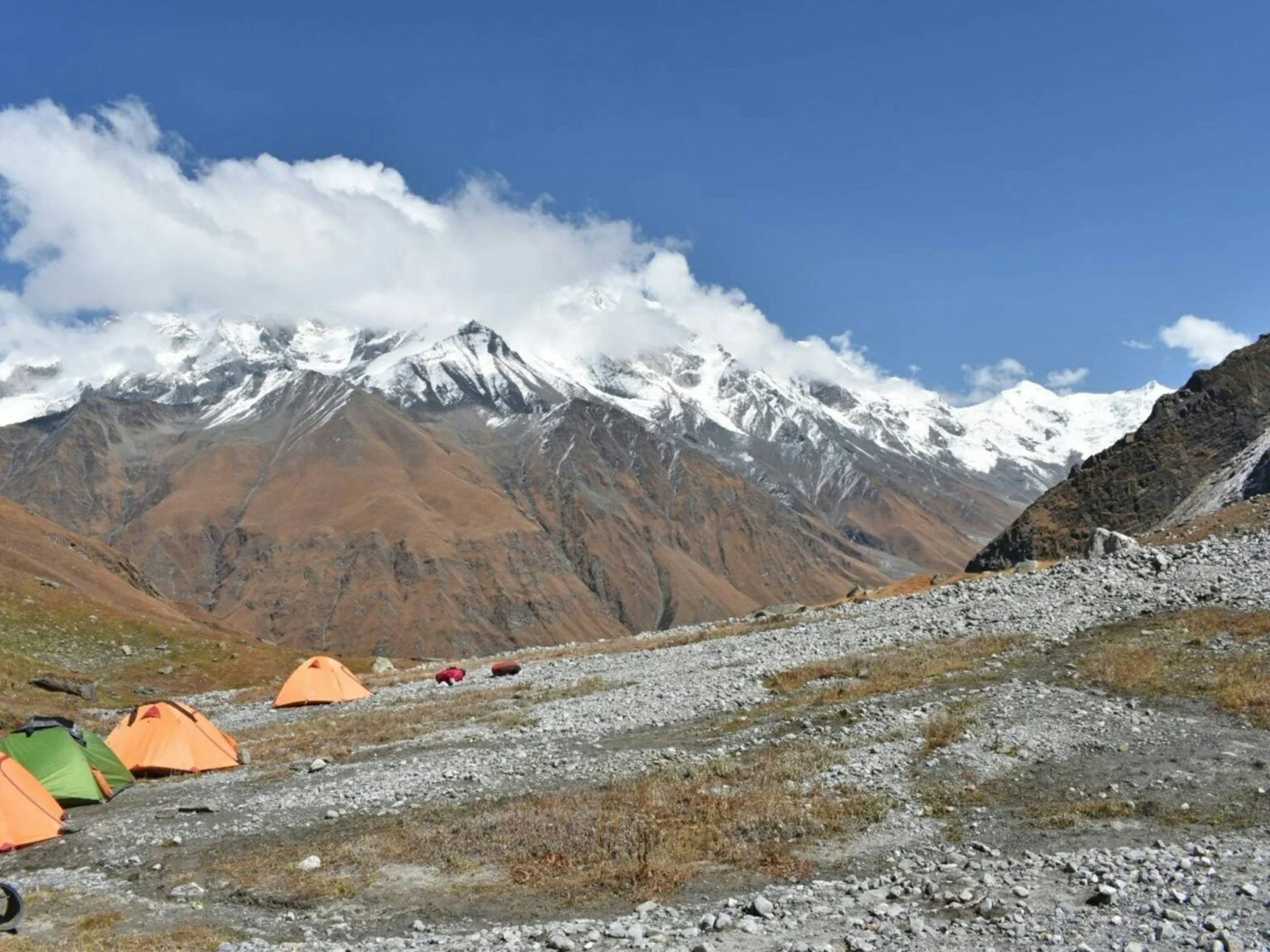
A further 4-5 hours of walking on moraine and stony ground brings us to Advanced Base Camp at around 5,600 m, close to the foot of the route. This will be our home for the climbing period. Our crew sets up individual tents, a dining tent and the kitchen, and the yaks return down the valley. The afternoon is for rest and settling in, with Shishapangma rising directly above camp.
We begin with a puja, the Buddhist ceremony Sherpa climbers perform to ask for safe passage before climbing. The following day is for rest and a skills refresher: your Sherpa guide reviews fixed-rope technique, ascender and descender use, crampon work and glacier travel. Meanwhile our climbing team scouts the lower route on Shishapangma and starts carrying ropes, tents and fuel towards Camp 1.
Rotations follow the standard route on the north side. We cross the glacier from Advanced Base Camp to establish Camp 1 (around 6,300 m), then climb broad snow slopes with some steeper sections to Camp 2 (around 6,800 m), returning to Advanced Base Camp to recover between trips. Our Sherpa team fixes rope where needed and carries tents, fuel and food to the high camps. The aim is to sleep at Camp 2 before the summit push.
With acclimatisation complete, we rest and wait for a settled forecast. The summit push takes around four to five days: up through Camps 1 and 2 to Camp 3 (around 7,300 m), then a pre-dawn start across the upper snow slopes to the summit ridge. The main summit at 8,027 m lies beyond the central summit along an exposed ridge, so turnaround times are agreed and kept. Spare days allow a second attempt.
We pack up Advanced Base Camp, leaving the site clean and carrying all waste down, and walk back to Base Camp in around 5-6 hours while the yaks carry the loads. With weeks of acclimatisation behind us, the descent feels easy and the thicker air is noticeable. In the evening there is time to celebrate the expedition with the Sherpa team and the crew. Overnight in tents.
We drive back across the plateau and down into the green Kerung valley, a long day of around 7-8 hours. Dropping more than 2,000 m in a day, you will notice the warmer, thicker air and the return of trees and fields. A hot shower and a proper bed are waiting at the hotel, and the evening is free to relax and enjoy a meal in town. Overnight at a hotel in Kerung.
After breakfast we drive to the border at Rasuwagadhi, complete exit and entry formalities and say goodbye to our Tibetan liaison officer and crew. On the Nepal side our vehicle takes us back through Syabrubesi and Dhunche to Kathmandu, a long day of around 9-10 hours including the border crossing. On arrival you are transferred to your hotel. Overnight at the hotel on a bed-and-breakfast basis.
This day is kept in reserve for delays caused by weather or transport. If it is not needed, we complete the expedition debriefing and you are free to explore Kathmandu: the old royal squares of Kathmandu and Patan, Swayambhunath on its hilltop or the shops of Thamel. It is also a good moment to celebrate the Shishapangma expedition with the team before heading home. Overnight at the hotel on a bed-and-breakfast basis.
After breakfast, we transfer you to Tribhuvan International Airport in good time for your onward flight. We hope you leave with strong memories of Shishapangma and of the people who climbed it with you, and we look forward to welcoming you back to the Himalaya, whether for another expedition, a peak climb or a relaxed trek.
What’s included
Cost Includes
15 items- Airport pick-up and drop-off in Kathmandu
- Hotel accommodation in Kathmandu on a bed-and-breakfast basis
- Chinese group visa and Tibet Travel Permit, arranged in Kathmandu
- Shishapangma climbing permit issued through the China Tibet Mountaineering Association (CTMA)
- CTMA liaison officer and Tibetan support staff as required by regulations
- Private vehicles from Kathmandu to Rasuwagadhi and back, and vehicles in Tibet from Kerung to Base Camp and back
- Accommodation and meals in Syabrubesi, Kerung and Tingri
- Yaks to carry expedition loads between Base Camp and Advanced Base Camp, both ways
- Experienced Nepali Sherpa climbing guide(s), with ratios agreed at booking
- Cook and kitchen team, with all meals at Base Camp, Advanced Base Camp and on the mountain
- Individual tent for each climber at Base Camp and Advanced Base Camp, plus dining, kitchen and toilet tents
- High-camp tents, stoves and cooking fuel
- Fixed ropes and route fixing by our Sherpa team
- Satellite phone and solar power at Advanced Base Camp, and a comprehensive first aid kit
- Insurance, wages and equipment for all Nepali staff
Cost Excludes
10 items- International flights to and from Kathmandu
- Nepal visa
- Travel insurance covering mountaineering to 8,027 m, medical treatment and emergency evacuation (compulsory)
- Personal climbing equipment and clothing
- Supplementary oxygen, masks and regulators, unless agreed as part of your expedition package
- Lunches and dinners in Kathmandu
- Extra costs caused by permit changes, border closures, early return or other events beyond our control
- Personal expenses such as phone and internet use, drinks, laundry and souvenirs
- Summit bonus for Sherpa climbing guides and tips for kitchen and support staff
- Any service not listed under included services
Equipment list
Foot Wear
3- Normal Socks 3-4Pairs
- Trekking Shoes 1 Pair
- Slippers
Hands
2- Thin Fleece Gloves 1 Pair
- Wind Stopper Fleece Gloves
Upper Body
6- Light Weight Top / Thermo Coat
- Buff
- Fleece Jacket 1
- Gore Tex Jacket 1
- Down Jacket 1
- Cotton T-Shirt 2-3
Lower Body
4- Mid Weight Long Under Pants
- Under Wear 4-5 Pairs
- Gore Tex Pant. 1
- Water Proof Pant1
Head
4- Sun Cap
- Balaclava
- Fleece Hat
- Neck Gaiter 2-3
Sleeping Bags
1- Sleeping Bag rated to -20°C For base camp
Bag Packs
2- Rucksacks 45-55L
- Duffle Bag 90 L 1 Piece
Sun stuffs
4- Sunscreen Minimum SPF 50
- Lip balm with SPF 30
- Sunglasses UV protection
- Toiletries.
Medicines
7- Brufen / Ibuprofens
- Antibiotic
- Diamox
- Paracetamol
- Handy Plaster
- Crack Bandage
- Tincture Iodine
Miscellaneous
2- Walking Stick
- Umbrella / Rain Coat
Frequently asked questions
Travellers entering Tibet overland from Nepal need a Chinese group visa, which we arrange in Kathmandu with your original passport, even if you already hold another Chinese visa. You also need the Tibet Travel Permit and the climbing permit issued through the China Tibet Mountaineering Association (CTMA). We handle all of these, and we ask for passport scans and photos well before departure.
Yes. Permits for Tibet are issued by the Chinese authorities, and regulations, border procedures or opening dates can change at short notice. We keep in close contact with our partners in Tibet and keep you informed. If the expedition cannot run as planned for reasons beyond our control, we discuss alternatives with you, such as a comparable 8,000 m peak in Nepal.
Shishapangma has a central summit that is only slightly lower than the main summit at 8,027 m. The two are linked by an exposed, corniced ridge, and in some conditions reaching the main summit means a delicate traverse that adds time to summit day. Your Sherpa guide will explain the options, and the final decision always depends on conditions, your energy and the agreed turnaround time.
For climbers with experience on 6,000 m and ideally 7,000 m peaks, Shishapangma is a sensible first 8,000 m objective. Vehicles reach Base Camp, yaks carry loads to Advanced Base Camp, and the route is mainly on snow slopes of moderate angle. The summit ridge and the high altitude still demand fitness, good rope skills and sound judgement.
Helicopter rescue is not generally available in Tibet, so evacuations from Base Camp are normally made by vehicle towards Kerung and Kathmandu. That makes prevention especially important: gradual acclimatisation, careful monitoring by your Sherpa guide and medical supplies at camp. Your insurance must cover mountaineering to 8,027 m and emergency evacuation, including from Tibet.
Autumn, from September to October, is the traditional season on Shishapangma, with generally stable weather after the monsoon. Spring, from April to May, is also possible in years when the Chinese authorities issue permits for that season. Our expedition is planned to leave time within the window for acclimatisation, weather delays and a second summit attempt if needed.
Trip Reviews
Submit your review | |
Plan Shishapangma Expedition (8,027 m) with our team
Tell us your dates and group size and we will reply within 24 hours with availability, a tailored itinerary and a group price.
- Reply within 24 hours
- No booking fees
- Free itinerary tailoring
You may also like

K2 Expedition: Conquering the Savage Mountain (8,611 m)
- 59 Days
- Challenging
- Nepal Expedition
