Upper Mustang Trek
Trip Overview
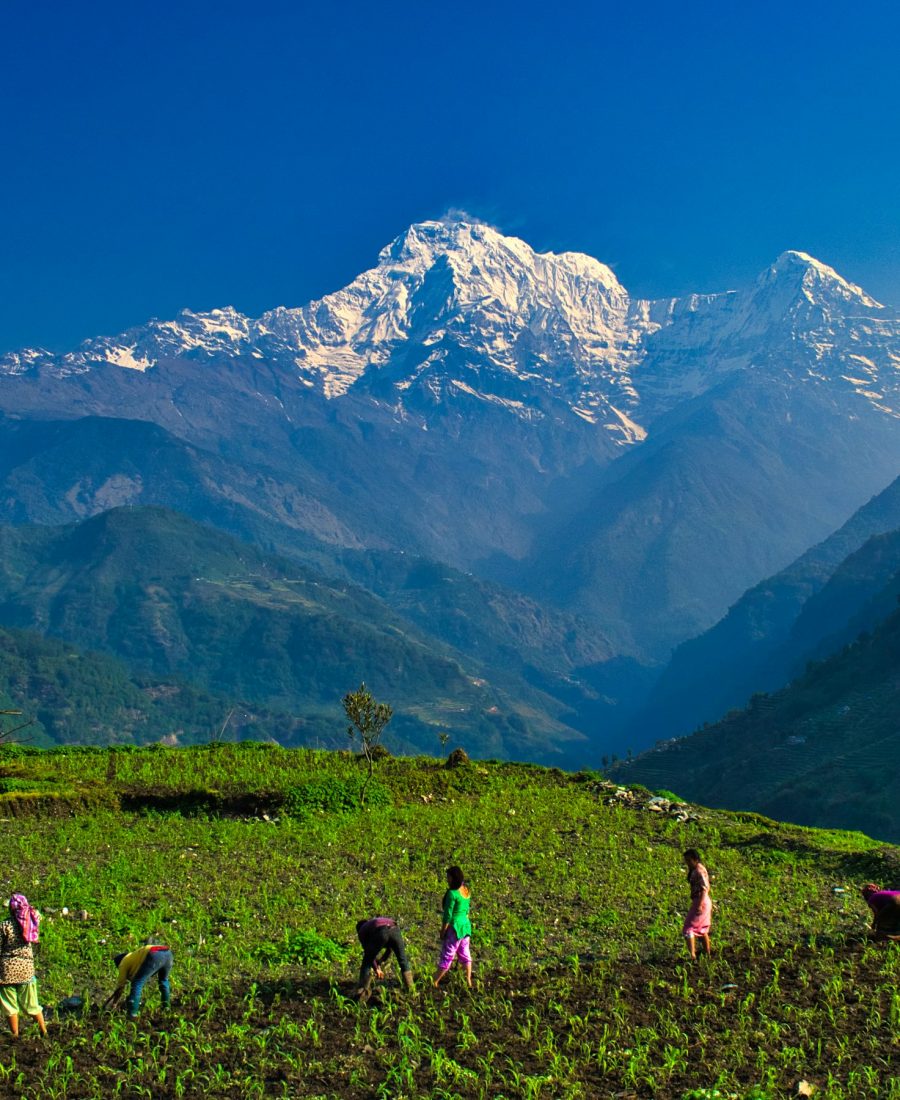
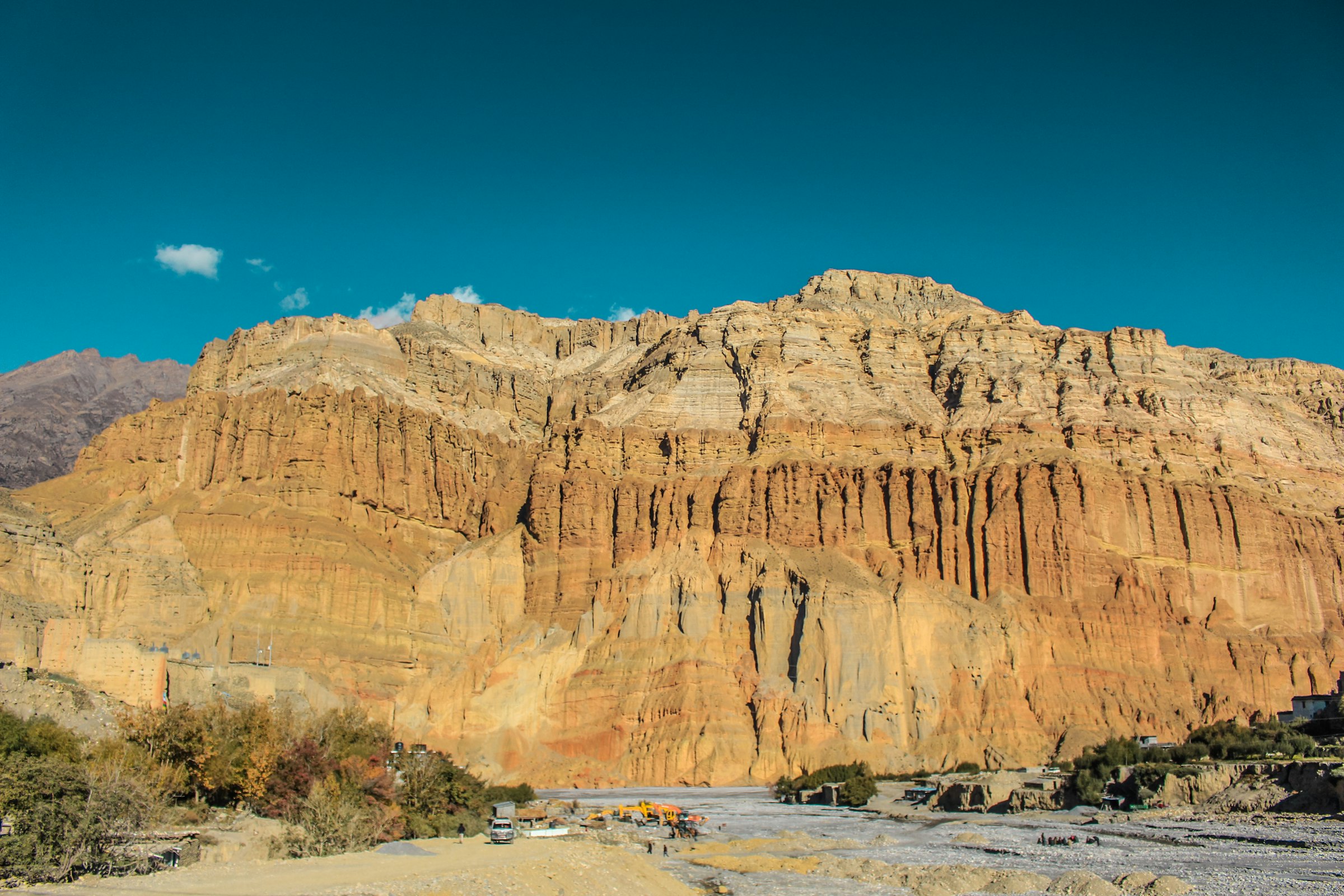
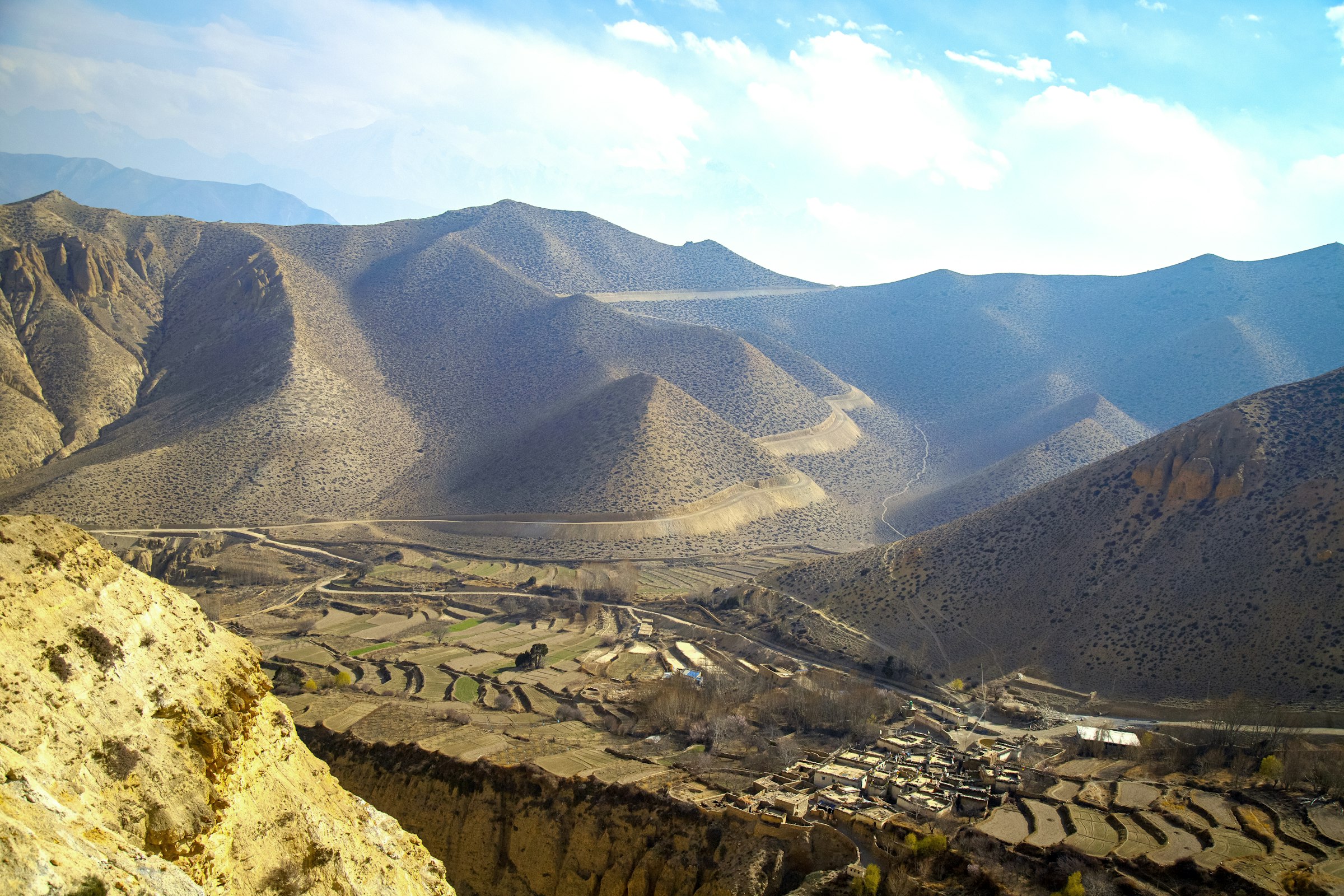
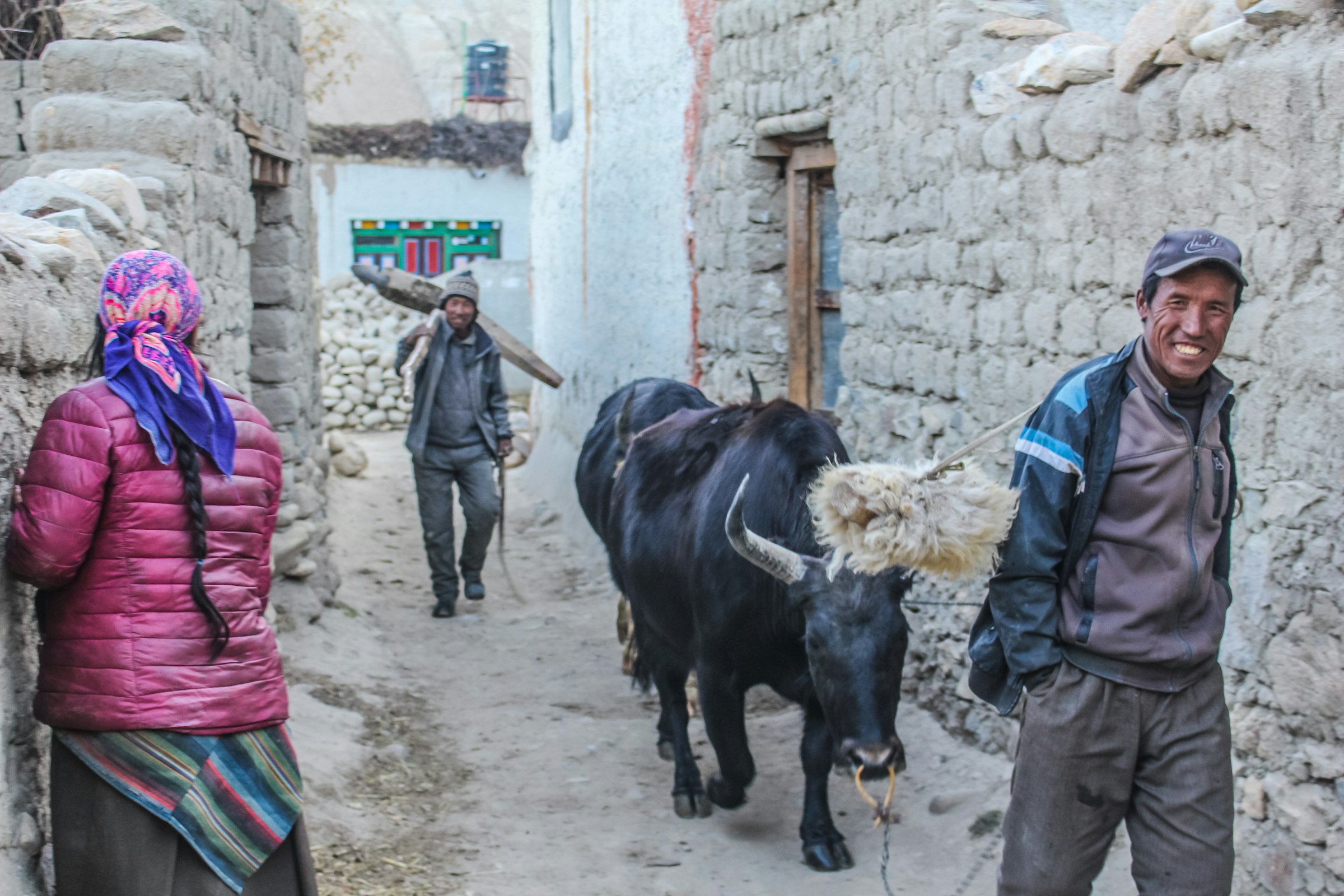
Upper Mustang, the former Kingdom of Lo, lies north of the main Himalayan range on the border with Tibet. Sheltered from the monsoon by Dhaulagiri and the Annapurnas, it is a high desert of wind-carved cliffs, red and ochre canyons and green oases of barley around whitewashed villages. Closed to foreigners until 1992 and still a restricted area, it has kept a Tibetan Buddhist culture that feels a world apart from the rest of Nepal.
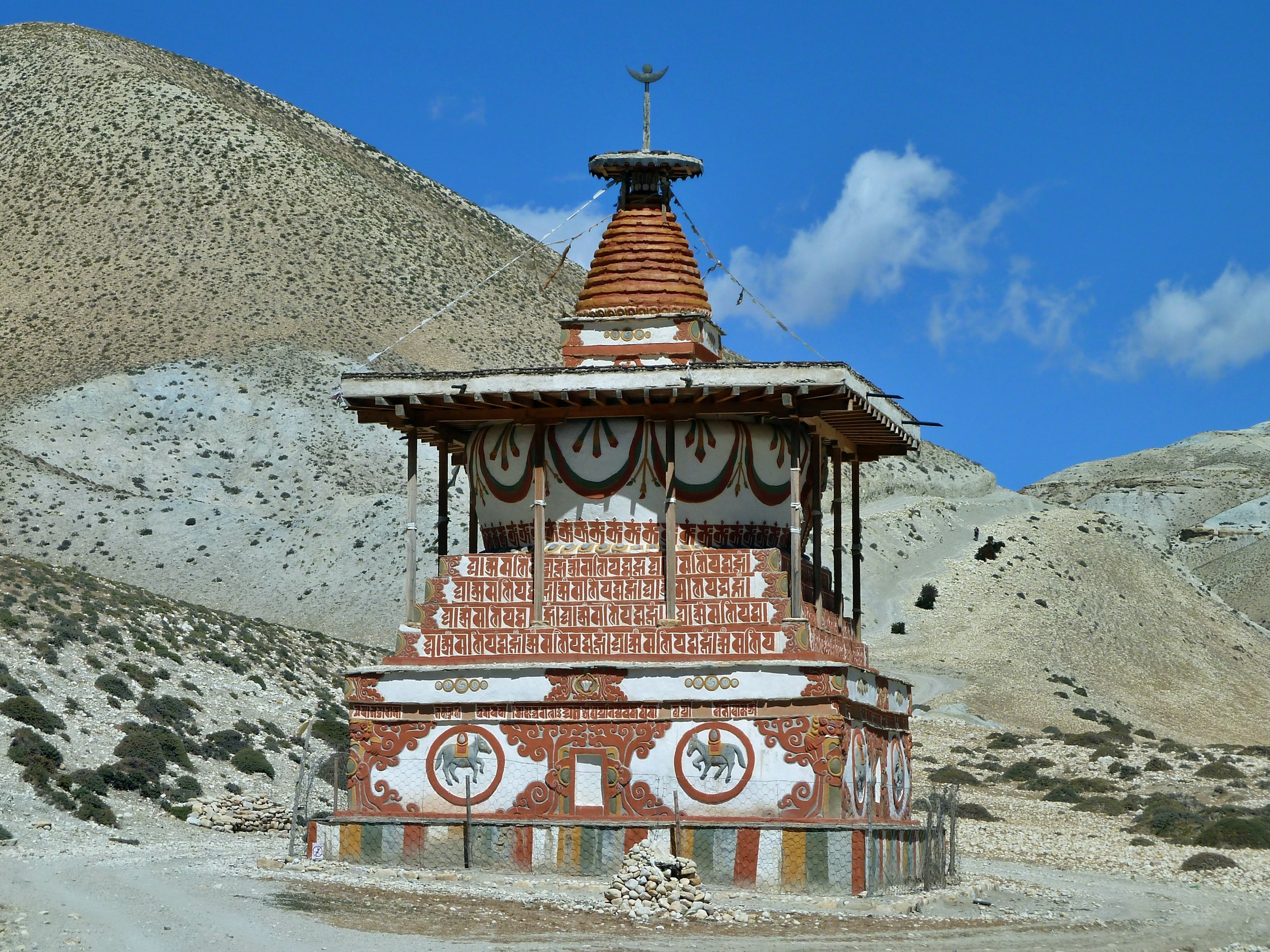
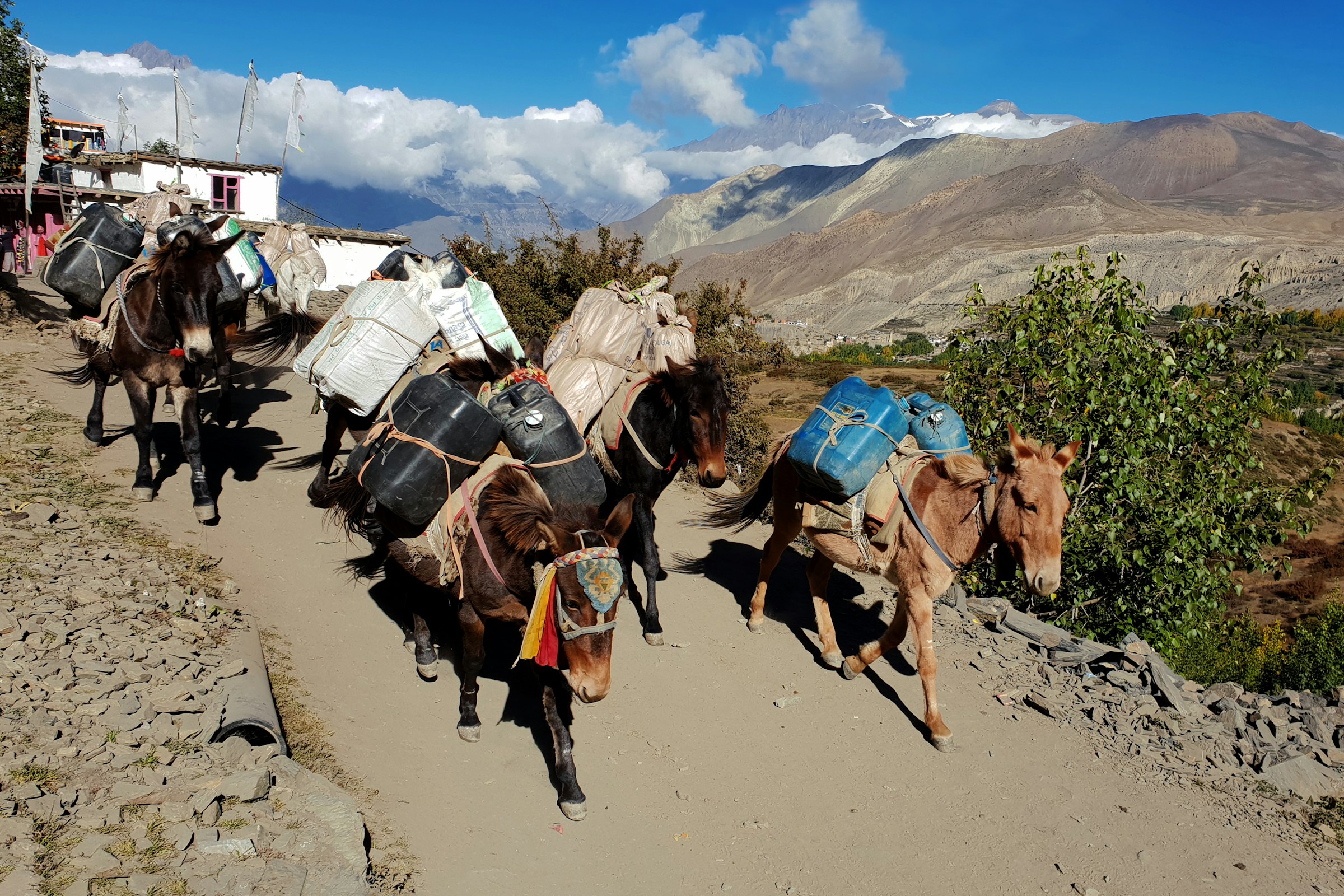
The trek begins with a flight from Pokhara to Jomsom and a short walk to Kagbeni, the gateway to the restricted area. From there the trail follows the Kali Gandaki north past cave dwellings carved high into the cliffs, then crosses a series of windswept passes between Chele, Syangboche, Ghami and Tsarang. Each village has its own monastery, chortens and mani walls, and the wall near Ghami is among the longest in Nepal.
The goal is Lo Manthang (3,840 m), the walled capital of Lo, where narrow lanes lead between the old royal palace and monasteries such as Jampa Lhakhang and Thubchen, known for their centuries-old murals. A full day here lets you explore the town and visit nearby cave sites. The return follows a different route via Ghar Gompa, one of the oldest monasteries in the region, and the red cliffs of Dhakmar, before rejoining the trail south to Jomsom and the flight back to Pokhara.
Who is this trip for?
The Upper Mustang Trek is graded moderate. The altitude stays mostly between 3,000 m and 4,000 m, with a few passes slightly higher, and daily walks of 5-7 hours follow dusty, open trails exposed to strong sun and afternoon wind. It suits reasonably fit walkers with an interest in culture and landscape. Because Upper Mustang lies in the rain shadow, it is one of the few treks in Nepal that works well during the monsoon months as well as in spring and autumn.
As a restricted area, Upper Mustang can only be visited with a special permit issued through a registered trekking agency, accompanied by a licensed guide and with at least two trekkers in the group. Nima Adventure, led by Managing Director Kanchha Sherpa, handles the Restricted Area Permit, ACAP, flights and logistics, and can time your trip to coincide with the colourful Tiji festival in Lo Manthang, held each spring according to the Tibetan calendar.
Trip highlights
- The walled town of Lo Manthang (3,840 m), capital of the former Kingdom of Lo
- Ancient monasteries including Jampa Lhakhang, Thubchen and Ghar Gompa
- Cave dwellings carved into the cliffs of the Kali Gandaki valley
- Red and ochre canyon scenery in the trans-Himalayan rain shadow
- Long mani walls and chortens around Ghami and Tsarang
- Mountain flights between Pokhara and Jomsom past Dhaulagiri and Annapurna
- Option to time your trek with the Tiji festival in Lo Manthang
Itinerary
A Nima Adventure representative meets you at Tribhuvan International Airport and transfers you to your hotel. After you have settled in, we run through the trek plan and collect the passport details and photographs needed for your Upper Mustang Restricted Area Permit and ACAP. The rest of the day is free to recover from your journey or wander the lanes of Thamel. Overnight at a hotel in Kathmandu.
Restricted area permits are issued in Kathmandu through a registered agency, so we use today to complete the paperwork while you explore the city with a guide. A typical day includes Swayambhunath, the hilltop stupa overlooking the valley, Pashupatinath on the banks of the Bagmati, and the great stupa of Boudhanath, heart of Kathmandu's Tibetan community and a fitting introduction to the culture of Mustang. In the evening we hold a full trek briefing. Overnight at a hotel in Kathmandu.
Travel west to Pokhara by tourist bus, a scenic drive of about 6-7 hours along the Trishuli valley, or by a 25-minute flight if you prefer. Pokhara lies on the shore of Phewa Lake with Machhapuchhre rising behind it, and the afternoon is free to relax by the water before tomorrow's early flight. Your guide checks your packing in the evening, as baggage allowances on the Jomsom flight are strictly limited. Overnight at a hotel in Pokhara.
An early morning flight of about 20 minutes takes you up the Kali Gandaki gorge between Dhaulagiri and the Annapurnas to Jomsom. After meeting the porters, we walk north along the wide riverbed to Kagbeni, an oasis village of mud-brick houses, green fields and a red monastery at the entrance to Upper Mustang. The afternoon is free to explore its narrow alleys and old chortens. Walking time 3-4 hours. Overnight in a teahouse in Kagbeni.
After the permit checkpoint at the northern edge of Kagbeni you enter the restricted area. The trail follows the east bank of the Kali Gandaki, climbing over ridges to the whitewashed village of Tangbe, with its narrow alleys and apple orchards, and on to Chhusang. Across the river, cave dwellings are carved high into the eroded cliffs. We then cross the Kali Gandaki and climb steeply to Chele, where the landscape and culture become noticeably Tibetan. Walking time 6-7 hours. Overnight in a teahouse in Chele.
Today's trail climbs steeply out of Chele along the edge of a canyon, with views back down the Kali Gandaki and south to Nilgiri. The day includes two small passes, the Taklam La and the Dajori La, and a lunch stop in Samar, a village sheltered by poplar trees. In the afternoon we cross more ridges and side valleys, descending into a gorge and climbing out again before reaching Syangboche. Walking time 6-7 hours. Overnight in a teahouse in Syangboche.
A gradual climb leads to the Yamda La, at around 3,850 m, followed by a descent to Ghiling, a village surrounded by barley and buckwheat fields with a fine old monastery. The trail then climbs to the Nyi La, at roughly 4,000 m one of the highest points of the outward route, before dropping to Ghami, one of the largest villages in Lo, set among fields beneath eroded cliffs. Walking time 5-6 hours. Overnight in a teahouse in Ghami.
Leaving Ghami we cross a suspension bridge and walk beside one of the longest mani walls in Nepal, built of stones carved with Buddhist prayers; we keep the wall on our right, as local custom asks. The trail then climbs over the Tsarang La and descends to Tsarang, a large village dominated by a five-storey white dzong (fortress) and a red monastery that houses old statues and texts. Walking time 4-5 hours. Overnight in a teahouse in Tsarang.
The trail drops to a stream below Tsarang and climbs gradually across a wide, open landscape to the Lo La, at about 3,950 m. From the top you get your first view of Lo Manthang, its walls and flat rooftops spread across a plateau below, with the hills of Tibet beyond. A short descent takes you through the town gate into the old capital of the Kingdom of Lo. Walking time 4-5 hours. Overnight in a teahouse in Lo Manthang.
A full day to explore Lo Manthang. Inside the walls, Jampa Lhakhang and Thubchen Gompa contain some of the finest wall paintings in the Himalaya, carefully restored in recent decades, and Chode Gompa is still home to a community of monks. You can also see the old royal palace and wander the narrow lanes. In the afternoon, an optional ride on horseback or by jeep takes you to the cave complexes around Chhoser or the hilltop monastery of Namgyal Gompa. Overnight in a teahouse in Lo Manthang.
We leave Lo Manthang on a quieter trail away from the main route, climbing to a high, windswept pass of a little over 4,000 m with wide views over the plateau. Below it lies Ghar Gompa, also known as Lo Gekar, believed to be one of the oldest monasteries in Nepal and associated with Guru Rinpoche, and known for its painted stones and murals. From here the trail descends to Dhakmar, set beneath dramatic red cliffs eroded into columns and caves. Walking time 6-7 hours. Overnight in a teahouse in Dhakmar.
A short walk down the valley brings us back to Ghami, where we rejoin the main trail. From here we retrace our steps up to the Nyi La and down to Ghiling, with time in the afternoon to visit its monastery and walk among the fields. The landscape looks quite different in the opposite direction, and the late light on the eroded cliffs is a photographer's delight. Walking time 5-6 hours. Overnight in a teahouse in Ghiling.
We continue south through Syangboche and Samar, crossing the small passes of the outward journey, and descend past Chele back towards the Kali Gandaki. A final steep descent and a river crossing bring us to Chhusang, a village beside the river surrounded by red cliffs and caves. It feels noticeably warmer down here after the high plateau, and the evening is a good time to sit back with the crew. Walking time 6-7 hours. Overnight in a teahouse in Chhusang.
The last trekking day retraces the route via Tangbe to Kagbeni, where we check out of the restricted area, and continues along the Kali Gandaki riverbed to Jomsom. The wind in the valley strengthens from late morning, so we start early. If you prefer, this stage can be shortened by taking a jeep from Chhusang or Kagbeni. In the evening we celebrate the end of the trek with the guide and porters. Walking time 6-7 hours. Overnight in a lodge in Jomsom.
Flights from Jomsom leave early in the morning, before the wind picks up, and the short journey offers a last close look at Dhaulagiri and the Annapurnas. In Pokhara we transfer you to your hotel, and the rest of the day is free to relax by Phewa Lake. Mountain flights depend on the weather; if there is a delay, we wait for the next flight or arrange the long road journey back to Pokhara by jeep. Overnight at a hotel in Pokhara.
Return to Kathmandu by tourist bus, a drive of about 6-7 hours, or by a short flight if you have arranged one. On arrival you are transferred to your hotel, and the rest of the day is free for souvenir shopping in Thamel or a final visit to Boudhanath, close to our office. In the evening we meet for a farewell dinner to celebrate your journey to the Kingdom of Lo. Overnight at a hotel in Kathmandu.
Your Upper Mustang journey ends today. Depending on your flight time, you may have a few free hours for last-minute shopping or a final walk around the city. A Nima Adventure representative will drive you to Tribhuvan International Airport in good time for your international flight. If you would like to extend your stay with another trek, a jungle safari or a tour of Bhutan or Tibet, we will be happy to help.
What’s included
Cost Includes
15 items- Airport pick-up and drop-off by private vehicle
- Three nights' hotel accommodation in Kathmandu on a bed and breakfast basis
- Two nights' hotel accommodation in Pokhara on a bed and breakfast basis
- Guided sightseeing in Kathmandu with a private vehicle
- Kathmandu to Pokhara and back by tourist bus
- Return flights between Pokhara and Jomsom, with airport transfers
- Upper Mustang Restricted Area Permit and Annapurna Conservation Area Permit (ACAP)
- Teahouse accommodation during the trek, twin sharing where available
- Breakfast, lunch and dinner during the trek
- Experienced, government-licensed English-speaking trekking guide
- Porter service (one porter between two trekkers)
- Wages, meals, accommodation, equipment and insurance for guide and porters
- Nima Adventure duffel bag and a first-aid kit carried by your guide
- Farewell dinner in Kathmandu
- All government and local taxes
Cost Excludes
12 items- International flights to and from Kathmandu
- Nepal entry visa
- Travel insurance covering trekking, medical treatment and emergency helicopter evacuation (mandatory)
- Lunch and dinner in Kathmandu and Pokhara, except the farewell dinner
- Domestic flights between Kathmandu and Pokhara, if preferred to the tourist bus
- Monastery, palace and museum entrance fees in Upper Mustang and Kathmandu
- Horse or jeep hire for optional excursions from Lo Manthang
- Extra nights and transport caused by flight delays, cancellations or early return from the trek
- Drinks, snacks, hot showers, battery charging and Wi-Fi on the trek
- Personal trekking equipment and clothing
- Tips for guide, porters and driver
- Anything not listed under the included services
Equipment list
Foot Wear
3- Normal Socks 3-4Pairs
- Trekking Shoes 1 Pair
- Slippers
Hands
2- Thin Fleece Gloves 1 Pair
- Wind Stopper Fleece Gloves
Upper Body
6- Light Weight Top / Thermo Coat
- Buff
- Fleece Jacket 1
- Gore Tex Jacket 1
- Down Jacket 1
- Cotton T-Shirt 2-3
Lower Body
4- Mid Weight Long Under Pants
- Under Wear 4-5 Pairs
- Gore Tex Pant. 1
- Water Proof Pant1
Head
4- Sun Cap
- Balaclava
- Fleece Hat
- Neck Gaiter 2-3
Sleeping Bags
1- Sleeping Bag rated to -20°C For base camp
Bag Packs
2- Rucksacks 45-55L
- Duffle Bag 90 L 1 Piece
Sun stuffs
4- Sunscreen Minimum SPF 50
- Lip balm with SPF 30
- Sunglasses UV protection
- Toiletries.
Medicines
7- Brufen / Ibuprofens
- Antibiotic
- Diamox
- Paracetamol
- Handy Plaster
- Crack Bandage
- Tincture Iodine
Miscellaneous
2- Walking Stick
- Umbrella / Rain Coat
Frequently asked questions
You need the Upper Mustang Restricted Area Permit and the Annapurna Conservation Area Permit (ACAP). The restricted area permit is only issued through a registered trekking agency in Kathmandu, for groups of at least two trekkers with a licensed guide. Nima Adventure arranges both permits; we will ask for your passport details and photographs in advance and complete the paperwork on your second day in Kathmandu.
No. Independent trekking is not permitted in Upper Mustang. The restricted area permit requires at least two foreign trekkers travelling with a licensed guide through a registered agency. If you are travelling alone, please contact us early, as we may be able to suggest options for joining another trekker on the same dates.
The season runs from March to November. Because Upper Mustang lies in the rain shadow of the Annapurnas and Dhaulagiri, it stays fairly dry even in the monsoon, although flights to Jomsom and roads lower down can be disrupted. Spring brings the Tiji festival in Lo Manthang, and autumn offers clear skies. Winter is very cold and many lodges close.
We grade it moderate. Most of the trek lies between 3,000 m and 4,000 m, and days involve 5-7 hours of walking on open trails with several short passes. The main challenges are the dry, dusty conditions, strong sun and the wind that blows up the valley each afternoon. Good fitness, sun protection and a buff or scarf against the dust make the walking much more comfortable.
Yes, a dirt road now links Jomsom with Lo Manthang. Our route follows the older walking trails wherever possible, away from vehicles, but the road is useful in an emergency and makes it possible to shorten the return by jeep if you prefer. It also allows optional jeep excursions from Lo Manthang to more distant cave sites and monasteries.
Flights between Pokhara and Jomsom run only in the morning and can be delayed or cancelled by wind or cloud. If this happens we try the next available flight or, if the delay is long, travel by jeep along the Kali Gandaki road, which takes most of a day. Extra nights or transport caused by such delays are not included, so we recommend a buffer day.
Yes. Travel insurance is mandatory and must cover trekking to at least 4,500 m, medical treatment and emergency helicopter evacuation, as Lo Manthang is remote and far from hospitals. Please send us your policy number and the insurer emergency contact before the trek. We also recommend cover for trip cancellation, flight delays and lost baggage.
Trip Reviews
Submit your review | |
Plan Upper Mustang Trek with our team
Tell us your dates and group size and we will reply within 24 hours with availability, a tailored itinerary and a group price.
- Reply within 24 hours
- No booking fees
- Free itinerary tailoring